
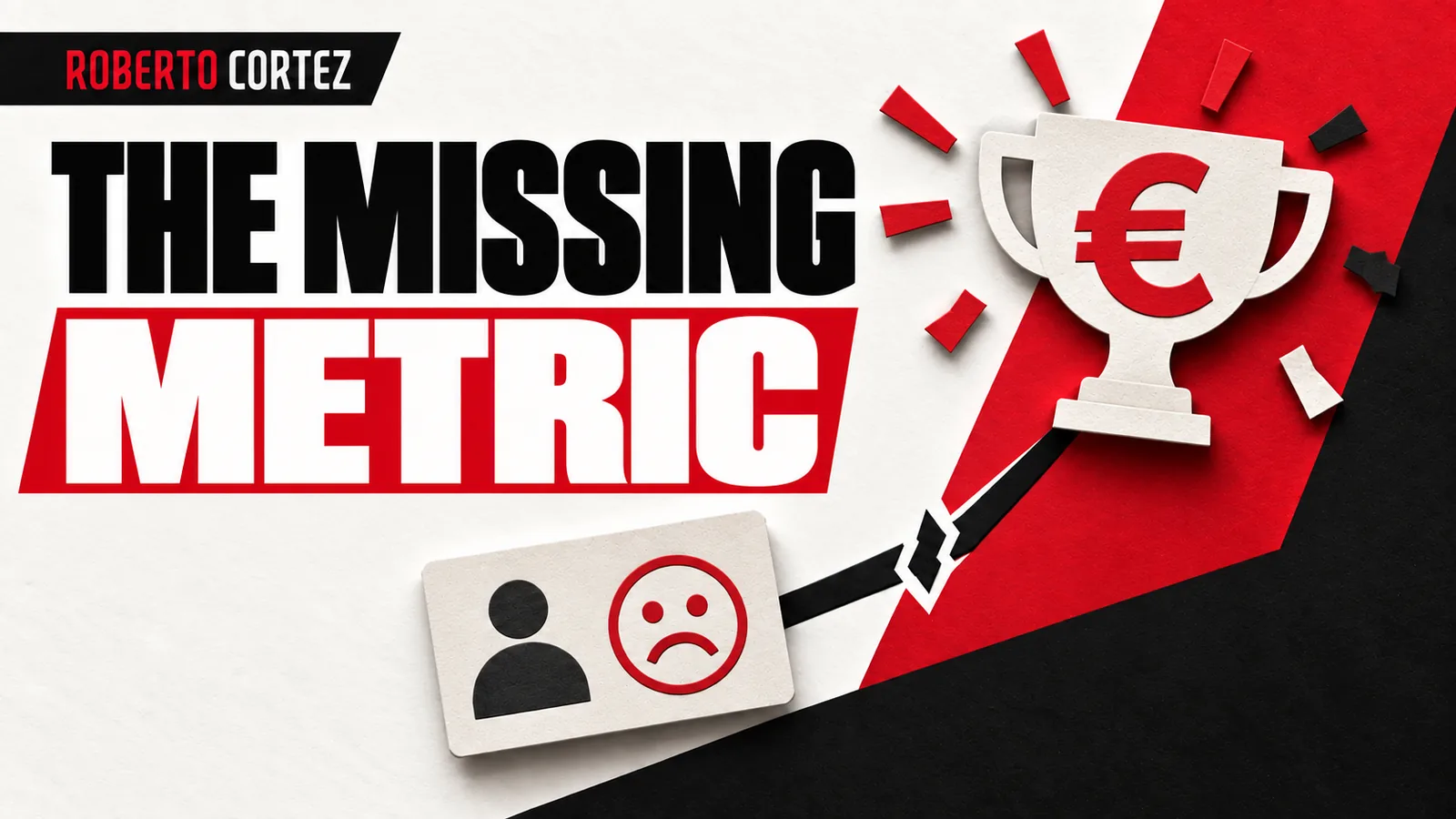
The episode that shows the problem
In my own agency, the traffic team celebrated revenue records while the client grew increasingly unhappy with the real outcome of the ad spend. Each side was watching a different number, and neither was technically wrong on their own terms.
The team felt proud of the growth achieved, because the project was hitting revenue records. On the other side, the client watched their profit margin get eaten by ad spend. What was missing from the start was a clear ROAS target that could act as a limit on the campaigns.
The lesson I take from the episode is simple: align from the start, and keep looking at the same metrics consistently, not just in the kickoff meeting.
To prepare your next step, explore Customer retention and experience.
Understand the business before defining any metric
Before discussing numbers, you need to deeply understand the client's business. A metric without business context tells you nothing about whether the work is actually succeeding for the person paying the invoice. You need to know how the client sells, what the value proposition is, who the typical customer is, and what objections come up during purchase.
Without this immersion, there's no way to know which metric actually matters for that business, or to tell a genuinely good result from mere noise.
This immersion can start during the pre-selection stage, before the contract is signed. If I don't yet understand the business in front of me, I don't know how to add value, price the work, or design a sensible action plan for the first months.
The metric questions that often go unasked
Many business owners can't immediately answer essential questions about their own operation, and it's on whoever runs the marketing to help get to those answers, without inventing numbers nobody has verified. The core questions are: how does the company bill online and offline, what margin does each product release, what is the current CAC, and what is the break-even CAC.
The core questions are: how does the company bill online and offline, what margin does each product release, what is the current CAC (customer acquisition cost), and what is the break-even CAC, the point where the business neither gains nor loses money on a first sale. These questions are part of the onboarding I teach in my Prolancer classes, before any campaign starts.
It's worth asking about repurchase rate, estimated LTV, funnel conversion rates, and average order value. Without these numbers, a media buyer has no way of knowing whether their work is putting money in the client's pocket, even while gross revenue climbs.
Explore this decision further: What Metrics I Track to Know if the Business is Actually Improving.
Align the North Star metric before starting
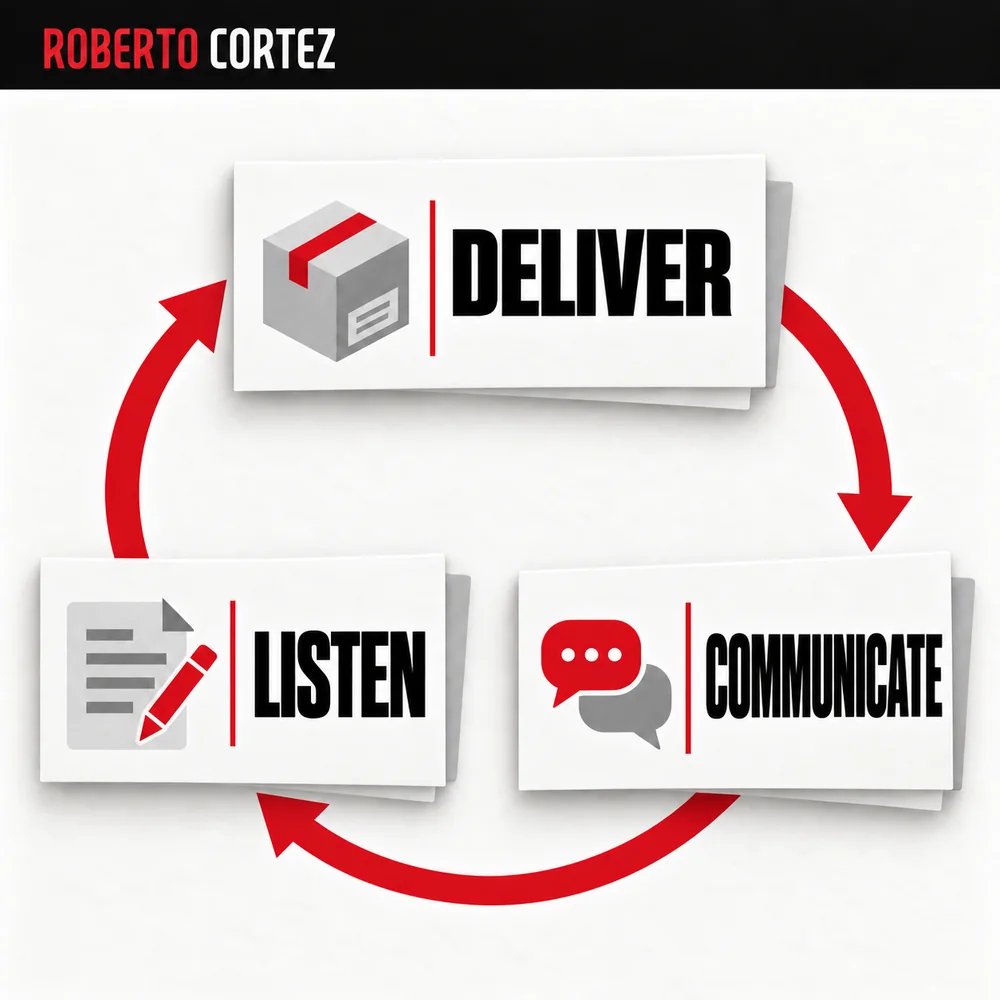
Expectation alignment, in my experience running an agency since 2019, matters more for how long a partnership lasts than the campaign results themselves. I've seen projects with phenomenal results fall apart from lack of constant feedback, and projects with only modest results last many months, precisely because there was alignment and honest communication at every step.
I've seen projects with phenomenal results fall apart from lack of constant feedback between the parties, and I've seen projects with only modest results last twelve, eighteen, or twenty-four months, precisely because there was alignment and honest communication at every step.
The central question to ask the client, before the project starts, is: what would make this collaboration a success? Which North Star metric are we watching daily in the first months? An early-stage business might accept a break-even ROAS just to gain new customers; an established brand might prefer selling less as long as margin stays untouched. The answer should be written down and agreed, not guessed halfway through the project once tension has already set in.
Where the data comes from and what period to count
Agreeing on a metric's name isn't enough if each side uses different data sources. Numbers with the same name can measure different things, and that gap usually only surfaces once there's already a dispute on the table. The ad platform dashboard and the client's internal sales system rarely tell exactly the same story.
The ad platform dashboard and the client's internal sales system rarely tell exactly the same story, because they use different attribution windows and don't always capture the same confirmed conversions.
It's worth agreeing, during onboarding, which system is the official source for decisions, and what time window to look at before drawing conclusions. This avoids pointless arguments about who has the right number and keeps the conversation focused on deciding what to do with the reality the data shows.
A hypothetical example of an AI-assisted alert
You can use automation tools and language models to cross-check ad spend against revenue recorded in the client's system. Applying that reasoning, an alert should focus strictly on the business thresholds defined during onboarding rather than reacting to routine, temporary fluctuations in your cost per click.
As a hypothetical, you could set a rule: notify the team whenever return on ad spend, measured over a multi-week window, drops noticeably below the break-even point agreed with the client. The exact formula matters less than the principle: compare revenue against margin, not sales volume alone. The hours saved only matter if they lead to a better decision.
As a hypothetical, you could set a simple rule: notify the team whenever return on ad spend, measured over a multi-week window, drops noticeably below the break-even point defined with the client. The exact formula matters less than the principle: the tool should compare revenue against margin, not simply celebrate sales volume on its own, as happened in the agency episode. Worth noting: the hours an AI check might save only matter if they lead to a better decision, not as a saving in themselves.
Explore this decision further: How to design a dashboard that shows which clients need attention.
Meeting cadence and the first-week mistake
I made the mistake, as described of trying to resolve everything during a project's first week. This established an intense initial pace that became impossible to sustain over the following months. Rushing through entire setups immediately creates unmanageable expectations of constant availability rather than building a durable process.
Wanting to redo the site, build audiences, launch campaigns, and schedule meetings every other day looks like dedication, but it creates an expectation of availability that later can't be maintained. Once the client roster grows, whoever received that intense early attention feels less important, even if the underlying work continues with equal care.
Meetings should always have a clear objective and shouldn't happen just because they were on the calendar from a week before. It's normal to have closer contact in the first weeks, to fine-tune tracking and creatives, but the healthy direction is toward more spaced-out meetings, supported by consolidated data. Clients stay loyal longer when they feel predictability than when they feel an initial burst of enthusiasm that later fades without explanation.