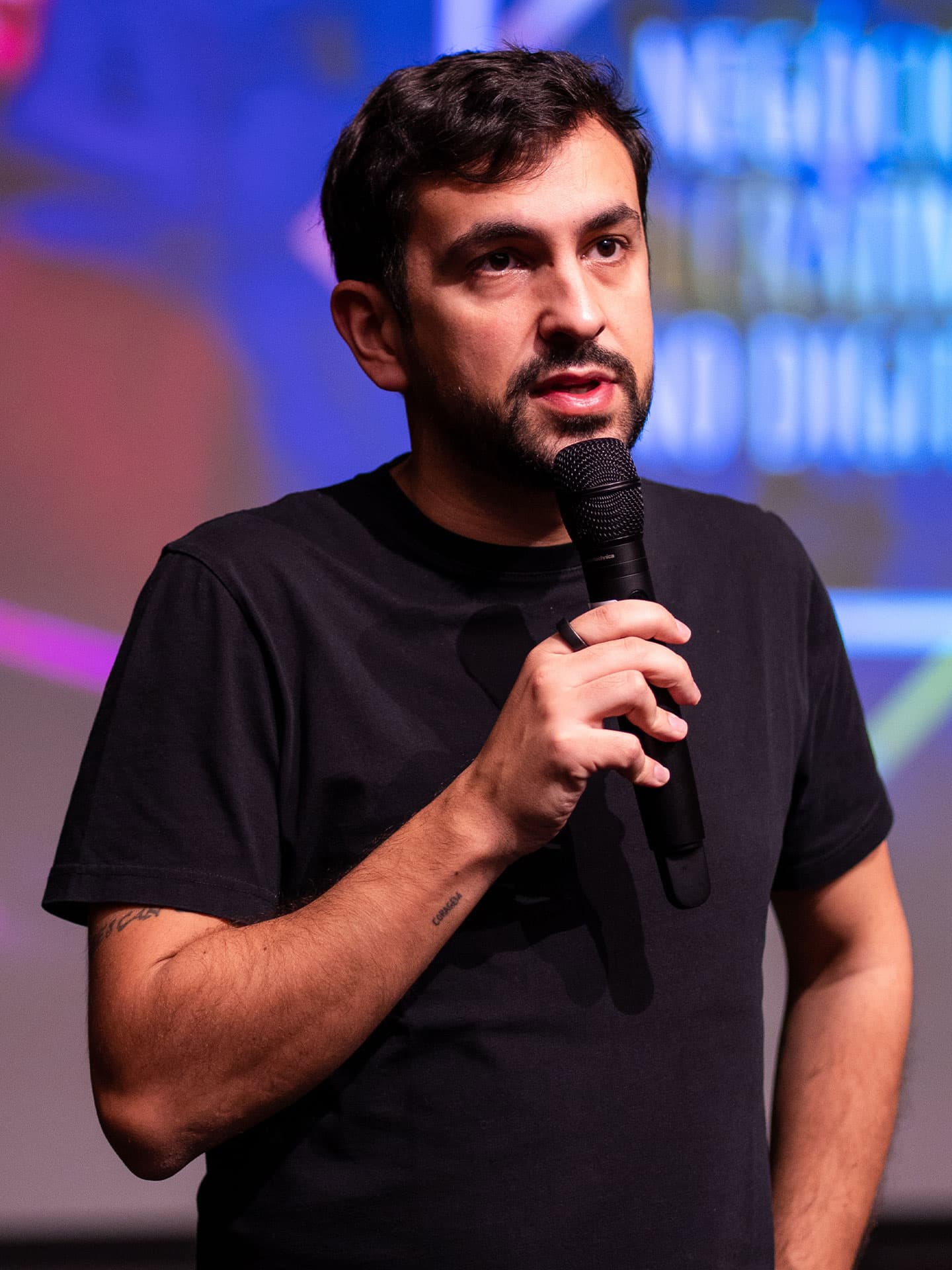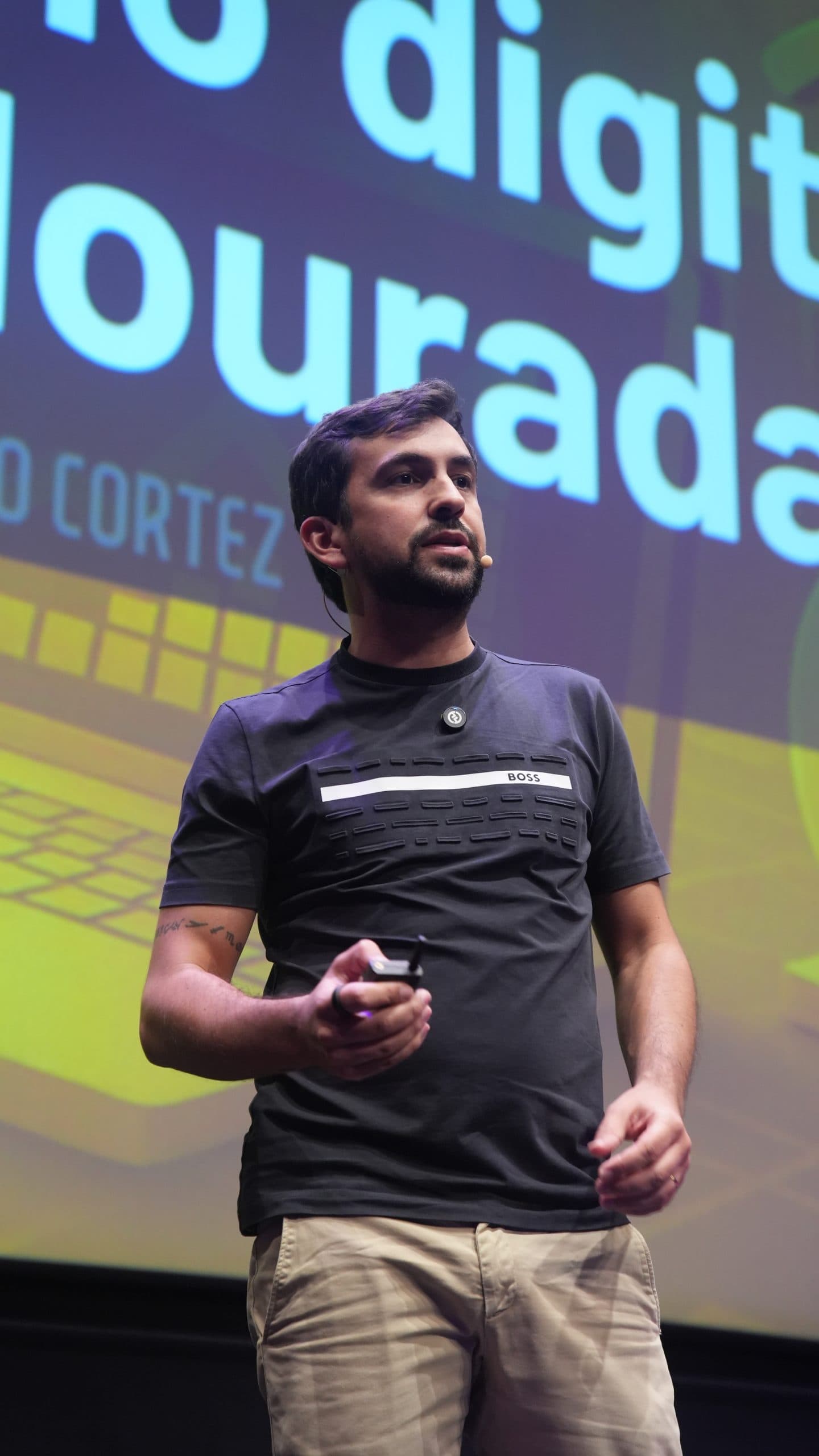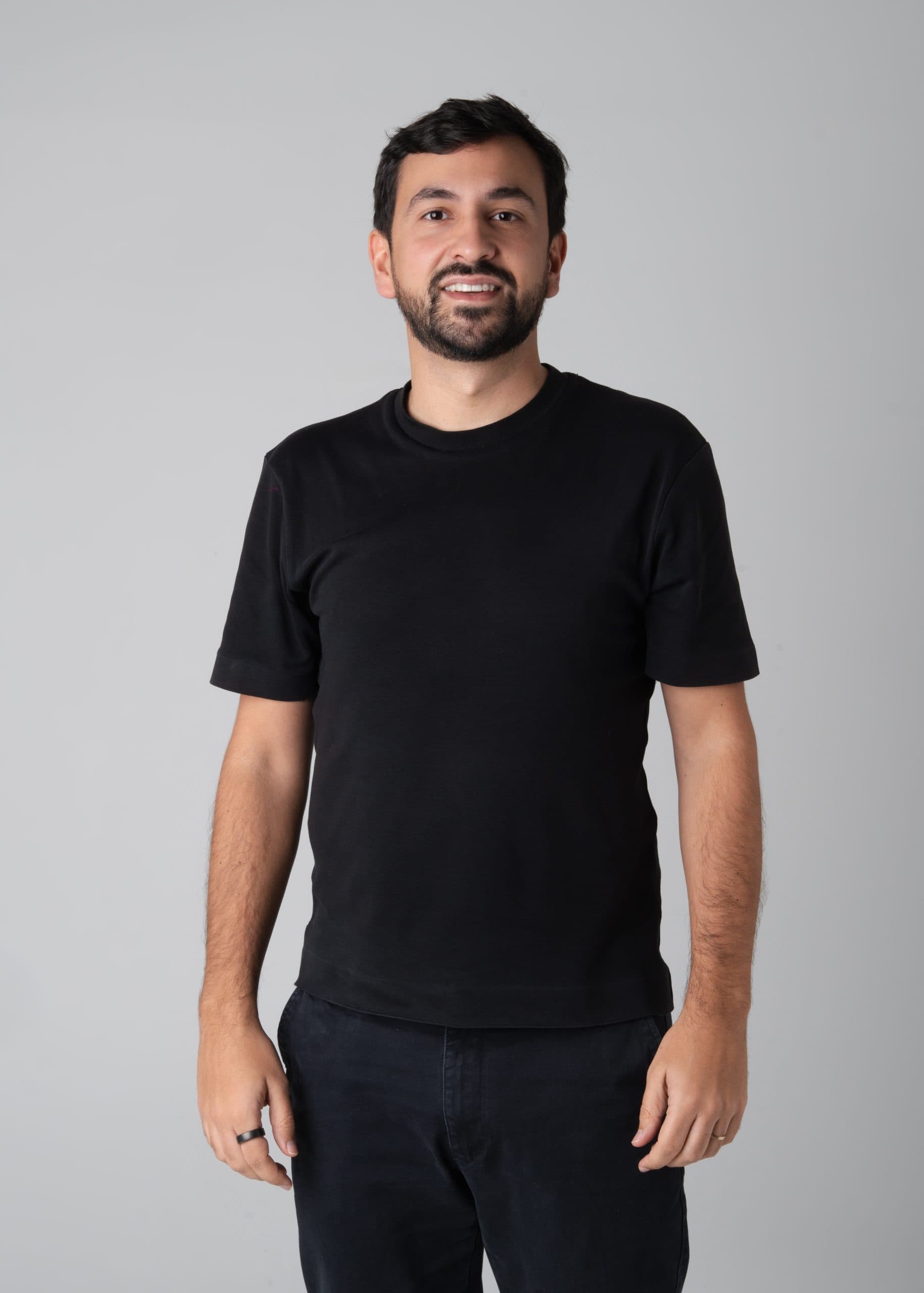
What my business experience is built on
My experience comes from building businesses, selling services and working with the team on implementation. The €6 million accumulated over the years covers several ventures of my own. Services account for the largest share: running operations, delivering the work and taking responsibility for the work clients have commissioned.
The €6 million in cumulative revenue comes from my own businesses: SpartAds services, Programa de Aceleração Digital, Prolancer, AdSummit, Laboratório da IA, mentoring, talks and other courses and information products sold over the years. Services, operations and hands-on implementation still account for the largest share. We earn more from doing the work than from teaching it.
Learning to sell mattered as much as learning to execute
My start in digital happened in the Czech Republic, at Webnode. I had studied International Relations, and a video I made for YouTube helped me land that first job. It was inside that company that I began to understand the role of online ads in acquiring customers.
I told that story in an interview with Afiliados Magazine, in 2023. When I returned to Portugal and started working for myself, the difficulty was no longer just technical. I needed to explain the value of the work, put together proposals, and charge for what I knew how to do. I went through an agency, worked with different brands and markets, and later, at Jusbrasil, kept developing projects as a freelancer on the side.
The agency was born in 2019 out of work that already existed. I already had clients and revenue that allowed me to take the step of paying for a space, buying equipment, and hiring the first team member. That origin still shapes how I evaluate other people's businesses today: I care about understanding what has already been done, what was learned, and what resources are already committed to the project before looking at any idea.
Building a team forced me to change how I worked
Knowing how to manage campaigns was an important foundation, but running a company brought a different kind of decision: hiring, distributing responsibilities, managing client relationships, and margin. These are topics I keep discussing publicly because they shape marketing results just as much as any ad strategy.
On Sextas Ímpares #147, a conversation about seven years of entrepreneurship, I talked about a phase when it would take me up to seven days to respond to a lead. I was involved in too many decisions and was, in practice, the bottleneck of my own business, even though demand existed. The company's operation depended too much on me, and that had a real cost in lost opportunities.
Today I pay more attention to the team's ability to move forward with clear criteria, to the cost of delivering the service, and to the kind of relationship we want to have with clients. I also talked, at that time, about the importance of protecting the team when a working relationship becomes harmful: I have already preferred to lose a client rather than see someone on the team demotivated because of them. Growing requires making this kind of decision, in addition to pursuing more sales, something I also cover in the article on turning leads into clients in a service business.
AI as part of daily work and of what I teach
My connection to AI comes from this same concern with operations: understanding where we can work better, which tasks to automate, and which tools are worth building. SpartAds combines business growth work with AI and automation services, through its two sites, spartads.pt and spartads.ai.
In my classes I show concrete projects and processes: planning an app with Claude Code, analyzing campaigns, and tracking results, always paying attention to data care, permissions, and credentials. In class #145, about building a sports predictions app, I showed the football predictions app I built for friends and explained the planning and security review before publication. In that class I stressed that planning the architecture well before asking the AI to build reduces a lot of rework, even though it doesn't eliminate every error: even after publishing, bugs showed up that needed fixing.
Security is a step I treat as mandatory, not optional: never expose keys or tokens in public repositories, and always run a dedicated review before any system goes live. I also talked about this in class #151, on traffic management with AI support, where I showed how I use automatic alerts to monitor campaigns, always keeping the decision-making on the human side.
For anyone who wants to go deeper into the technical side of this topic, I have an article on how to plan an app with Claude Code before starting to code. The central idea is always the same: whoever builds without understanding the fundamentals of what they're doing risks creating something fragile, inefficient, or insecure, and that costs time and money later on.
In the book I wrote in 2022, I was already discussing how algorithms and AI affected the work of people managing ads. I argued that time freed up by automation should go towards better strategy, analysis and conversion. The tools I use today let me work on other problems, but I keep asking the same question: what can we improve in the business with this?
I explain that work in the guides to developing applications with AI and security. These decisions accompany construction, from defining users to reviewing the product before publication.
Teaching, writing, and continuing to execute
Teaching has been part of my work for several years: I'm the author of the book "Aprende a vender com Marketing Digital," I created AdSummit, and I keep Sextas Ímpares as a space for public sharing. Teaching requires organizing your reasoning, testing tools before recommending them, and being able to clearly explain why you choose one approach over another.
I've had more than 30,000 students over these years of training. The accumulated experience includes 6 million euros in revenue across my own businesses and direct support to more than 1,000 Portuguese companies, through services or close mentorships. These are numbers from my own journey in business and training, not a promise of results for anyone joining the programs. Each business has its own starting point and its own challenges.
Laboratório da IA offers weekly classes and support with Roberto Cortez, the team and guests to work on questions and projects involving AI, automation and online business. That follow-up work is about execution decisions: what to build first, what's failing, and what needs to be revised before moving forward. I keep learning from the team's projects, from students, and from the questions of people applying this in the field, every day.
You can get to know my way of working in more detail on the AI and automation and online business and sales pages. To follow practical demonstrations and longer conversations about these topics, there's Sextas Ímpares on YouTube.
To explore current support, see how AI and business mentoring works. You can also read testimonials from students of previous courses, preserved with their original context.
Learning, applying and reviewing again
I keep learning while building my projects and working with other businesses. A new tool may change how a task is carried out, but I need to understand what improves in the delivery and which responsibilities remain mine. That connection between learning, practice and review is what I bring to my classes.
When I share an experience, I want you to understand why I made that decision and what happened afterward. Then you can compare it to your own case: do you have the same information, the same team, and the same problem? That comparison helps you choose what to take from it and what you should test differently.
In the book, I described an idea that excited me: an application to collect and deliver clothes through laundries. I spoke to a potential partner, who asked me to complete a Lean Canvas before we went ahead. Once I worked through costs, operations and resources, I realised the project required time I did not want to take away from the businesses I was already involved in.
I decided against it. Planning helped me choose where to spend my time and stop holding on to an idea just because it looked attractive at first. I bring that experience to conversations with other business owners: I like enthusiasm, and I also want to understand the work that a decision involves.
I have been writing a newsletter for several years. In Sextas Ímpares class #143, I talked about the frustration of finding texts that all seem written the same way: the same analogies, the same tone, few recognisable opinions. That concern also applies to my own content.
I want people to understand what I think, including the questions I am still working through. Talking about a subject helps me organise my ideas and sometimes change my mind. My classes leave room to show an attempt that failed, explain a choice and discuss what I would do differently.