
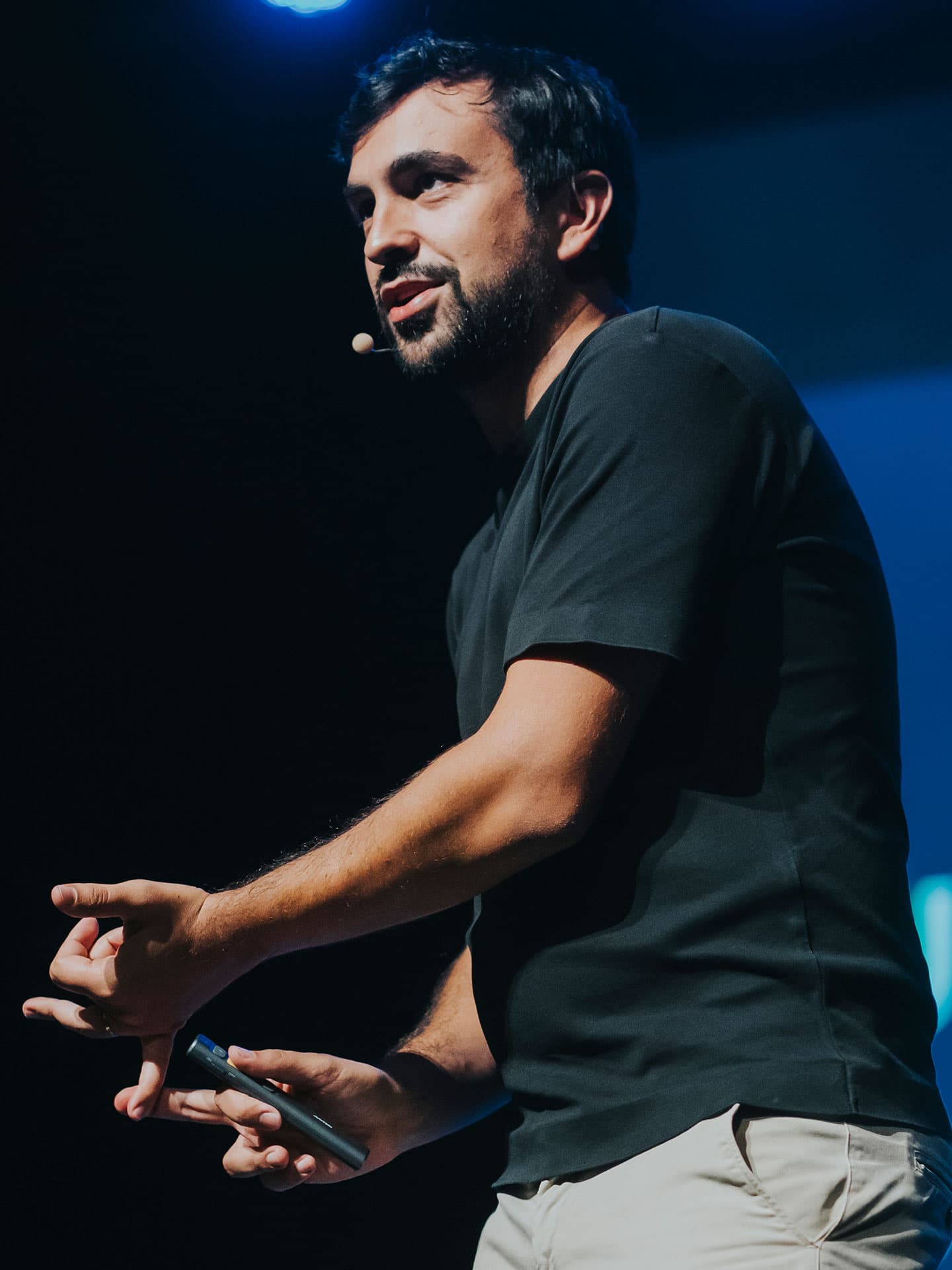
Formats I accept and how they work
I accept invitations for talks at business conferences, team training sessions, podcasts and technical interviews about the digital ecosystem. Each format needs clear objectives so that whoever attends leaves with something concrete to apply, not just good intentions. My team gathers the essential details to design the right session.
When an organization gets in touch, the first step is defining the audience, the goal of the event and the technical level of the participants. I don't do generic motivational presentations or abstract speeches about the future of technology. The focus stays on growth processes, systems integration and profitability, with examples drawn from SpartAds and my own projects.
At conferences with several hundred professionals, the priority is to take apart common myths and show workflows that actually work, with clear decision paths for people running businesses. In internal training sessions with sales or marketing teams, the work centers on reducing repetitive manual tasks, qualifying demand more carefully, and automating what consumes time without generating value.
In podcasts and interviews, I prefer technical conversations about execution and building digital operations, not shallow debates about speculative technology. You can see how I think about operations and structure in growing an online business: what I learned about margin, team and AI.
Proposed topics for talks and executive training
The topics I propose start from the practical application of language models, sales automation and customer acquisition, with no magic solutions or theory disconnected from the daily routine of Portuguese companies. I adjust each topic to the concrete challenges of your sector, within what I've already tested or closely followed.
One central topic is called "Operational Artificial Intelligence in Companies: From Chatbot to Process Automation." Using a hypothetical example of a customer support team, I explain how to go beyond a simple chat window and design processes where AI classifies requests, organizes data and speeds up repetitive tasks. On this idea, I have the article how to use AI in your business beyond asking the chatbot questions.
One option for sales events is commercial qualification and B2B acquisition with AI support. We can discuss organizing contacts, choosing criteria and preparing the first conversation. I develop these steps in AI for B2B prospecting: qualifying opportunities before making contact, with a link to the class where I demonstrated them.
Another possibility is to work on the path between the ad, the information request and the sales conversation. We can discuss what data reaches the team, who responds and how each opportunity is followed up. The theme and depth of the session are adjusted to the audience and the objective you present in the invitation.
The guides to talks about artificial intelligence and AI training for businesses develop audience selection, objectives and preparation. They can help clarify the format before you complete the invitation.
Who the session is for
The subjects I work on can be useful to business owners, professionals, teams and people who are learning. When assessing an invitation, it helps to understand the audience’s existing knowledge and the questions they want to explore. This information helps us choose examples and adjust the session’s depth to the event.
The Portuguese business ecosystem benefits from direct examples, with concrete numbers and implementation difficulties explained with examples. Over the years I've supported several national companies and I continue to run active businesses, which lets me speak both about what works and about the mistakes that cost time and margin. An audience of managers usually notices quickly the difference between stage talk and ground-level practice.
In your request, explain what you would like people to take away from the session. They might want to understand a change in working practices, explore an AI application or discuss a business decision. This helps us prepare a useful conversation and assess whether the subject fits my experience.
If the format you have in mind differs from a usual talk or training session, describe it in the form. We can assess the objective, the group and the type of participation you want. The commercial team gathers that information and follows up to clarify availability and conditions; no commitment is made on this page.
How to prepare the request and steps to confirmation
To move forward with a tailored proposal, send my team the key details of your initiative through the usual contact channels. We need to know the expected date, the location or platform, the type of audience and the intended topic. The team will get in touch to clarify details and present terms.
I don't have a fixed public price list or predefined durations, because a conference for several hundred people requires different preparation than a one-day training session for a leadership team. Once the calendar details and scope are aligned, I check availability against the ongoing operations at SpartAds and AdSummit.
After the request, the team analyzes whether the topic fits well with the proposed event. If there's a good match, we schedule a short call to define the talk's topics or the training modules, without commitments on duration or price at this stage.
The sales team follows up on the invitation to clarify the format, availability, and conditions. Once those points are agreed upon, we can prepare the topics and examples for your audience. The form serves to start that conversation.
If the format and audience make sense for what I've described here, the next step is simple: send the event details through the contact channels and wait for the team's response so we can assess the fit.
How to prepare the context of your invitation
A useful invitation explains who will attend, which decisions that audience faces and what you would like the session to clarify. Add the approximate date, format and organisational context. You do not need a finished programme before getting in touch; this information gives us a starting point for the initial conversation.
For team training, describe two or three tasks that take time or create uncertainty. These might include preparing proposals, organising sales enquiries or analysing reports. Explain how the work is done today and where it becomes difficult, without including clients' personal information in the form.
For an event, it helps to know whether the audience is beginning to use AI or already building processes with these tools. The same subject may need different examples and language. Tell us whether you want a discussion of business decisions, a practical demonstration or a conversation with other participants.
For an interview or podcast, introduce the subject and questions you want to explore. You can start from a Sextas Ímpares class and identify a point you would like to develop further. My sales team uses that context to assess fit, availability and terms before making any commitment.