

Start with the business question and frequency
Define which decision you want to support, which data is essential and how frequently it needs updating. Only then choose how to make it available to AI. An occasional question about a closed period has different requirements from a daily process consulting several systems that needs to detect failures before it produces a report for review.
I start by asking what I want to discover. “Analyse my business” leaves the period, information and type of conclusion undefined. “Identify where the progression from enquiries to meetings fell last month” makes it possible to list the records and definitions the analysis will need before anyone builds a connection.
Imagine a fictional service business reviewing its sales funnel. If a single analysis is sufficient, preparing an export may be enough. If the team repeats the same work daily, assess how much time it spends gathering files and which errors occur during that manual collection process.
Consider who will maintain the solution too. An integration nobody knows how to check can create dependency and conceal failures for days. The decision should include an owner, a way to verify results and a procedure for when the data source changes or stops responding to the requests made.
That is why preparing data for AI analysis comes before discussing connectors. You need to know what each field represents. The technology transporting it cannot resolve an ambiguous definition of a sale, an enquiry or a completed meeting within the business being analysed.
To prepare your next step, explore CRM integration with artificial intelligence.
Use CSV when a controlled export is sufficient
A CSV stores tabular data as text, arranged in records and fields. For a one-off analysis, it lets you provide an explicit selection and retain the version used. Check headers, dates, separators and values before reading it, because the file contains only what was exported and does not automatically update when its source receives new information.
In the sales example, you can export opportunities for the period with their arrival date, stage and status. Add an explanation of the columns and exclusions. If the export omits lost opportunities, AI should not interpret the file as representing the entire sales funnel for that particular month.
One export limitation is the selected view. A campaign summary may not support investigating differences between individual advertisements. That does not make CSV inherently unsuitable: it means exporting the relevant detail and preserving identifiers to relate files whenever the question requires combining information from different views or levels.
Keep the extraction date and filters used. You can then reproduce the analysis and explain a difference from a later query. If the underlying data keeps receiving updates, state that the result corresponds to the extracted version instead of presenting it as a permanently current picture of the business.
The operational cost emerges when exporting becomes repetitive. If somebody must open several platforms and repeatedly correct the same fields, include that work in the decision. Measure the concrete task first, then compare the effort of maintaining it with the effort of building and monitoring an integration.
Choose an API for a defined process between systems
An API provides an interface for software to communicate with other software. In a data integration, it enables a process with defined requests and responses, subject to the service's capabilities and permissions. Consider this option when collection repeats and the team can specify what to retrieve, how to validate it and how to handle failures.
For the hypothetical daily report, an integration might collect opportunities for a period and prepare a table before analysis. The team should define expected fields and check that the necessary collection arrived. An execution ending without a visible error does not, by itself, prove that the report contains all intended data.
Ask how the solution handles an unavailable source or incomplete response. The report should indicate the failure instead of presenting missing data as an absence of commercial activity. It must also distinguish a recent collection from values saved during an earlier execution that are now being reused for the report.
Assess maintenance as well as construction. A change to a service's field or rule may require reviewing the process. The owner should be able to identify the problem's origin and verify its correction while preserving the commercial logic that gives the report's columns their business meaning.
At this stage, choosing the AI model for the task is a separate decision. Collection may be well defined while interpretation remains weak. Check the received data first, then evaluate whether the model's response respects both that data and the question originally being asked.
Assess MCP when the assistant needs tools
MCP defines a communication protocol for making tools and resources available to compatible AI applications. A server can query an API and expose that capability to an assistant. MCP and an API are therefore not necessarily exclusive alternatives: they can occupy different parts of the same connection between a person's question and the data needed.
To decide, write the questions the assistant needs to resolve during the conversation. In the hypothetical case, someone might start with a monthly summary and then request details about one stage. Assess whether that exploration is part of the actual work or whether a fixed report already meets the need.
Confirm the concrete capabilities of the available connection. The MCP name does not demonstrate that you can consult every piece of data in a platform or that the tool includes the operation you need. Request a demonstration using your question and compare the result with a known reference.
Keep consultation needs separate from modification needs. If the objective is analysis, do not add the ability to change campaigns simply because the connection offers it. Define the permitted scope and the point at which an assistant's suggestion must reach the responsible person before becoming an action affecting the business.
To use AI in business beyond a chatbot, the connection must serve a useful process. An impressive demonstration of tool access does not replace a commercial criterion. The question remains whether the team can make better decisions using verifiable information and an acceptable maintenance effort.
Compare the options using the same work case
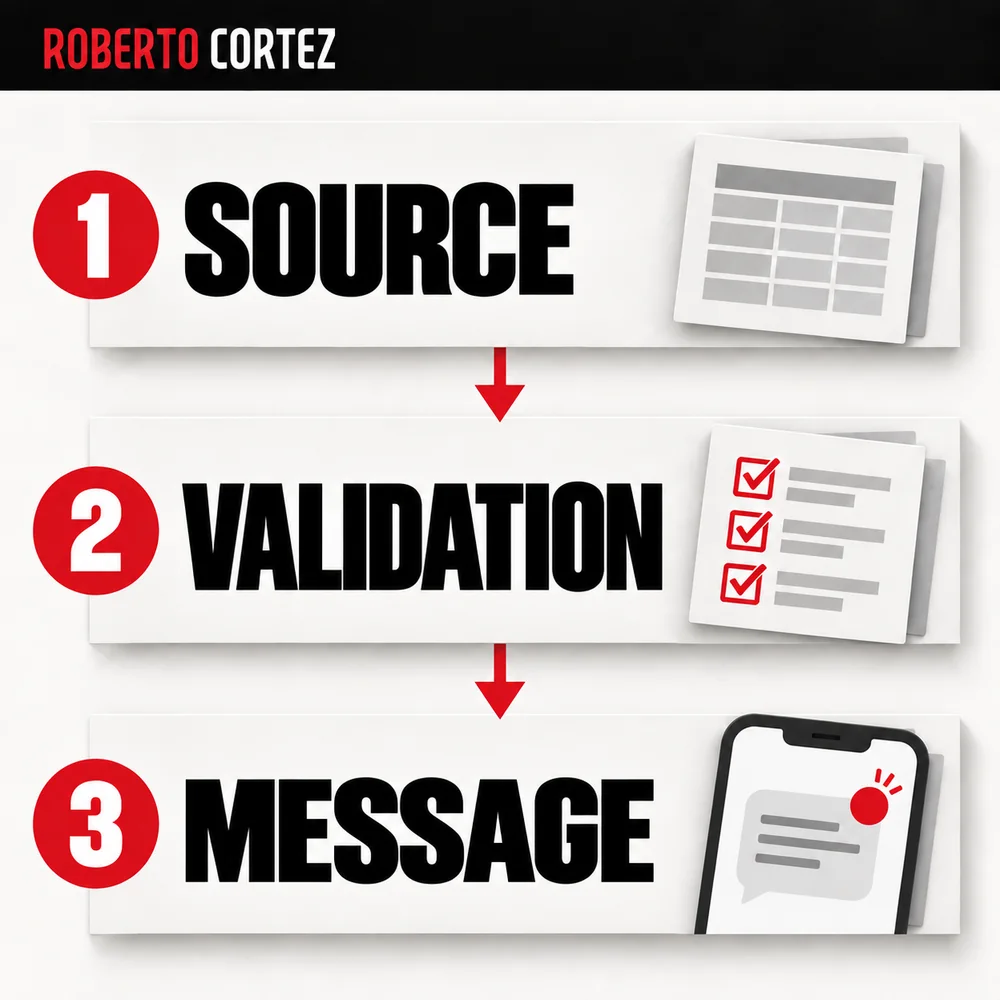
Choose a representative question and check what each option delivers, how much work it requires and which limits it presents. Compare data coverage, ease of review and responsibility for maintenance. The best choice for that process meets the need with an operation the team can understand, check and maintain throughout its use in the business.
You can begin with CSV as a verifiable reference and then assess integrated collection for the same period. If totals differ, investigate filters, definitions and extraction timing before deciding that one option is superior. The discrepancy is a question to resolve, rather than automatic proof of either option's quality.
Record behaviour when information is missing too. A solution that identifies a collection failure may be more useful than one that always produces a persuasive summary. Deliberately include that situation in the test so the team knows how to recognise it when it appears during actual work.
You do not need to choose one route for everything. A recurring integration can coexist with occasional exports for review. Keep clear which collection was used in each analysis and avoid mixing versions without identifying the change, especially when the result will support a commercial decision or be shared with others.
Finish the selection with continuity criteria. Define who reviews the data, when the connection should be reassessed and the alternative if it stops working. CSV, API and MCP then become options assessed through the work they enable, rather than names compared according to how new or impressive they sound.