
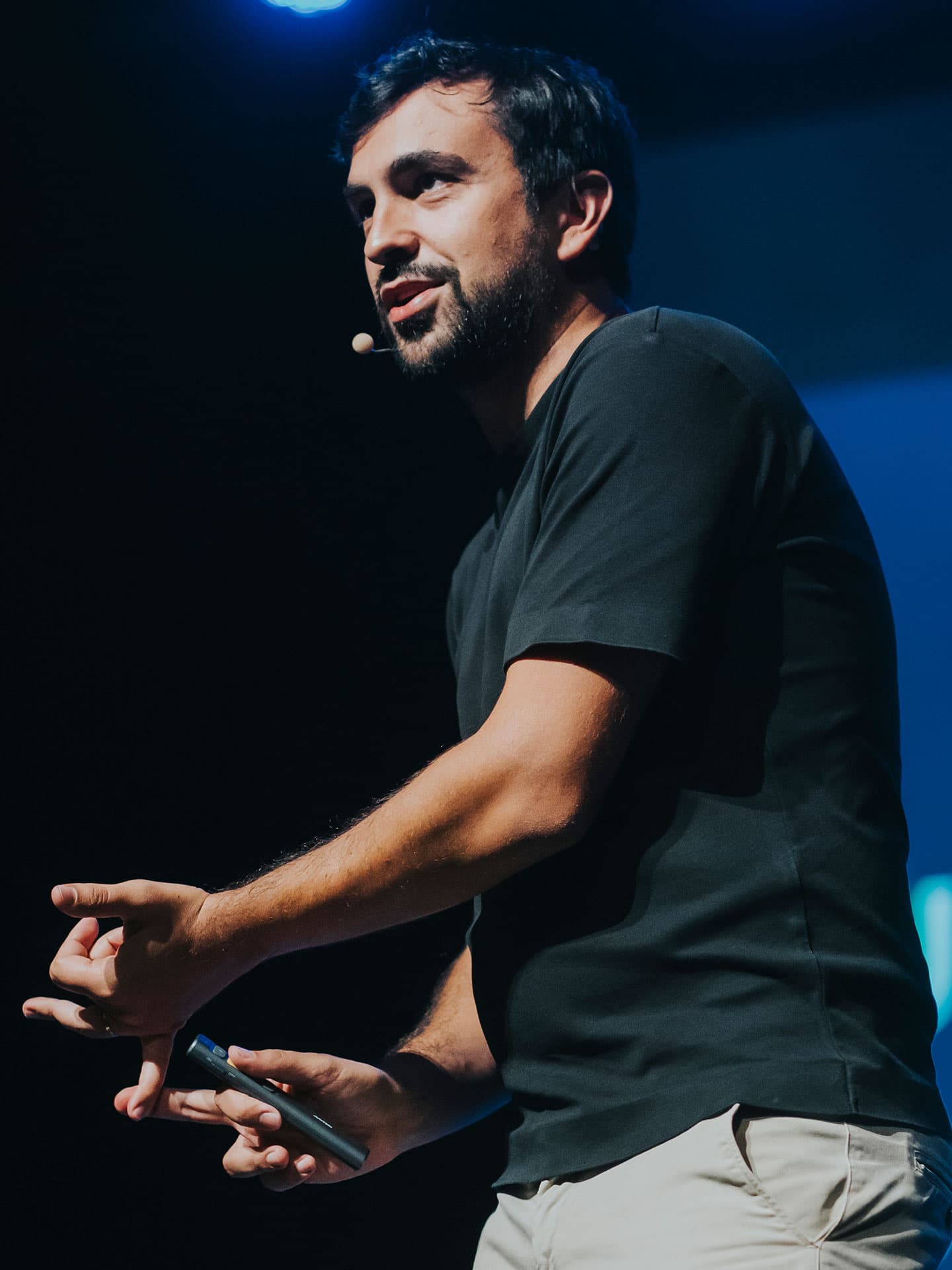
What I want the audience to take away
I want people to leave a talk with criteria for examining their own work and choosing a next step. That requires explaining decisions, examples and limits clearly. A demonstration becomes useful when the audience understands the problem it addresses, the preparation involved and what still requires human judgement before putting it into practice.
Someone may arrive wanting to discover tools and leave thinking about a process they had never questioned. A team leader may recognise excessive dependence on one person. A marketing professional may realise that the quality of an analysis depends on data they are not yet collecting correctly.
These learning outcomes are worth discussing when preparing an event. If the aim is to introduce managers to AI, we choose accessible examples and business decisions. If the audience already builds automations, we can explore rules, integrations and testing in greater depth. The same presentation cannot address all these audiences with equal depth.
Through Sextas Ímpares on YouTube, you can see how I explain things: I show what I build, share decisions and discuss attempts that needed correction. The lessons help organisers understand my approach, although a talk must respect the time and context of its particular event. The videos are in Portuguese.
AI topics I can bring to your event
The topics I work on connect artificial intelligence with business growth, process organisation and practical learning. The choice depends on the question the event wants to help answer. We can discuss leadership, changes in marketing work or the care needed when building and using tools tailored to a company’s own processes.
One topic is the move from individual experiments to organised work within a business. People may use an assistant to write but still be unsure how to turn that use into a process the team understands. The discussion can explore task selection, information quality and reviewing what has been produced.
Another is the role of people working in advertising and sales. In lesson #151, about the traffic manager in the AI era, I showed campaign monitoring tools and rules. The subject opens a discussion about decisions still needing commercial context and how to use time released by automation.
I can also discuss building applications with AI, drawing on demonstrations such as lesson #145 about Claude Code. For a business audience, the value lies in understanding what needs planning and checking. My article about planning an application before coding develops that sequence in more detail.
Adapt the discussion to business owners, teams and professionals
Preparation should consider the audience’s AI experience, decision-making responsibilities and type of work. Business owners, sales teams and technical professionals may hear the same example with different questions in mind. Knowing who will attend helps us choose vocabulary, depth and the space needed for questions that connect the topic to their circumstances.
With business owners, it matters how a technical possibility relates to time, cost, delivery capacity and responsibility. A quick-looking demonstration may involve maintenance, integration with existing tools and training. Explaining that work helps people assess opportunities with more information before making commitments that affect the business.
With marketing and sales teams, we can examine the connection between a campaign, an enquiry, a conversation and a decision. Automatic classification only helps if the person receiving the opportunity understands its context. My article about turning leads into customers in a service business connects tools with commercial follow-up and helps prepare this topic.
With technically experienced audiences, there is room to examine permissions, failures, incomplete data and testing. I still like to keep the business objective present. If the organisation wants participants to build a solution during the session, consider AI training for businesses, with the preparation and time that practical work needs.
My background as a speaker and educator
I have spoken at more than 50 events and have worked in digital since 2012. My background combines advertising, building businesses and teaching. Today I also bring experience applying AI and automation to projects, keeping those discussions connected to the decisions business owners and teams actually need to make in their work.
The public references collected on this website show a selection of that background. They include events such as Marketing Masters and Afiliados Brasil, alongside meetings and conferences in different fields. The Media Kit provides biographies, photographs and references for organisers and journalists. The documented list is a selection, without claiming to identify every appearance individually.
I created AdSummit and wrote Aprende a vender com Marketing Digital in 2022. The book already discussed algorithms and AI in advertising, arguing that automation should free time for strategy and analysis. The current applications I demonstrate add other problems and tools to that background.
I have had more than 30,000 students throughout my training work. Laboratório da IA offers weekly classes and support with Roberto Cortez, the team and guests to work on questions and projects involving AI, automation and online business. That contact helps me understand questions and difficulties from people applying these ideas. You can read more about my experience on the About page.
Prepare demonstrations and audience questions
A demonstration should be chosen for what it helps explain and prepared for the event’s conditions. Equipment, internet access and available time need checking. When sensitive information is involved, I use examples prepared for the context; the aim is to make the reasoning visible without exposing private information about people or businesses.
Before the session, it makes sense to agree whether there will be a live demonstration, recorded examples or a presentation. Each format has different needs. A live demonstration can show the process clearly, but it requires room for failure and an alternative that allows the explanation to continue if a platform stops responding.
Questions also deserve space in the session design. Collecting some beforehand can reveal what concerns the audience most: effects on work, security, investment or difficulty getting started. We can then choose examples that support discussion of those concerns. That helps avoid a presentation full of possibilities that misses participants’ actual questions.
For a panel, interview or podcast, preparation can begin with two or three decisions we want to explore at length. I prefer having context about the audience and the direction of the conversation. The book, articles and lessons help organisers identify subjects and prepare more specific questions about my business perspective.
How to send an invitation and what happens next
To send an invitation, introduce the event, audience, preferred topic and possible dates. Include the location, format and time reserved for the contribution. My commercial team reviews the request and gets in touch to clarify availability, conditions and details before any commitment is made about participation in the event or session.
If you have not chosen the exact topic, explain what you would like the audience to understand better. It helps to know the sector, expected audience size and whether participants already use AI. If there is a wider programme, share it so we can understand how the contribution relates to the other sessions.
Recording, streaming, later use of the video and publicity materials should be agreed during that conversation. The website captures the need; pricing and conditions are presented afterwards. Completing the form does not automatically confirm attendance, and there is no single price covering every possible format or request.
You can request a talk, panel, training session, interview or podcast appearance through the invitations page. If you are looking for help with implementation inside a company, explore AI consulting and SpartAds services. Providing that initial context helps direct the request towards the appropriate conversation.