
My first freelance experience exposed the difference
During my first experience as a freelancer, I thought technical knowledge would be enough to run the business. I was unprepared for selling and managing it. Recognising that distinction mattered: knowing how to use a tool did not resolve the commercial and operational decisions that had become my responsibility to make.
I knew how to run campaigns, but struggled to present the service and decide what to charge. At one point, I received just over sixty euros for two months of work. That episode belongs to my early freelance experience; it is neither a pricing reference nor a description of my current activity.
The knowledge I brought from working within one business did not guarantee that I could repeat its results at any company. The offer, demand and circumstances changed with each client. The tool covered part of the work, while I needed to understand a much broader collection of decisions affecting the result.
My conclusion is not that specialists should give up on entrepreneurship. It is that they should recognise the change in responsibility before assuming technical experience equals business preparation. You can keep improving your delivery skills while acknowledging that sales and management require attention in their own right.
Selling starts by making the value understandable
A prospective client needs to understand the problem you can address, under which conditions and why your work deserves consideration. Knowing features does not guarantee that clarity. Commercial competence includes asking questions, assessing whether a request is suitable and presenting a proposal that connects the service to the specific need being discussed.
In a hypothetical example, an automation specialist might spend a meeting listing tools, integrations and agents. The business owner might be worried about enquiries going unanswered. For the conversation to become useful, the specialist needs to understand the process and explain which part of that difficulty the work could improve.
This also helps identify unsuitable requests. Information may be missing, the team may not have agreed on its process, or the proposed service may not be the most useful intervention. Selling with judgement includes recognising when a proposal needs to change or when conditions are insufficient to make a commitment.
The discussion of selling services in a competitive market develops this clarity further. Your presentation should help the client understand the choice without relying on technical names or guaranteed results. Delivery expertise supports the proposal, but the proposal still needs to explain the value of the work.
A price must reflect the work you have accepted
Setting a price requires understanding the complete service, agreed conditions and resources needed to deliver it. Visible execution time is only one part of that commitment. Preparation, communication, revisions and follow-up also consume capacity, even when they do not appear as separate lines in the proposal the client receives from you.
In the automation example, building the first workflow might be relatively quick. Discovering how data arrives, clarifying exceptions and supporting its use might require more work. If those activities were promised, they form part of the responsibility accepted and need to be included when assessing the service's economics.
Distinguish what is included from what requires another decision. A client may request reasonable changes, but the team needs to know whether they belong to the original scope or represent additional work. An unclear boundary turns each conversation into an improvised negotiation, affecting deadlines and the capacity available for other commitments.
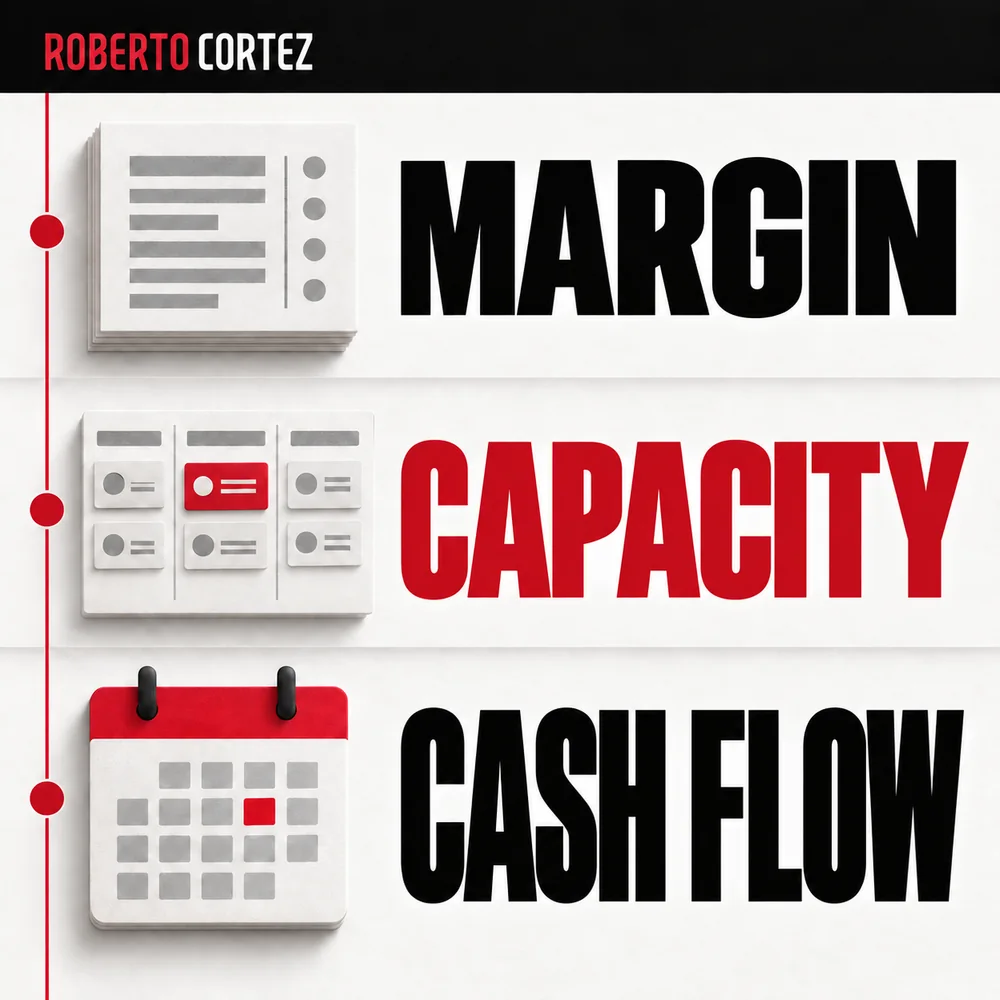
Also distinguish contracted revenue from money already received and what remains after costs. Accepted proposals do not mean cash is available to meet every commitment. Management needs to track these differences instead of using total sales as an automatic answer to every decision concerning the business and its resources.
Organising delivery is a responsibility of its own
Managing delivery involves setting priorities, tracking commitments and ensuring each person understands the expected result. Being the team's strongest practitioner does not ensure you know how to coordinate its work. Taking responsibility for management means creating conditions for consistent delivery, including when you are not personally supervising every step of the process.
Someone may solve difficult tasks while struggling to explain criteria, allocate work or give feedback. That does not diminish their technical competence. It shows that management is a different responsibility and deserves preparation, rather than being treated as an automatic consequence of performing technical work to a high standard.
Before delegating, identify what can be explained and reviewed by another person. Define the outcome, decision boundaries and points where you will provide support. Handing over a task list without context can leave every uncertainty concentrated on you, even after someone becomes available to help with the workload.
Growing a business while preserving margins and team capacity requires examining these dependencies. Hiring may add capacity, but it also creates onboarding and coordination needs. The decision should respond to the work that needs covering and the actual conditions for distributing responsibility across the people involved.
Assess business outcomes beyond technical execution
A deliverable can be technically correct and remain far from the commercial objective that justified the investment. Management needs to examine that relationship, distinguishing execution quality, use and business effects. Define what you expect to observe and which information will help you decide whether to maintain, adjust or stop an initiative.
A campaign can be configured correctly while attracting enquiries that do not match the offer. An automation can complete every step while producing information nobody uses. In both cases, checking technical operation alone leaves an important part of the original decision unanswered, even when the work itself functions as specified.
This does not mean attributing every outcome to the specialist or expecting control over factors outside their authority. It means making responsibilities and dependencies explicit. If a sale depends on the sales team's response, that condition needs to remain visible in the analysis instead of disappearing when results are reviewed.
This is one reason I expect business judgement from a paid media specialist. Tool knowledge remains necessary, but it should enable better questions and interpretation of events. In business management, the same discipline helps prevent decisions based solely on how much work has been completed rather than its consequences.
Choose one management capability to develop now
You do not need to master every field before starting, but you do need to recognise where insufficient preparation is limiting the business. Choose a recurring decision you currently make with too little information. Learn enough to understand it, seek help where necessary and check whether your practical decisions have actually improved.
If selling is difficult, review how you identify needs and present proposals. If you sell work you cannot deliver on the agreed terms, examine scope, capacity and price. If everything depends on you, begin with one specific responsibility that can be documented and handed over with an appropriate level of support.
A course or tool may help that learning if it addresses the difficulty you have identified. Accumulating more technical knowledge in your strongest field can feel comfortable while leaving the business decision unresolved. The criterion is whether you can apply what you learn to the work that actually needs to improve.
My first freelance experience made this distinction very clear to me. When considering the move from specialist to business owner today, I would start by identifying the new responsibilities and the preparation each requires. Technical expertise remains a valuable foundation; running the business means learning to make decisions beyond it.
To prepare your next step, explore Individual business mentoring with Roberto Cortez.