

Saying you work with a particular kind of company can help people identify you initially. However, two companies in the same sector may have very different needs, resources and processes. If specialisation ends with the sector's name, you still have to discover everything again and explain your service in generic terms.
What belongs in the definition of a niche?
The definition should combine a recognisable recipient, a specific problem and conditions that allow you to address it. Add the business stage when it changes the need or implementation capacity. A useful description helps clients recognise themselves and helps your team decide whether it should accept a particular project being considered.
In a hypothetical example, working with service businesses is a broad description. Working with service businesses receiving enquiries through several channels and needing to organise their handoff to sales identifies a process. You still need to confirm volume, available people and who can change the way work is organised.
This definition does not have to fit entirely into an introductory sentence. Some conditions belong in sales qualification because they require conversation and information the client may not immediately know. What matters is having criteria behind the public message, rather than expecting a headline to do every job.
Selling services in a competitive market becomes clearer when you can explain that fit. Specialisation should help people understand the service without implying you are the only person capable of addressing the problem they face.
To prepare your next step, explore Positioning and value proposition.
Do you have to choose a sector?
You can specialise in a sector, problem, process or business stage, provided the choice reflects similar needs and reusable knowledge. A sector is useful when its context significantly changes delivery. When the problem crosses several activities, a process specialisation may describe the work you know how to do more accurately than an industry label.
If buying behaviour, operating requirements and decisions differ substantially between sectors, knowing one well can reduce basic questions and framing mistakes. However, knowing its vocabulary is different from having enough experience to accept any project within that activity, regardless of its scale or complexity.
Process specialisation also needs boundaries. Organising enquiries in a small team is not necessarily equivalent to reorganising several departments with complex responsibilities. Similarity in the initial problem can conceal important differences in the work needed to resolve it and in the support required afterwards.
Choose the dimension that best explains your capability and verify the others during diagnosis. Avoid combining so many arbitrary conditions that only an imaginary company remains. The niche should let you recognise real demand as well as sound precise in a presentation to potential clients.
How do you assess whether there is room for the offer?
Assess whether people recognise the problem, are willing to seek help and can be reached through viable channels. Look for signs of decisions and available resources alongside favourable opinions. A specialisation can support a business only when demand is sufficient for the delivery capacity and costs you intend to take on.
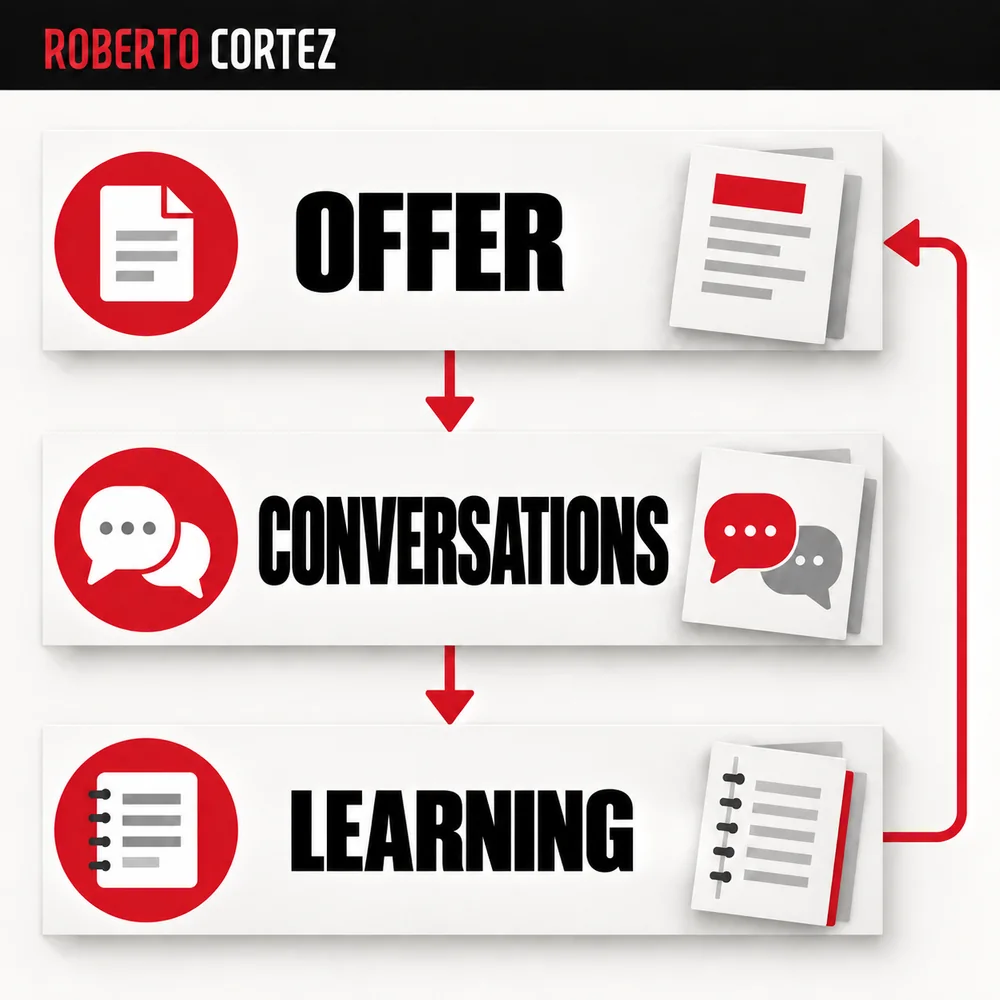
Conversations with potential clients can reveal how the problem appears, what they have tried and what prevents a change. Actual enquiries help distinguish general interest from a priority need. Do not turn a compliment about the idea into a forecast of contracts the business will win.
Observe alternatives too: internal work, another supplier, a tool or simply postponing action. Understanding what you compete with helps explain why your intervention makes sense. Competition does not invalidate a niche; it can indicate demand without proving there is profitable room for every provider entering it.
When starting a business with AI, this analysis should precede tool selection. A technical capability becomes an offer when a situation exists in which someone understands its value and can make use of it within their own business.
How does specialisation connect with delivery capacity?
Specialisation should reflect work you can perform, explain and support well. Identify the knowledge that repeats across projects and the parts still requiring adaptation. Being known for a problem does not remove the need for diagnosis or make every company in the same group a client with identical needs and working conditions.
In the enquiry-to-sales example, you can reuse questions, responsibility criteria and ways to check continuity. Tools, access and the team's pace may change from client to client. Reuse should save preparation while avoiding an unsuitable solution imposed merely because it worked in another setting.
You also need to know when to involve another capability or decline work. If an offer requires responsibility you cannot yet assume, narrow its scope or develop that capacity before promising it. An expert label cannot replace the actual conditions needed to deliver the service competently.
When rethinking a service with AI, review what can become faster and what still depends on your judgement. Specialisation may lie in decision quality and follow-up, even as performing some individual tasks becomes more accessible to other providers and clients.
What happens to services outside the main message?
Complementary services can remain available when they address needs consistent with the main offer and you can deliver them. They do not all need equal space in your communication. Explain the initial focus clearly and discuss additions for a concrete reason, without hiding limitations or implying capabilities your business does not actually have.
A company may present a main offer and perform complementary tasks required by a project. That differs from accepting every request that appears. The addition should relate to the problem and have clear conditions, preventing a defined service from becoming an endless collection of favours for the client.
When a request outside your focus is commercially attractive, assess the effort and effect on other clients. The decision need not rigidly obey your chosen label. It should be deliberate and avoid undermining the capacity that supports the specialisation you want to maintain in the business.
You can also direct enquiries to partners when they are better suited. The client receives an honest answer and you preserve focus. Building trust does not require personally solving every need that appears during the relationship, especially when somebody else can provide more appropriate help.
When should you adjust the niche definition?
Adjust the definition when conversations and projects reveal a clearer need, insufficient demand or costs incompatible with the offer. Keep an observation period that distinguishes an isolated case from a pattern. Revision should follow evidence about clients and delivery rather than the attraction of a new label that has become popular.
If suitable opportunities come from different activities but share a process, the problem may explain your focus better than the sector. If most enquiries require resources clients lack, review entry conditions or the proposal itself. If delivery requires deep adaptation every time, check what your specialisation really allows you to reuse.
Record the change in criteria and apply it to the next opportunities. You do not need to rebuild the whole brand after every lesson. You need a definition concrete enough to communicate and choose work, with room to improve as you understand the market and your own capabilities better.