
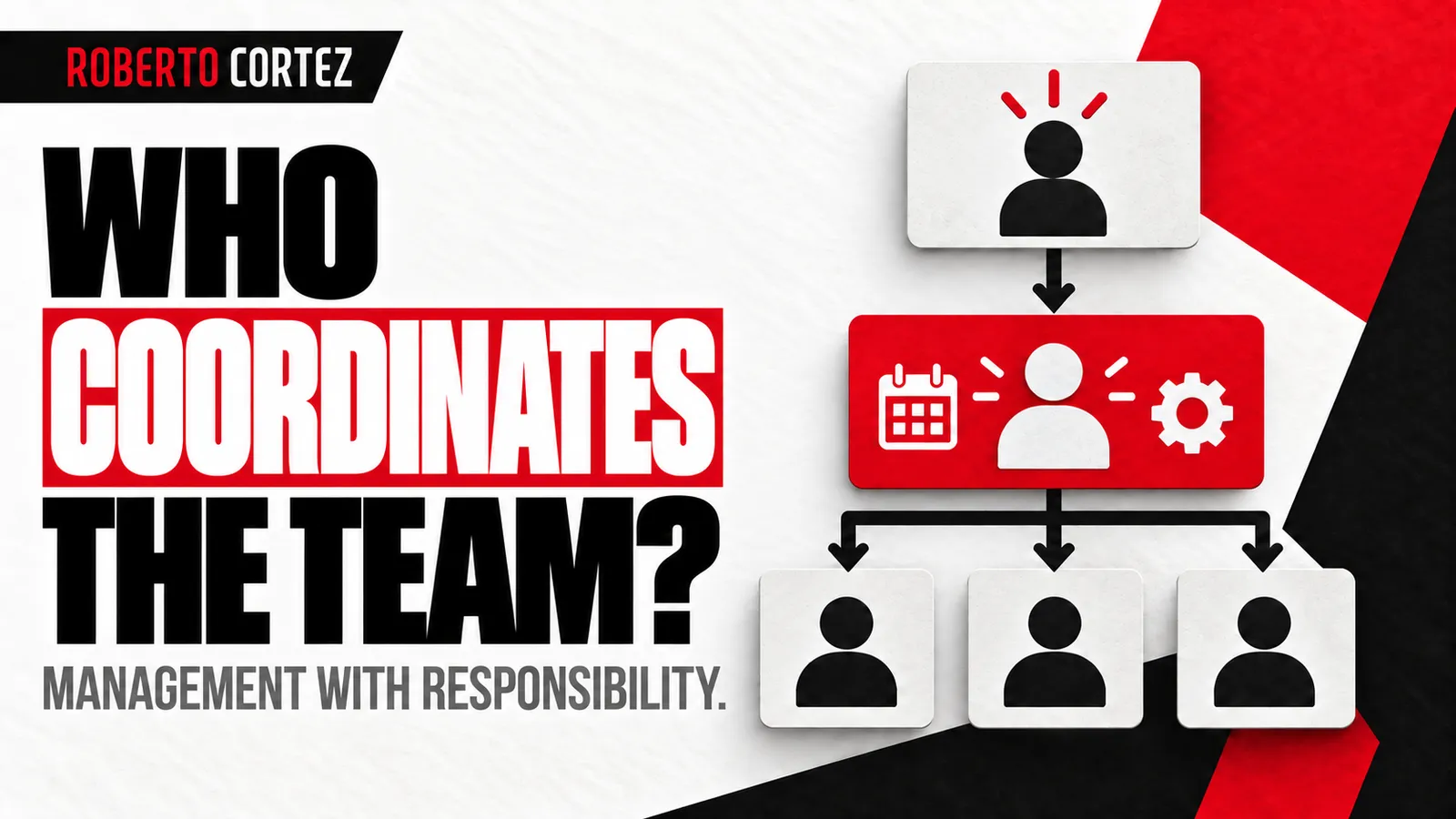
Identify management work that lacks an owner
Look for recurring decisions and coordination needs without an available owner to resolve them. Conflicting priorities, blocked deliveries and insufficient support may reveal that work. Before creating a management role, distinguish the need to manage people from isolated information gaps or a process that has simply not been defined clearly.
A small team can work on projects with many dependencies. A larger team may have stable responsibilities and enough independence to operate with less central coordination. The structure should respond to actual work instead of copying another company's organisation chart.
In a hypothetical example, two people need the same resource to meet different commitments. If nobody has authority to set the priority, both wait for the founder. When situations like this occupy a recurring part of the day, coordination work already exists even if it has no name on the chart.
Record these situations over a representative period: what required a decision, who waited and what happened as a result. The purpose is to reveal a responsibility rather than prove in advance that you need a manager. Observation may also show that clarifying a shared rule would have been sufficient.
To prepare your next step, explore Delegation and processes for small teams.
Understand what should leave the founder's schedule
A middle manager should take on specific decisions that no longer depend continuously on the founder. Identify those decisions and what the founder will do with the availability created. If every choice still goes to the same person, the new role adds a handover without resolving the concentration of responsibility.
In my own experience, I had to recognise that managing people and processes needed a responsibility of its own. Separating that management from my focus on marketing and sales was a decision about where I could contribute best. It was about more than wanting less work or changing a job title.
That distinction helps you examine the company more precisely. The founder can remain responsible for business direction while delegating daily team organisation. Doing so requires accepting that somebody else will make operational decisions within agreed limits, with enough information to take that responsibility seriously.
Examining decisions that recur every day helps separate rules that can be documented from choices requiring judgement. A manager does not need to receive every question. They need to own the questions for which continuing coordination and responsibility make sense.
Write down what the manager will decide
Define the manager's scope through decisions, outcomes and working relationships, with explicit boundaries. It may include allocating capacity, resolving priorities, monitoring quality and developing people. Also clarify the decisions retained by the founder or another role, so the team knows where to seek an answer without approaching several different owners.
In the hypothetical shared resource example, the manager can organise the schedule and resolve conflicts within existing commitments. Changing the scope sold or accepting a significant additional cost may need another approval. The boundary should be understandable to both the manager and the people doing the work.
Avoid describing the role merely as “making sure everything goes well”. That expectation is too broad to guide decisions or assess performance. Explain which deliveries the person monitors, what information they receive and which situations they must communicate before those situations become larger problems.
The logic of defining who approves each decision is useful here. If the manager owns a deadline but cannot order priorities, an essential condition is missing. Responsibility and authority need to be compatible for the role to function and for the team to understand the arrangement.
Assess management ability alongside technical competence
A technically strong person may be suited to management, but that ability needs separate assessment. The role involves organising other people's work, giving feedback and deciding between competing priorities. Check their interest in the responsibility and the conditions for learning, without treating promotion as an automatic consequence of good technical performance.
The strongest individual contributor may prefer to deepen their own work and support the team technically. Turning them into a manager without discussing the change can remove delivery capacity and create a responsibility they do not want. Recognising competence does not require every career progression to reach the same destination.
Observe behaviours related to management work. Can the person explain a priority, listen to information that contradicts their assumption and follow through on an agreement? Can they correct work without permanently taking over its execution? These questions bring assessment closer to the responsibility the role actually requires.
If potential exists but experience is missing, reserve support and time for learning. Do not add management to an already full delivery schedule and expect the person to do everything with unchanged availability. Identify work that will be reduced, redistributed or cease to depend on them.
Confirm that the business can sustain the role
Before creating the role, consider its cost, the time required for management and the impact on delivery capacity. An internal promotion may also require work redistribution or replacement of tasks. Connect that commitment to margins and cash availability, using the company's actual circumstances and scenarios with clearly stated assumptions.
There is no universal employee count that makes a management role economically appropriate. The volume and complexity of coordination matter, as does the ability to support the role. A company with substantial revenue can still lack sufficient margin to add structure sustainably.
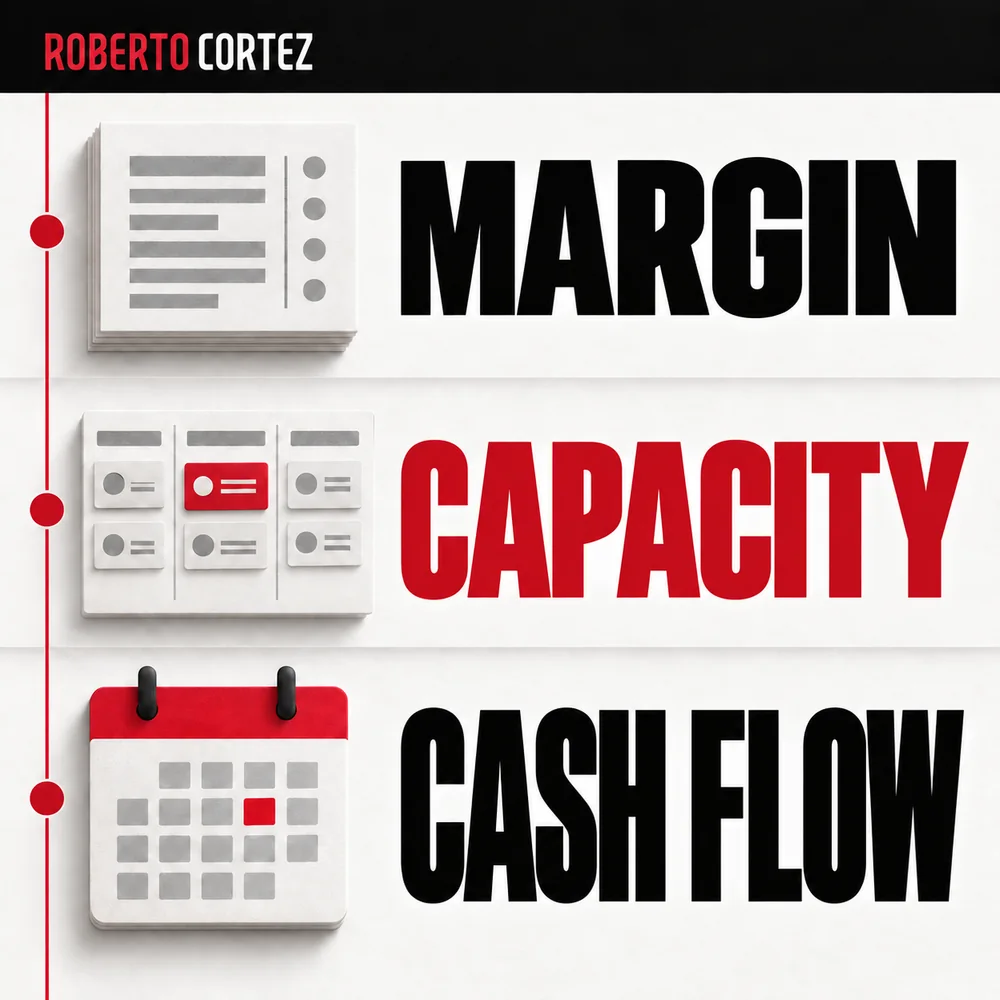
When considering growth with attention to margins and the team, account for the capacity the new arrangement might release and the capacity it consumes. A manager may reduce waiting and rework, but those effects need to be observed. Do not turn them into certain revenue before they exist.
Compare alternatives proportionate to the work identified. It may make sense to begin with a defined coordination responsibility, reserved time and clear decisions. The role still needs careful definition even if the work does not yet justify someone spending all their time on management.
Make the transition and review its effects
Introducing a manager requires communicating the responsibilities and decisions that now have a new owner. Define a review period and observe whether the team receives clearer answers and can move forward. Revisit the arrangement when the new role merely adds meetings or approvals without providing a useful contribution to the work.
Explain what changes, whom to approach and which decisions remain outside the manager's scope. The founder should reinforce that guidance through daily behaviour. If the team learns that it can always bypass the manager by seeking a second answer, formal authority becomes weaker.
During the first cycles, examine concrete cases instead of asking only for general impressions. Compare waiting, priority conflicts, delivery quality and availability to support people. Also check whether the founder has actually stopped being the mandatory point of approval for the decisions that were delegated.
I would create the role when I could describe necessary management work, a person capable of taking it on and sufficient authority to act. Then I would assess whether that combination improves how the team operates. The chart comes to represent a useful responsibility rather than a structure the business does not yet need.