

Look for a pattern before judging the relationship
A demanding week or difficult conversation is insufficient to conclude that a client harms the business. Look for repeated situations, identify their origin and review previous attempts to resolve them. Describe the pattern through observable behaviour and consequences, avoiding the mistake of turning an impression of exhaustion into a judgement about the person involved in the relationship.
Repeatedly changed deadlines, requests outside scope and contradictory instructions deserve examination. They may arise from poor client organisation, an unclear proposal or the team's own way of managing work. The origin changes which response makes sense to propose when discussing the future of the relationship.
Gather a few episodes with context: the request, decision taken and effect on delivery. You do not need an archive of every message to identify a pattern. You need enough examples to explain what repeats and why it has ceased to be an isolated exception.
Include what works in the relationship too. A client may create difficulty during a growth phase while remaining willing to adjust the process. If you seek only evidence confirming your wish to leave, you may miss a solution that preserves the work and addresses the cause of strain.
To prepare your next step, explore Customer retention and experience.
Calculate the account's actual workload
Compare client revenue with the effort needed to serve the account, including execution, coordination, review and exception handling. Separate directly associated costs from shared capacity consumed by the work. This helps assess the relationship's contribution without calling the amount remaining after only some expenses net profit or treating it as a complete picture of business performance.
A retainer may appear attractive while you count only planned tasks. Rework, additional meetings and founder involvement can substantially change that assessment. Record what happens over a representative period, distinguishing normal effort from an incident that should not be projected as a permanent part of the workload.
Identify expenses that exist solely because of the account too. A specific tool, external resource or integration with its own maintenance can disappear within company totals. Establish use and responsibility rather than assuming something already paid for has no future cost associated with keeping it in place.
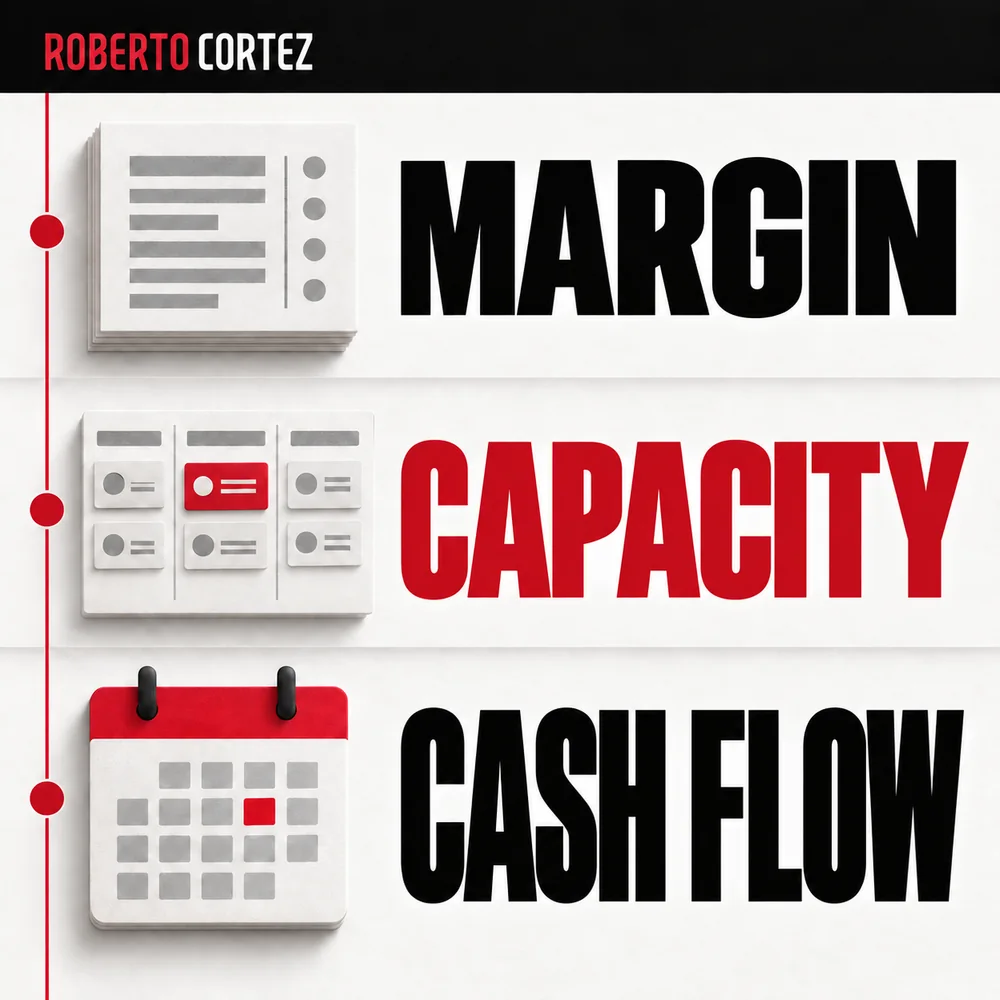
When assessing growth, margin and team capacity, avoid reducing the decision to revenue. The amount received matters, but it must be read alongside the work it occupies and the conditions of delivery. A large account can still require a serious review of its economics.
Listen to the team and identify effects on other deliveries
A relationship's impact also appears in interrupted work, planning difficulties and the way the team is treated. Ask for concrete situations and what would prevent repetition. Protecting people requires understanding the problem and taking decisions, rather than leaving each employee to negotiate limits alone when those limits belong to the company and should be supported by management.
I would rather lose a client than lose someone from the team because a working relationship has become unsustainable. That criterion does not mean every client demand is unfair. It means revenue does not make it acceptable to continually devalue people or ignore the relationship's effect on their work.
Ask the team to distinguish quality demands, poor organisation and disrespectful behaviour. A well-founded correction request may reveal our own failure. A pattern of personal attacks requires a different response, even if delivery also needs improvement and those shortcomings must be addressed by the team.
Observe what happens to other accounts when an urgent request arrives from that client. If the same people repeatedly interrupt existing commitments, the cost extends beyond the account being assessed. Consider those delays and the ability to continue serving the remaining clients with care and consistency.
First correct what depends on your organisation
Before attributing every difficulty to the client, review scope, request channels, approvals and the team's allocation of responsibilities. A relationship can improve when collaboration rules become clear and are followed. Define the change you want to test and when you will assess whether it reduced the specific problem that originally prompted the review of the account.
If the team accepts extra requests without explaining their impact, the client may have learned that this availability belongs to the service. Changing the habit requires a conversation about what is included and how additional work is decided. Simply starting to refuse without explaining the change will leave that expectation unresolved.
If the issue is instructions from several people, identify who consolidates the client's decision. If it is missing information, improve the request and response deadline. These changes require participation from both sides and someone who keeps the agreement active in day-to-day work after the initial discussion.
Service-client retention also involves resolving avoidable friction. However, an attempted correction needs criteria: which behaviour should change and which effect should be observed. Without that definition, “one more chance” can become indefinite repetition of the same situation rather than an actual attempt to improve it.
Choose between adjusting conditions and preparing a departure
Once you understand the cause and cost of the pattern, assess whether the relationship could continue with different scope, pricing, processes or dedicated capacity. Confirm whether the client wants and can participate in that change. If essential conditions remain incompatible, prepare a departure that respects existing work and the company's need to reorganise its own operation.
Raising the price may make sense when actual delivery requires more work than planned. It may be insufficient when the main difficulty concerns treatment of the team or uncontrolled changes in decisions. Match the response to the cause rather than using financial renegotiation as a universal solution for every problematic relationship.
Thinking about price, execution speed and responsibility helps separate effort from value. Here, also establish which additional responsibility was accepted and whether current conditions recognise it. A faster task does not automatically compensate for coordination that has become unpredictable across the account.
Consider dependence on the revenue without using it to postpone the decision indefinitely. If departure requires commercial preparation and team reorganisation, define and follow that work. Creating alternatives is management's responsibility; it should not be transferred to the people who experience the strain of the relationship every day.
Execute the decision and check what changes
Turn the decision into clear conditions, owners and follow-up, whether the relationship continues or ends. If there is a new agreement, check whether the pattern changes. If there is a departure, organise delivery, information and transition without abandoning commitments, so the company regains capacity responsibly and the team knows what will happen next in its work.
After renegotiation, assess more than whether the client accepted the new price. Observe whether requests became organised, revisions decreased and the team can plan. A commercial change may have been accepted without resolving the operational cause that originally led to the discussion about continuing the relationship.
After departure, follow the actual effect on the business. Freed capacity needs a use, and replacing the revenue may take time. The aim is to build a portfolio the team can serve with quality and respect, with economically sustainable relationships and decisions management can explain through the work and conditions involved.