

You can show an integration working, walk through several options and explain how you built the system. That may be useful to someone who needs to assess the implementation. But a sales meeting may also include someone still trying to understand what work changes, who takes responsibility and what they must provide to move forward.
The right detail depends on the question being assessed. A business owner may want to understand the architecture because that choice affects operations; a technical lead may first need to understand the process it will support. Do not decide the level of the conversation solely from the job title shown on the meeting invitation.
I will use a fictional case: a maintenance company is assessing a solution for tracking service requests. The demonstration uses simulated data and shows a request arriving, an owner being assigned, its status and any missing information. The aim is to observe how the presentation helps a decision, without treating this example as a real implementation or evidence of results.
Find the unanswered question before assuming disinterest
The most useful signal is the gap between the customer's question and what the demonstration is clarifying. If the same question returns after several screens, establish what remains unclear. Silence, few questions or a compliment do not, by themselves, show that the person is uninterested, understands the proposal or wants to buy what you are presenting.
In the maintenance example, the manager may ask who notices when a request has received no follow-up. If your response is to open the configuration of a connection between systems, you may have shown part of the mechanism without explaining responsibility. The question remains valid even if the integration works exactly as you expected it to.
Observe the substance of interventions, not just their frequency. Someone interrupting to confirm an exception may be assessing the solution seriously. Another person may watch the entire presentation without commenting because they still cannot connect it to the work they know and are unsure where to begin asking about that connection.
Instead of assigning an intention, return to the specific question: “You asked how a request without an owner is identified; has what I showed clarified that?” The answer gives you information for adjusting the demonstration. It also creates room to discover that the original question meant something different from the interpretation you initially made.
Avoid turning confirmation into a question that only invites agreement. “Is everything clear?” can receive a yes without revealing what was understood. Ask the person to identify the point they still need to assess or explain how that workflow relates to a recent situation experienced by their own team in its everyday work.
If the question belongs to an area not represented in the meeting, record who could clarify it. Do not prolong the demonstration to try to resolve through imagination a condition that depends on someone else. Recognising the dependency lets you prepare a more useful next conversation with the right participants and information available.
The first adjustment may be small: change the order, return to the result or show a different case. You do not need to abandon all your material because a question appeared. You need to understand which part of the presentation stopped responding to what the customer is trying to assess at that moment.
Define the decision the demonstration needs to support
Before opening the tool, agree what the person needs to be able to assess by the end. It might be suitability for a routine, the need for a limited trial or another team's involvement. That definition guides the chosen workflow and prevents a tour of every available feature without a connection to the possible next step.
In the fictional case, a reasonable decision might be whether it is worth testing request tracking with the responsible team. The demonstration should therefore help assess the workflow, required information and way of recognising pending items. It does not need to resolve every configuration choice to clarify that first step in evaluating the proposed solution.
If the customer does not yet know where follow-up is being lost, the situation may need to be understood before presenting a solution. The diagnosis before proposing a marketing plan develops that care in starting from reality and open questions. Applied here, it avoids building a persuasive demonstration for a problem that has not yet been confirmed.
Also ask what the person cannot decide alone. They may need to involve the system's users, whoever manages access or whoever approves resources. The presentation should make these dependencies understandable, instead of treating one participant's interest as though it represented a decision by the entire company to proceed with the proposed work.
Prepare a sentence that keeps the conversation focused: today we will observe how a request is tracked and identify what would need confirmation before trying this workflow. The sentence does not promise a purchase at the end of the meeting. It defines a question you can return to when detail begins to displace assessment.
This preparation also limits the material needed. If a feature does not help answer the agreed question or reveal a relevant condition, it can wait for another time. Keeping it aside does not mean concealing information; it means being able to explain why each part shown deserves the time of the people attending.
Remain willing to change the question when new information appears. The customer may already have resolved follow-up and be concerned about a different difficulty. In that case, confirm the change and assess whether the material remains suitable before insisting on a workflow you had prepared to address a different need from the current one.
Show a recognisable workflow from start to usable result
Choose a situation the customer can relate to their work and follow it from arrival to a usable result. Explain who participates, what information appears and which decision comes next. A coherent workflow makes the proposal understandable without requiring the person to reconstruct the process from a collection of features presented separately throughout the demonstration.
For the fictional maintenance company, start with the incoming request and identify the available data. Then show how an owner appears, where missing information is visible and what happens before someone considers the request properly tracked. The customer can discuss the process rather than merely watch a sequence of clicks across a set of screens.
Avoid jumping between panels without explaining the connection. Whoever built the solution knows why each screen changes, but someone seeing it for the first time can lose the link between the original request and its final status. A short sentence explaining what changed often helps more than adding another detail about the interface itself.
Show the result through the use it enables. If the manager can find unassigned requests, explain what they can do with that information and what will still depend on a human decision. The demonstration should make the proposed change understandable while preserving a clear view of the tasks the system does not perform.
The work of explaining the benefit of an AI service without selling a list of tools helps connect mechanism and usefulness. In this meeting, apply that care to each transition in the workflow. Whenever you introduce a detail, make visible the question about use that this detail helps the customer understand and assess.
Include a relevant exception if it helps evaluate the process. A request with insufficient information can show where the team must intervene and how it recognises the pending issue. You do not need to simulate every possible failure in an initial conversation, but avoid choosing a case that suggests independence which has not been demonstrated.
If the presentation becomes lengthy, return to the main workflow and identify what remains pending for analysis. This organisation preserves continuity without removing questions. The person should be able to connect the beginning, the change observed and the next responsibility, even when some details need a separate session with the people able to assess them.
Explain what was demonstrated and what still needs confirmation
Distinguish behaviour observed under demonstration conditions from what still depends on adaptation or testing in the company. Identify simulated data, manual preparation and limits relevant to the decision. This separation allows the presented possibility to be assessed without confusing a controlled workflow with a solution already ready for every situation encountered in the customer's daily operation.
In the example, the requests were prepared for the presentation and did not come from the company's real channels. Make that clear when introducing the case. Showing a request appearing on screen does not, by itself, prove that a connection to the customer's current system already exists or has been authorised for use.
If you prepared a field manually, explain that intervention when it affects interpretation of the result. The person needs to know what happened before the visible part. Otherwise, they may attribute a capability to the system that depended on your preparation in that example and has not yet been provided for normal use.
It also matters to distinguish a produced result from a completed action. A prepared notification may still await review; an assigned request may not yet have been handled. Use statuses and descriptions that match what actually happened, avoiding a presentation that turns an intermediate stage into a promise that the whole task has been resolved.
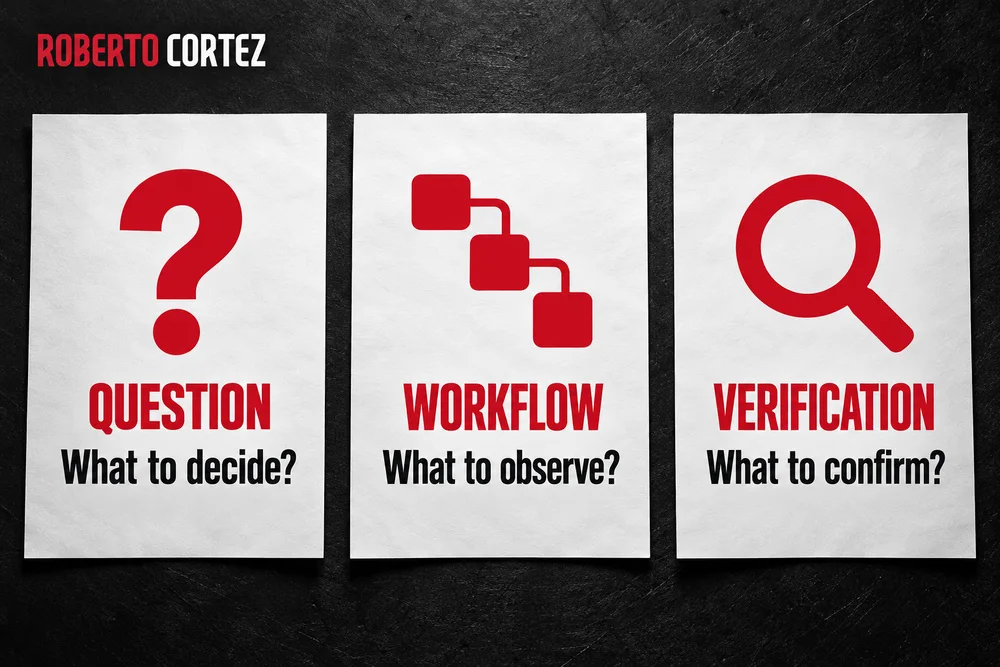
You do not need to interrupt every sentence with a qualification. Identify important conditions where they change the interpretation and collect the outstanding points at the end. Clarity comes from relevant information presented at the right time, rather than a generic list of cautions disconnected from what the customer has just been shown.
When evidence is missing, name the verification required. You might need to examine real data, confirm access or observe use by another person. A specific uncertainty with a way to assess it helps the decision more than simply answering that everything will be possible during implementation, without knowing what that would require.
Make room for technical validation without hiding relevant conditions
Organise technical assessment around the questions and people responsible for answering them. Some details can be explored separately, but conditions affecting feasibility, effort or responsibility must remain visible in the business conversation. Separating levels of detail does not justify presenting a simple solution while concealing dependencies that could change the customer's decision about adopting it.
In the fictional case, you may need to establish whether the current tool permits the intended connection. The decision maker does not have to follow every verification step to understand that the connection is unconfirmed. That condition can affect scope, effort and the sequence of any trial the company might consider undertaking.
A technical question can reveal a commercial or operational concern. “Where is the data stored?” may relate to who can access it, service continuity or an internal requirement. Before answering with component names, clarify what the person needs to decide using that information and who should validate it within the company's assessment process.
If someone capable of evaluating the implementation is present, involve them in the conversation. Agree when deeper examination makes sense and which materials need to be consulted. Do not automatically postpone an important question because it is technical, or require everyone to follow details that do not change the decision currently being considered.
Record questions needing subsequent work with a responsible person and an identifiable output. “Look at the technical side” is too broad to guide follow-up. It is clearer to specify which connection needs confirmation, what information will be examined and how the outcome will return to the business decision that depends on it.
The procedure for testing an automation before handing it to the team explores the move from a presented possibility to validating the work. A sales demonstration can justify that stage without replacing it. The next commitment should match the available evidence and the conditions that still need to be verified before further progress.
By the end of this part, participants should distinguish detail unnecessary at that moment from an essential condition still unresolved. The former can wait without undermining assessment. The latter needs to be recorded and resolved before the decision that depends on it, even if a separate technical conversation is the right place to do that.
Return to the conversation when detail stops helping
If the presentation has stopped answering the agreed question, interrupt the sequence and establish where the uncertainty lies. Summarise what has already been observed and choose the next detail from the customer's response. Returning this way lets you correct the workflow without assuming that the person has lost interest or simply needs more explanation from you.
Imagine you are showing update rules and the customer again asks who follows up requests without a response. You can close the configuration and return to the view where the responsible person identifies pending items. Explain the connection between what was happening behind the scenes and the action the team will need to take.
If the question remains, ask which part of the example does not match the company's reality. Requests might not have a single owner, or may need to pass through several people. Showing the same sequence faster will not resolve that difference; you need to understand whether the workflow you presented is suitable for the situation.
Avoid using technical knowledge to fill every silence. Leave space for the person to relate what they saw to their own work and formulate a question. That space does not guarantee interest, but it allows information to emerge that a continuous presentation might prevent from entering the conversation while you are demonstrating the tool.
You can also acknowledge that a part was explored too deeply too soon. A simple correction followed by a concrete question is enough to return to the relevant subject. You do not need to justify the detour at length or add another demonstration merely to show that you had more material prepared for the meeting.
If the question requires a capability unavailable in the example, say what you can show and what you need to prepare. An incomplete result should not be disguised through explanations of future possibilities. Record the need so you can decide whether it merits another verification and whether it fits within the work being proposed.
The purpose of returning to the conversation is to restore shared assessment. The customer should understand what is being discussed, and you should understand what remains unclear. When that connection exists, technical detail can re-enter with a specific purpose instead of occupying the discussion simply because it was next in the sequence you had prepared.
Finish with what became clear and the next verification
End by separating what participants understood, what the demonstration showed and what still needs validation. Confirm the outstanding question, who can answer it and the agreed next step. A compliment about the system does not replace that record or demonstrate authorisation to implement, access data or make a commitment on behalf of the potential customer.
For the fictional maintenance company, the outcome might be recognising value in request tracking while the connection to its current tool remains unresolved. The next step could be involving whoever manages that tool and examining the necessary conditions. This represents an assessment to continue, without turning interest into a confirmed purchase or implementation agreement.
Ask for confirmation of your summary and leave room to correct your interpretation. The person may have understood the workflow yet conclude that the need is not a priority. That answer also keeps the sales process consistent with the real decision instead of accumulating positive demonstrations without any defined continuation beyond the meeting.
The guide to the B2B sales process helps connect this conversation to subsequent stages. Each transition should correspond to observable information or commitment, with someone responsible for follow-up. The demonstration becomes useful when it clarifies a question in that sequence and leaves visible what remains necessary before the opportunity can move forward.
Prepare subsequent material according to the question recorded. If a dependency needs confirmation, send the agreed information for that assessment; if the process needs discussion with the team, organise the workflow and points to examine. Repeating every feature in a lengthy document can recreate the distance you have just corrected during the meeting.
I would assess the demonstration through the decision it made clearer, including the decision not to proceed yet. Showing knowledge is useful when it makes working conditions, limits and possibilities understandable. The presentation has served its purpose when the customer can explain what they saw, what it could change and what still needs confirmation before choosing.