
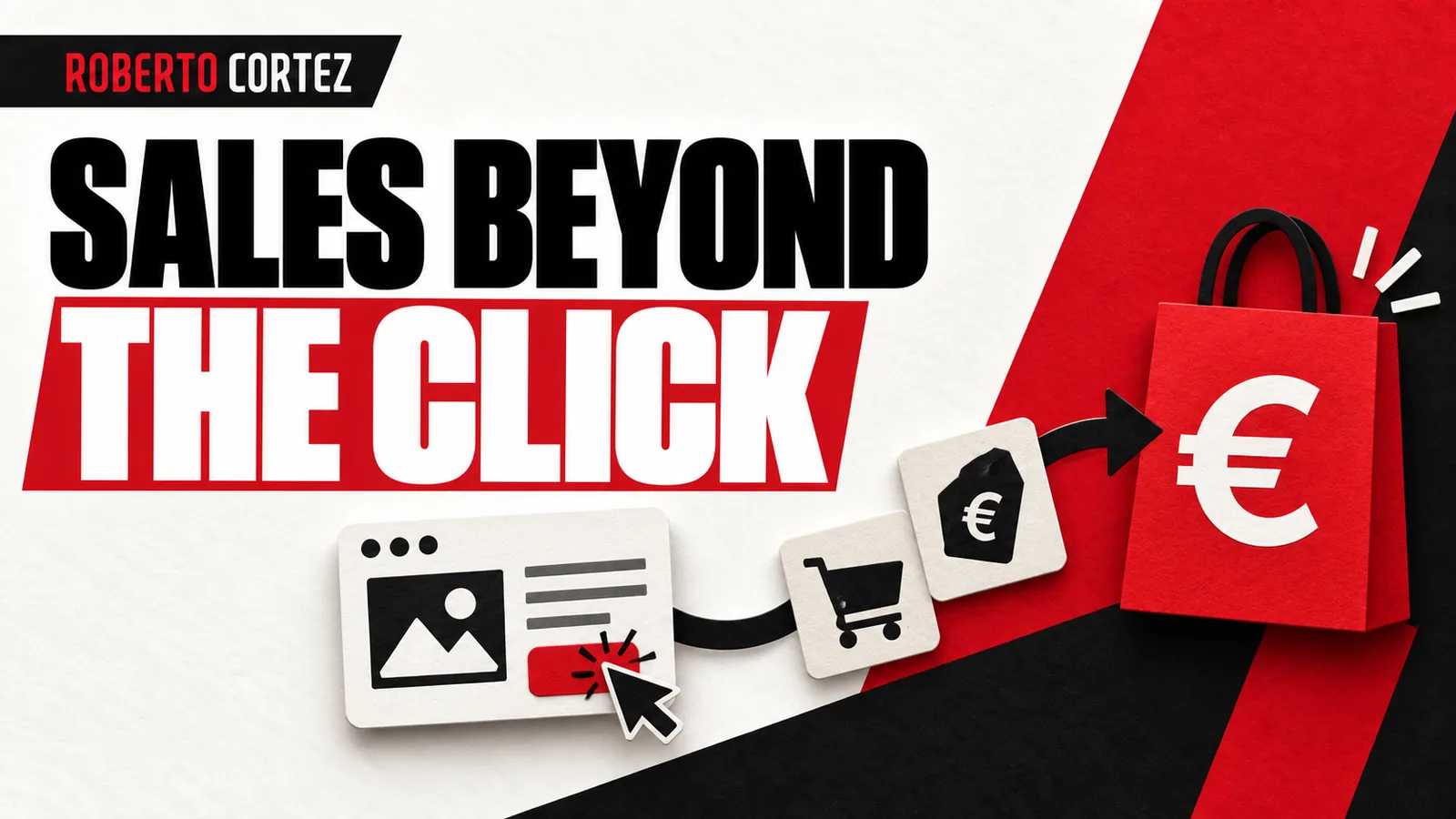
The mistake of judging each product in isolation
Not every line in a spreadsheet needs to be profitable on its own. What needs to make money is the business as a whole. Cutting based only on each product's isolated profitability often removes the very foundation supporting the rest of the funnel, even when it looks like a rational decision at the time.
In one of the Sextas Ímpares sessions dedicated to managing large ad budgets, I talked about this: the business should make money as a whole, and that is why a good share of the budget can go to entry products, easier to sell, even if they are not the most directly profitable. These products carry lower sales friction, either because they are cheaper or because they represent an obvious entry opportunity for someone who does not yet know the brand.
The common mistake I describe in the class is looking simply at the profitability of each product and cutting based on that number alone, without considering how much that same product helps sell others. That ignores the fact that a product might not sell much on its own, yet still justify the budget it occupies because it prepares other, more profitable sales.
Direct sales and assisted sales
The distinction is easy to state and hard to apply day to day: a campaign might not generate many direct sales of the product it advertises, but it can still assist sales of other products that never appear linked to it in a platform report. That makes it look worse than it actually is for the business overall.
If I have that product or service on the shelf, it can make me sell much more of other items, even without showing up as directly responsible for those sales. This requires looking at attribution models and understanding whether there are products or campaigns that don't sell much themselves but assist sales of others. A low-friction entry ad might be introducing customers who, weeks later, buy something else through direct traffic or branded search.
If I evaluate only the direct ROAS of that entry campaign, it looks weak and becomes a natural candidate for cutting. If I look at the full customer journey, I realize it might be what sustains the rest of the funnel, even without generating isolated profit.
How to build a lead funnel that the sales team can actually work
How to convert more leads into clients in a service business
Don't become a hostage of a single platform's report
A practical consequence of this reasoning is avoiding decisions based only on the number shown inside the ads manager for that campaign, ignoring its real effect on the business as a whole. Cutting by that isolated metric risks trimming fat in the wrong place and weakening new customer flow.
If I cut based only on that isolated metric, I risk cutting fat in the wrong place and weakening the flow of new customers into the business. I use the expression of not becoming a hostage of the spreadsheet: you need to understand the business as a whole and what helps it grow more broadly, not just the isolated performance of each line in the report.
In practice, this means comparing the campaign's result against the total sales volume of the business, not only the number attributed to it by the ad platform. If, after reducing or pausing a top-of-funnel campaign, I see sales of other products drop a few weeks later, that is a strong signal that the campaign was assisting sales, even with a modest direct return.
A personal example about diminishing returns
I shared in the class an example connected to this type of reasoning, though applied to the question of diminishing returns rather than to attribution between different products. It shows how the same care about looking at numbers over time, rather than in isolation, applies to distinct budget decisions.
When advertising my book, I was investing around 100 euros a day during an early acquisition phase. Over time, with the audience already worked through and more exposed to the offer, I achieved exactly the same sales investing only 10 euros a day. Doubling or tripling that budget past that point did not generate a proportional return; it was simply spending money without gaining enough additional sales to justify that extra spend.
The underlying logic is similar to what applies to attribution between products: it is not enough to look at an isolated campaign number on a given day, you need to compare different budget levels over time before drawing conclusions.
How to think about a test before cutting
If I suspect a campaign is assisting sales of other products, a sensible way to test that hypothesis is to reduce spend gradually instead of switching it off immediately, and observe what happens to the total sales volume of the business over the following weeks.
This is a common-sense recommendation, not a fixed formula I detailed in the class: the goal is to give yourself enough time and data to understand whether the drop you see after cutting actually stems from that decision, or whether it is simply coincidental with some other variable. It's worth stressing that spending more on a campaign does not by itself prove it is statistically significant; only repeated budget adjustments compared over time give that kind of evidence, and even then with limits.
It is also worth reviewing the customer path whenever site or billing analytics allow it, to check how many touchpoints existed before the final purchase. This helps confirm whether a given campaign frequently appears among the first steps of customers who later buy higher-value products, even if the platform never gives it credit for that role.
What this demands from whoever manages the budget
Managing larger budgets gives room to diversify products, audiences, and creatives, but it also increases the temptation to cut everything that looks unprofitable at first glance, without first investigating the real effect of that campaign on the rest of the business.
A media buyer with real business sense is not just someone executing buttons; they need to understand attribution models and figure out where the actual waste is before cutting any line of the budget. If the business cannot say where sales actually come from, that is exactly where to start: mapping the journey before deciding what to switch off, instead of trusting only the number the platform itself displays.
This way of thinking applies both to those managing large budgets and to those working with more modest amounts. Scale changes how much data is available, but it does not change the central question: is this campaign really wasting money, or is it preparing sales that show up somewhere else in the report?
Source note
This reflection comes from a class I recorded for Sextas Ímpares #91, on how to manage large ad budgets, available at youtube.com/watch?v=SrJOaLpJG28. The point about not looking only at the profitability of each isolated product comes up around 12:00, the distinction between direct and assisted sales around 13:40, and the expression about not becoming a hostage of the spreadsheet around 14:50.