
I value studying in connection with practice. Knowing an idea helps, but understanding where it applies and experimenting thoughtfully are a different part of the work. Entering a programme with an objective makes it easier to choose what deserves attention and recognise the questions that need support.
That does not mean expecting every course to produce immediate sales. Training can help you learn foundations, make better decisions or prepare a project. Your assessment should match the objective you chose and the actual conditions in which you will be working.

Define the decision or task you want to improve
Before comparing programmes, write down what you need to be able to do and why it matters to the business. A concrete need helps you assess the suitability of the content, level and exercises. If the objective remains too broad, break it down until you find an initial application you can observe and discuss.
“Learning marketing” can mean very different tasks. Understanding a report so you can discuss it with your team requires a different path from learning to set up a campaign. Both needs are valid, but they should not be assessed using the same list of tools or the same type of exercise.
In a hypothetical example, someone wants to reduce dependence on scattered messages when tracking sales enquiries. Their first application might be defining enquiry stages and creating a record the team can use. That description helps establish whether the training addresses the process or merely demonstrates a particular software tool.
For someone starting a business with AI, the choice should also reflect the project's stage. Identifying a need, testing an offer and organising operations raise different questions. Training becomes easier to assess when you know which of those questions you are trying to answer at the present moment.
Check whether the programme matches your starting point
Suitable training needs to connect what you already know with what you want to learn. Check the prerequisites, resources needed and expected work. A programme can be good yet sit at a level you cannot follow, or repeat content you already apply without addressing the difficulty that led you to search for training.
Read the objectives and look for examples of what participants will do. A module name may be too broad to clarify whether you will analyse a case, build an exercise or simply explore concepts. If that information is missing, a concrete question to the provider can prevent incompatible expectations later.
Distinguish strategic learning from operational execution too. A business owner may need criteria for assessing decisions and delegating more effectively. The person carrying out a task needs to practise the steps and recognise possible errors. A course designed for one of those objectives is not automatically sufficient for the other.
With AI, the question of using the technology in business beyond the chatbot helps define what you expect to apply. Check whether exercises resemble your work and whether the necessary access is available. Do not confuse following a demonstration with having the conditions to maintain an implementation yourself.
Reserve capacity to apply learning during the programme
The time required includes attending, preparing exercises, experimenting and reviewing what did not work. Before committing, identify where that work fits into your week and who needs to participate. If application depends on data, access or other people's decisions, treat those conditions as part of the learning plan rather than leaving them unresolved.
In a hypothetical example, a programme involves building a tracking dashboard. The participant can attend the sessions but cannot obtain the company's data. The obstacle may lie in preparing the application rather than understanding the content. Recognising it early allows the exercise to be adjusted or a test dataset to be prepared.
There is no universal ratio of study hours to practice hours that resolves every situation. Unfamiliar foundations may require more preparation; a familiar tool may allow earlier experimentation. What matters is not postponing all application to an unspecified future while continuing to collect more materials, videos and notes without using them.
When learning involves a team, agree who will test, who can authorise changes and who will follow up questions. Reserve an exercise small enough to complete and close enough to actual work to be useful. The first result can be an understood, documented process, even before anything changes in production.
Look for a way to receive and use feedback
Feedback is useful when it helps you understand what needs to change in a concrete attempt. Check what support exists and how to submit questions or exercises. Then bring context, what you tried and the result observed, so the conversation can improve the next attempt instead of remaining a general assessment of your work.
Access to a community, a session or a question channel does not mean receiving the same kind of support. Understand the format, its limits and how it fits your need. A conceptual question may be addressed differently from a detailed review of a project that has several connected problems.
You also have a role in that process. Simply saying “it does not work” leaves information missing. Show the objective, the conditions of the exercise and the point at which the outcome differed from what you expected, using test data when real business information should not be shared with others.
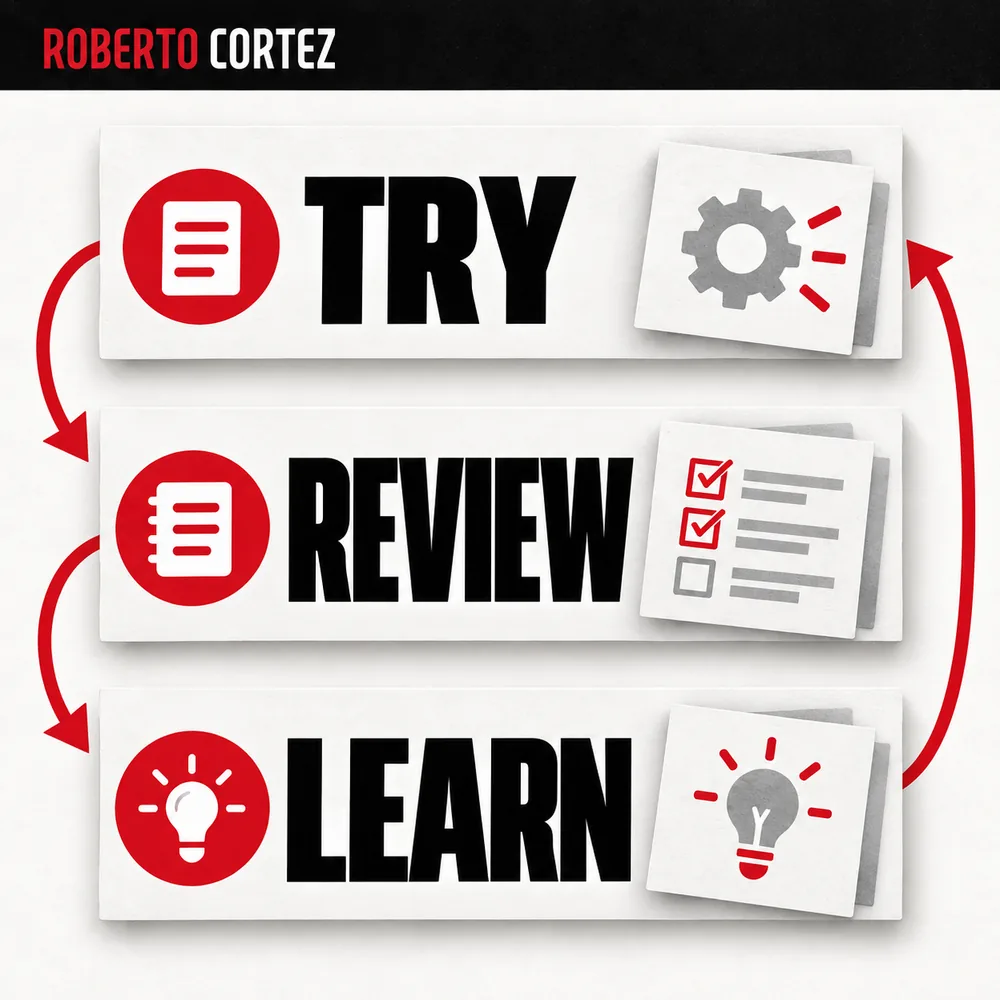
Keep the guidance you receive and check whether you applied it. If the difficulty remains, bring that new evidence to the next conversation. Support becomes a continuous process when you can show what changed between attempts, rather than relying solely on the impression that the session made everything clearer.
Assess progress without inventing a promise of returns
Compare what you can do with your starting point and the objective you defined. Observe execution quality, independence and the errors you now recognise. Commercial outcomes can matter, but depend on other conditions; distinguish the skill acquired, the application completed and the effect you still need to observe in the business over time.
In a hypothetical example, someone learns to organise campaign data and can produce a consistent report. That is progress in the task. It does not yet prove the training increased sales: that conclusion would require observing decisions, implementation and outcomes while considering what else changed during the same period of work.
Include the investment of money and time, without turning an estimated benefit into a realised result. Relate the decision to margin, team capacity and growing the business. A programme that requires more execution than you can make available may not be the best choice at that particular time.
Testimonials can help you understand experiences, but do not replace assessment of your own need. Check which programme, edition and context they concern. Another person's result does not demonstrate what will happen to you, and an earlier experience should not be presented as evidence for a different offer or programme.
At the end, choose the next step based on work completed. It may involve further practice, clarifying a missing foundation or seeking complementary training with a specific objective. The decision improves when you know what you can already apply, rather than selecting another programme simply because you finished the previous one.
To prepare your next step, explore AI and business mentoring.