
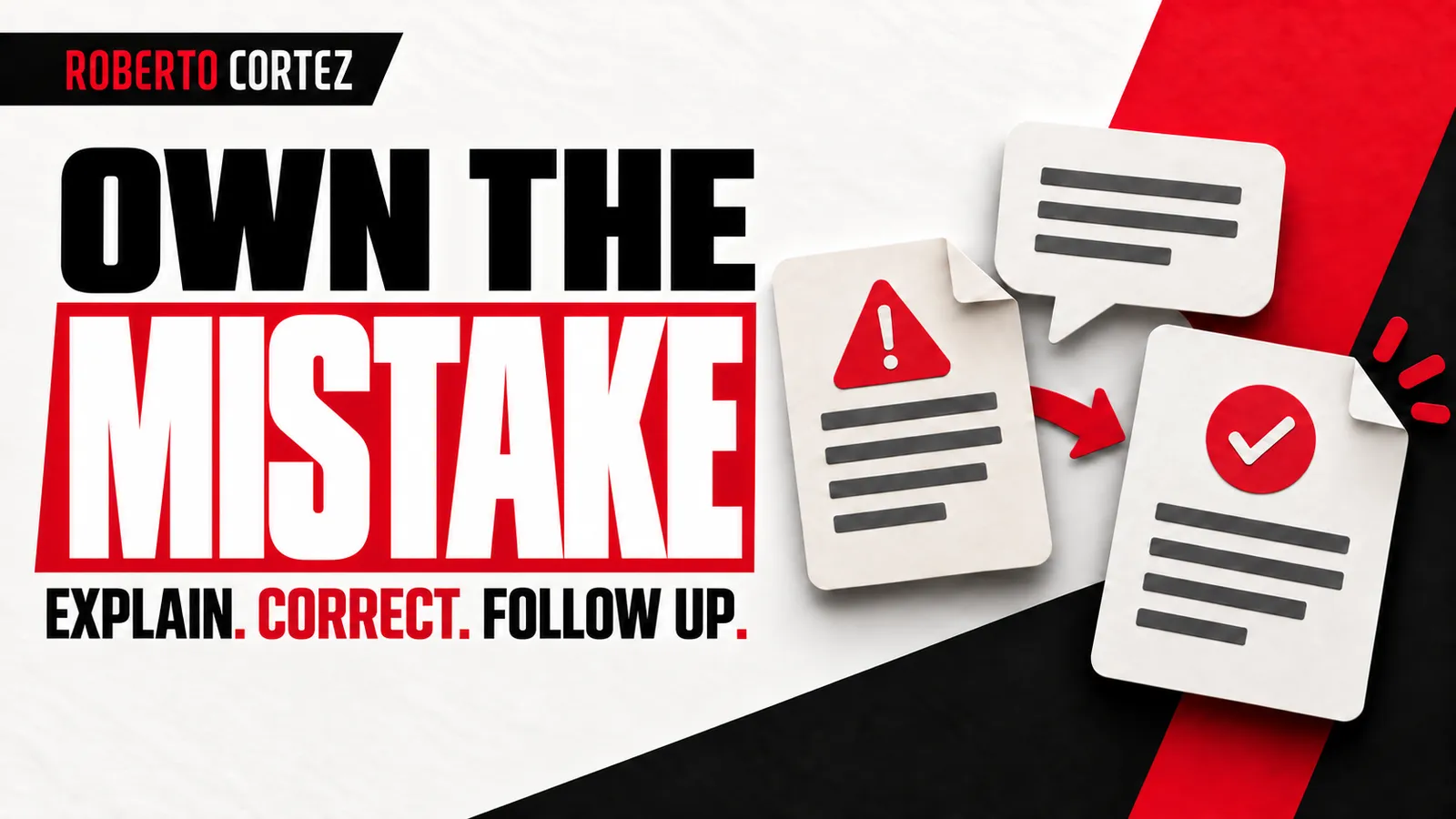
Establish what happened and stop it from repeating
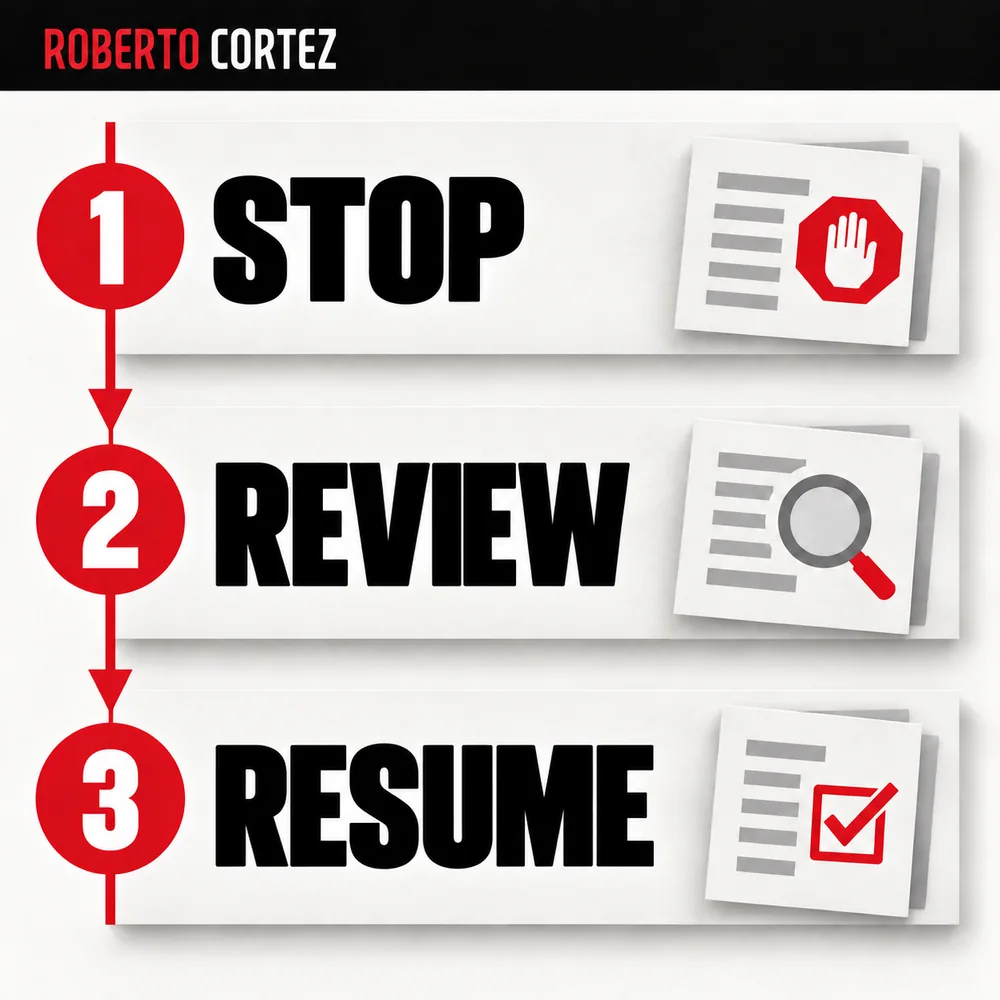
Before explaining the mistake, gather the essential facts and check whether the action that caused it is still happening. Stop anything that could repeat the problem within your responsibility, and preserve the records needed to understand the situation. This first intervention should reduce exposure without erasing information or creating further changes that are difficult to track.
Imagine a hypothetical case in which a commercial message was sent with an incorrect condition. The first task is to prevent further sends of that version and identify what was actually sent. Correcting the source file alone does not change what recipients have already received.
The client needs to know whether the problem is contained and what that means. You may have stopped the action without yet knowing every consequence. Explain that distinction so that a technical interruption is not presented as the complete resolution of the incident.
Involve whoever can decide on the correction too. Defining who approves each action in a project helps prevent several people from trying to fix the same mistake in incompatible ways. A quick response needs enough coordination to avoid increasing the confusion.
To prepare your next step, explore Customer retention and experience.
Say what you know without filling gaps with assumptions
The first communication should separate the observed fact, confirmed impact and matters still being checked. Use language the client understands and identify uncertainties that could change the response. You do not need to wait for the complete explanation before informing them, but avoid conclusions that the investigation does not yet support at that stage.
“We found an incorrect version in the message sent” differs from “nobody was affected”. The second statement requires confirmation about receipt and consequences. If you do not have that information, explain what you are checking and how you will communicate the conclusion once it is available.
Avoid concealing the situation behind vague expressions such as “a minor issue occurred”. Assess the scale through what happened, rather than the discomfort of whoever communicates it. A concrete description allows the client to understand whether they need to take action on their side.
Equally, do not present the worst possible scenario as though it has already happened. If you are still confirming the extent, describe that uncertainty precisely. The message is useful when it makes the situation understandable, including the limits of what is known at that particular moment.
Accept your part and propose a concrete response
Accepting responsibility means identifying the failure that belongs to you and explaining how you will act on it. An apology has substance when accompanied by a correction, an owner and a way to verify the outcome. Assess consequences with the client without replacing that assessment with promises you do not yet know you can fulfil.
I believe mistakes in our execution should be acknowledged, even when doing so costs the service provider money. I have previously configured advertising expenditure above the intended amount. The criterion I take from that experience is to face the consequence and address the remedy instead of trying to hide what happened.
That position does not require announcing a solution before understanding the impact. You may need to correct a deliverable, redo work or discuss compensation appropriate to the case. Explain your proposal and what remains to be confirmed, keeping responsibility visible throughout the process of resolving the incident.
Do not use an employee's name to distance yourself from the failure in front of the client. Internal investigation may need to establish how the decision was made, but the commercial relationship requires a response from the team. Whoever communicates should be able to follow the correction through to completion.
Give the client room to explain the impact
After presenting the facts, ask how the mistake affected the client's operation and what additional information they have. Your team may understand the technical failure without knowing every practical consequence. Listening to that perspective helps adjust the correction and prevents you from closing the matter solely on the basis of what you can observe yourself.
In the incorrect-message example, the client may have received questions the delivery team has not seen. They may also need to coordinate a response with other people in the company. That information changes how the situation should be resolved, even when the origin of the mistake is already known.
Listening does not mean immediately agreeing with every interpretation. If there is disagreement about what happened, return to the records and clarify each point. The aim is to build a shared understanding of the facts without turning the conversation into a dispute about who is entitled to be dissatisfied.
Retention in a service business also depends on how difficult moments are handled. Transparent communication allows clients to assess your response. It does not guarantee that they will want to continue, because the seriousness of the mistake and the history of the relationship matter too.
Schedule the next contact and honour it
End the communication with a defined next update, even if the correction remains incomplete. State who is following the matter, which information will be sought and when you will speak again. If there is insufficient news at that time, communicate the actual status and next step rather than allowing silence to replace the commitment made.
A deadline for an update differs from a deadline for resolution. You can commit to confirming the analysis at a particular time without promising that every consequence will have been addressed. That distinction provides the client with predictability while the team continues working on the incident.
Choose one person to bring together its current status. If each contact sends a partial version, the client may receive contradictory messages and need further clarification. A factual synthesis reduces that effort without preventing contributions from people who hold important information about what happened.
A dashboard of clients needing attention can help keep the agreed follow-up visible. The record should identify an action and an owner, rather than merely a colour or risk note. The tool is useful only if someone uses that information to honour the next contact.
Close the correction with evidence and a process change
The mistake is operationally closed when the correction has been verified, the client has received relevant information and outstanding tasks are identified. Record what will change to reduce the possibility of repetition too. Learning should result in an observable change rather than ending with a generic recommendation that the team be more careful in future.
If the failure arose from ambiguous approval, the approval record may need changing. If it resulted from the wrong version, review how the ready-to-use file is identified. The measure chosen should address the observed cause and remain simple enough to keep being applied in everyday work.
The client does not need every internal detail. They need to understand what was corrected, what remains unresolved and what will change in subsequent work. Preserving the relationship starts with providing that clarity and fulfilling the agreement, even when the conversation itself is difficult to have.