

Receiving payment every month can make business planning more predictable. For the client, however, the question remains what justifies continuing to pay. If the answer depends only on the seller's financial preference, the need that supports the relationship still has to be found.
What need justifies an ongoing relationship?
Look for work that becomes necessary again, decisions requiring support or a clearly defined ongoing responsibility. Frequency should follow the client's activity and the service provided. A task performed only once may justify a project, while changes, maintenance or learning over time may justify a different model of support throughout the relationship with that client.
In a hypothetical example, creating a page for an offer is a deliverable with a beginning and an end. Following up on enquiries, analysing difficulties and testing improvements may require later work. That support only deserves a retainer if there is enough activity and a real decision about how to use the information gathered.
Do not add meetings just to fill the monthly calendar. A conversation can help decide priorities, but it does not replace execution or prove value simply by existing. If no decisions, work or responsibility justify continuity, offer a one-off intervention or a review at defined moments.
Client retention in a service business starts with this fit. Maintaining a healthy relationship is harder when the sale created a recurring obligation for a need that has already been resolved.
To prepare your next step, explore Recurring revenue businesses.
What should the client understand they are paying for?
The client should understand whether they are paying for recurring deliverables, support, reserved capacity or an explicit combination of these elements. Each creates different expectations about availability and workload. Explain what happens during a quiet period and when requests exceed the planned volume, so that the monthly fee is not interpreted as unlimited access to the team.
A support retainer may include regular analysis, discussion of priorities and intervention within an agreed scope. Another may reserve availability to respond to certain situations. Do not use the same vague description for such different commitments, because the way the service is evaluated will also differ.
If availability forms part of the value, describe the conditions under which it exists. Clarify channels, request types and how responses are organised without promising a permanent presence the team cannot provide. The client should be able to connect that reserved capacity to a need of their own.
When rethinking services with AI, the effort of execution may change. Review the proposal through usefulness, responsibility and actual costs, without assuming a faster task automatically makes any monthly fee justifiable.
How do you assess whether the retainer is sustainable for the provider?
Compare expected revenue with the work required, delivery costs and the capacity being committed. Include coordination, revisions and busier periods rather than looking only at the most visible execution time. Predictable monthly revenue can still fund an unsustainable service if the commitment grows without corresponding attention to the team's capacity or to the agreed price.
In a hypothetical example, several clients concentrate requests in the same week. Average monthly hours may look comfortable while hiding a capacity problem. Observe how work is distributed and set priorities that can be fulfilled when several needs arise at the same time.
The cost of starting the relationship, gathering information and preparing operations also matters. If continuity is short, that initial effort may weigh more heavily than expected. Consider that cost without assuming every client will stay for a period that has not yet been observed.
When calculating how much you can pay for a lead, avoid treating future monthly fees as already received. If you use retention scenarios, identify the assumptions and associated costs; accumulated revenue is neither margin nor profit available for acquisition.
How do you show value when the work becomes less visible?
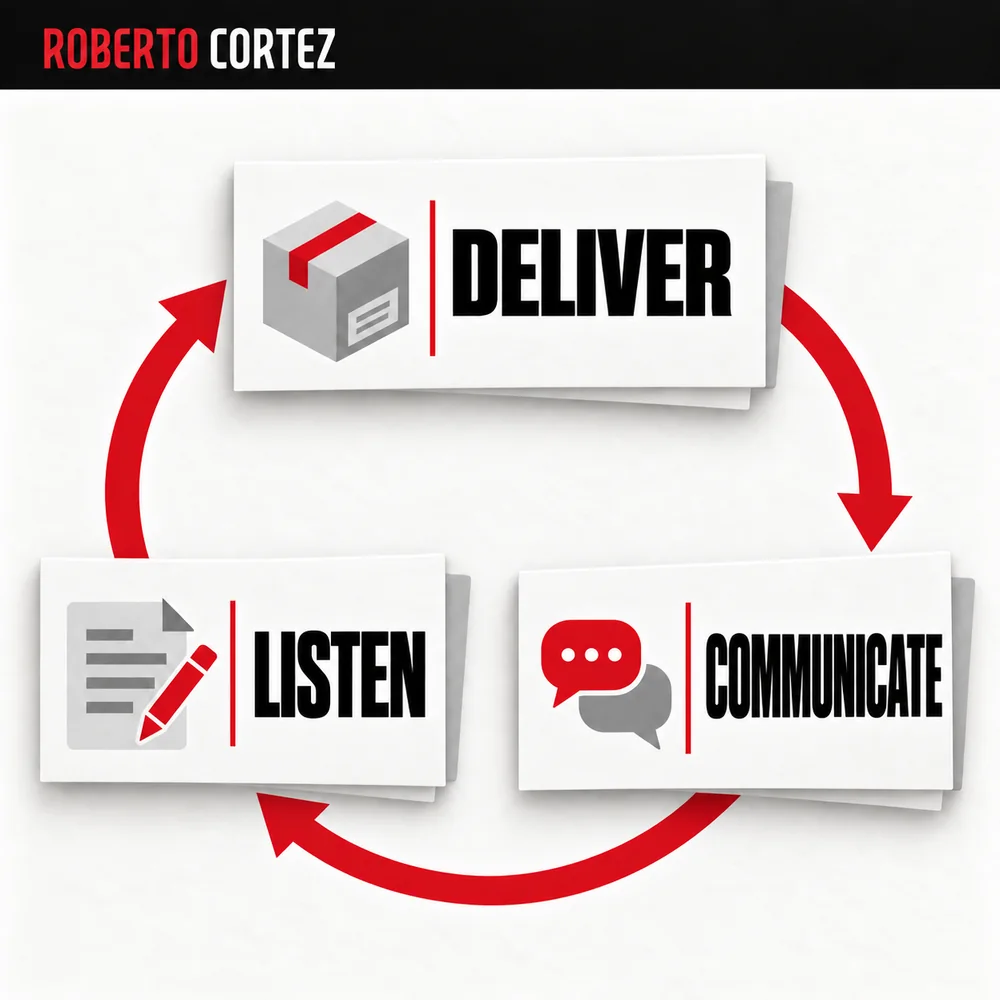
Make decisions, interventions and learning visible, connecting them to the need that justified the service. Avoid filling reports with activity that has no consequence for the client. When prevention or availability is involved, explain the commitment fulfilled and its boundaries, without attributing outcomes to an intervention when the available information cannot demonstrate that connection with confidence.
A report can identify an observed problem, what changed and what still needs confirmation. If nothing required intervention, explain which checks were performed and whether the frequency remains appropriate. Do not invent prevented incidents to make it appear there was more work than actually took place.
Communication should also make dependencies clear. An improvement proposal awaiting approval is not an implemented change. Distinguish what your team completed, what depends on the client and what did not proceed because information or priority was missing.
Support becomes useful when it helps people decide. If reports repeat without learning or relevant action, review the scope and frequency. The intervention may need changing, the commitment may need reducing or the relationship may no longer need the same model.
When should you review or end a retainer?
Review the retainer when the need, workload or delivery capacity changes materially. Agree moments to assess whether the commitment remains appropriate and how changes will be discussed. The desire to preserve recurring revenue should not prevent a clear conversation about a service that has lost usefulness or no longer corresponds to what both parties originally agreed.
A client may build an internal team, change priorities or stop using an important part of the support. This does not mean the previous relationship failed. It may mean the need evolved and another form of collaboration now makes more sense.
If there is dissatisfaction, try to distinguish a correctable failure from a persistent mismatch. Take responsibility for your own mistakes and present a concrete solution where one exists. Do not treat renewal as proof of satisfaction without listening to the person who continues to pay.
Conditions for renewal, changes and departure should be understood before work starts and revisited when necessary. The commercial objective is to enable informed decisions and an organised transition while respecting the agreement. Artificially making departure difficult does not replace a service that continues to deserve being chosen.
How do you choose between a retainer and a one-off project?
Choose the model that best matches the duration and recurrence of the need, the responsibility accepted and how delivery will be assessed. A one-off project may be sufficient when the work has a defined endpoint. A retainer requires a reason to continue after the first delivery, supported by capacity and criteria both sides can understand and follow.
Before proposing the monthly fee, describe what happens after the first period and why it remains useful. If the explanation amounts to repeating a task without a confirmed need, review the offer. Recurring billing does not, by itself, create a recurring need.
Record the scope, dependencies and signs that should trigger a review. Then observe the work and listen to the client throughout the relationship. A sustainable retainer needs to make sense both to the person paying and to the provider reserving time and responsibility to fulfil it.