

Look at what the project contributes and what it occupies
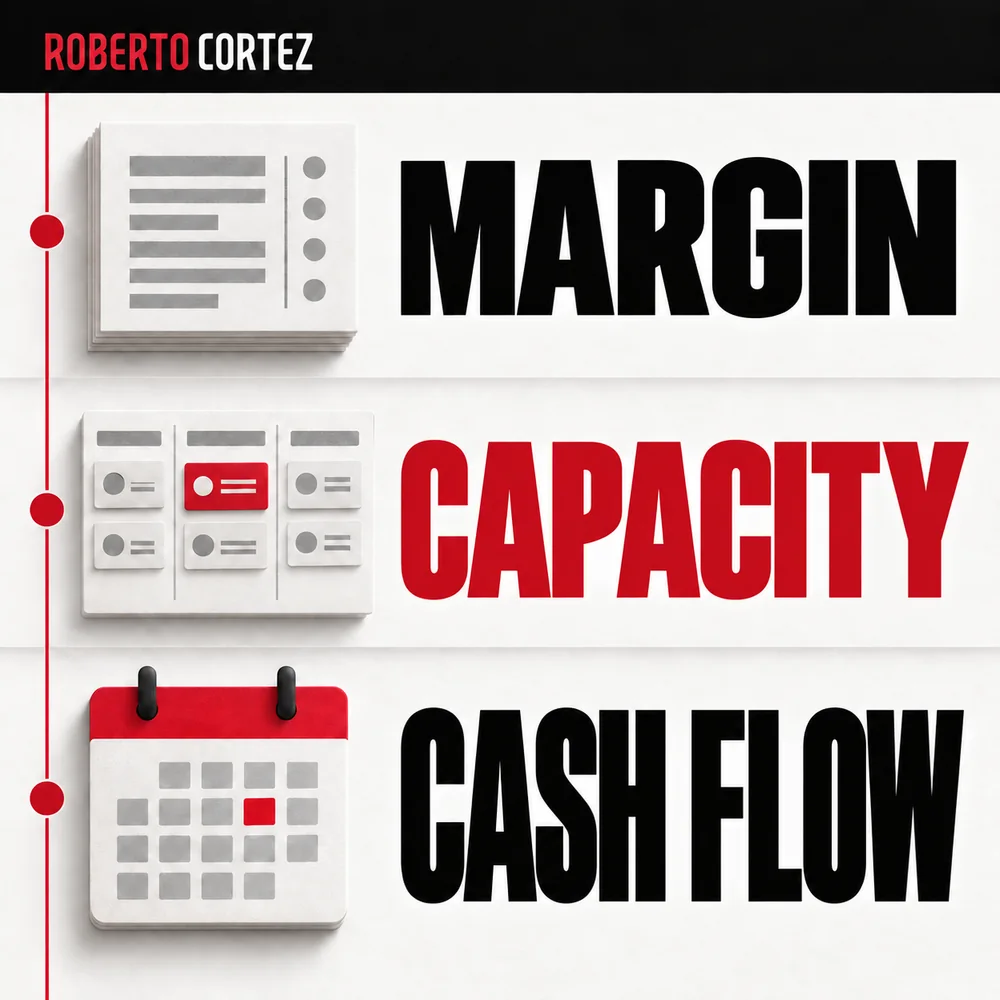
Assess the project's contribution after its associated costs and identify the management capacity it requires. Include preparation time, interruptions and decisions that depend on the founder. Revenue demonstrates demand, but does not explain on its own whether that use of resources remains appropriate for the business, its current priorities and the other work it needs to complete.
A project can sell well while occupying a disproportionate share of the calendar. It may require several tools, suppliers and routines that exist only to keep it running. Looking only at sales hides that complexity, even though it affects work on other projects and the team's availability to respond to new opportunities.
I have had to close projects that were still generating revenue. Giving up something built over time was difficult, especially while demand continued to exist. What helped was thinking about the energy I wanted to dedicate to the business's future, instead of continuing simply because the project had an important place in its history.
That experience belongs to an earlier stage of my businesses. It does not show that every product requiring substantial founder involvement should end, or that closing a project guarantees better results. It helps recognise that keeping an activity running is also a decision, with consequences for everything the business leaves undone as a result.
When examining growth, margin and team capacity, distinguish revenue from results. Identify direct costs and shared resources without arbitrarily assigning all company expenses to the project you want to close. If an expense remains after closure, it cannot be presented as an immediate saving created by the decision to stop that activity.
Observe the kind of attention required as well. Some tasks fit into a predictable routine; others constantly interrupt someone who needs to concentrate elsewhere. Recording specific situations helps assess founder dependency, rather than deciding solely from the exhaustion of a particularly difficult week or the disappointment of a launch that went badly.
To prepare your next step, explore Strategic planning for small businesses.
Compare the project with a sufficiently concrete alternative
Explain what the company will do with the time, people and money released before counting that capacity as a gain. Compare options over the same period, allowing for uncertainty in each. A new possibility needs demand, execution capacity and monitoring criteria to justify leaving an activity that already works and contributes to the business in its current form.
Imagine a fictional company with a profitable support programme and a growing recurring service. The programme requires constant founder involvement, while the service has opportunities the team cannot develop. The question becomes which combination of activities best serves the company's objectives and can actually be delivered with the resources available to the business.
The alternative should exist as more than an optimistic estimate. Identify interested customers, necessary work and known obstacles. If the service depends on people already occupied with other deliveries, closing the programme may not release the right capacity. Time available in one role does not automatically provide the expertise needed to perform another.
Consider the period between stopping sales of the current project and obtaining results from the alternative. Cash inflows may change before all costs disappear. A transition needs conditions that allow it to happen without forcing the team to compensate through urgent work that consumes the very attention you were hoping the decision would recover.
Not all a project's value appears in its own revenue. It may generate relationships, learning or demand for another offer. Check those connections against available evidence without using vague benefits to justify keeping every activity. If a meaningful indirect contribution exists, it belongs in the comparison and needs an explanation that others can understand.
Write the decision's hypothesis in plain language. For the fictional company, it might mean freeing founder involvement to develop the recurring service and respond better to identified opportunities. That formulation lets you track what happens afterwards, instead of declaring success simply because an activity has disappeared from the team's working calendar.
Test simplification before assuming continuation or closure are the only options
Examine whether clearer scope, fewer exceptions or a different delivery approach could reduce the attention required. Define a test with a duration and evaluation criteria. Simplification deserves consideration when it preserves customer value and allows the activity to continue without recreating the dependency that prompted the initial review of its place in the business and its demands on the team.
In the fictional company's programme, some complexity might come from requests outside the agreed scope. Clarifying what is included and organising delivery better could reduce interruptions. Another possibility is offering the programme during defined periods, provided that approach fits customer needs and can be clearly explained before anyone buys the service or commits to participating.
Delegation also deserves consideration, but requires more than assigning a name to a task list. The person needs capacity, information and authority to decide within clear boundaries. If every choice still returns to the founder, the project retains the same dependency even when the organisation chart suggests a different distribution of responsibilities across the team.
When rethinking a service and how it is delivered, begin with the outcome the customer wants. A process change may help preserve that outcome with less execution effort. Do not assume that adding a tool resolves an overly broad offer or removes decisions that still lack a clearly identified owner inside the business.
In my experience, reviewing the resources being used also helped make costs more visible. Asking who uses a tool and whether renewing it makes sense is a useful discipline. Applied to a project, that attention separates necessary resources from habits that persist simply because nobody has questioned their usefulness since the original decision was made.
The test needs a decision point. If simplification reduces dependency and preserves quality, you have an alternative to closure. If it continually requires new exceptions or still occupies the capacity you want to recover, record that evidence and compare the options again, without extending an experiment indefinitely after it has answered the original question.
Close with continuity for customers and a destination for your attention
If closure is the best option, define the transition, outstanding commitments, responsibilities and work that will no longer be accepted. Reserve capacity to complete existing obligations and execute the next priority. The decision releases attention only when dependencies are resolved and the calendar genuinely stops serving the previous project, rather than keeping it alive through unresolved work and recurring exceptions.
Closing an offer does not mean abandoning customers during delivery. Map what remains in progress and communicate the next steps clearly. The plan should distinguish stopping new sales from completing existing work, so that both the team and customers understand what is changing and what the business still intends to fulfil during the transition.
Identify materials and knowledge worth preserving too. A project can end while leaving processes, lessons and relationships useful to the business. Saving that knowledge does not require keeping the operation open, but helps ensure closure is a decision about the future rather than an unnecessary loss of work already completed and experience already gained.
Released attention needs protection. If every available opening fills with new requests accepted without criteria, the company merely exchanges one source of distraction for another. The cost of making the same decisions repeatedly shows why it helps to define priorities and boundaries the team can apply in its everyday work without constant reconsideration by the founder.
After the transition, compare expectations with what happened. Check whether founder involvement decreased, whether resources went to the chosen priority and whether costs appeared that you had not considered. That review should improve future portfolio decisions, including the willingness to acknowledge that some expectations were too optimistic or that the alternative needs further work.
I want to be able to explain why a project still deserves space in the business. When that answer stops being convincing, its format, resources and continuation deserve review. Closure can be a responsible decision when it follows a concrete comparison and a choice about what the company wants to build next with its available capacity.