

What business question should come before looking at Stories metrics?
The question I ask first is which type of content keeps attention and generates a real reaction, whether a direct message or a commercial conversation moving forward, rather than simply how many views a single story got on its own. Publishing daily without knowing what you're testing burns time without producing a useful decision.
I explained that I use Stories as part of a larger business process. If you only look at the view count on the first screen, you get a poor reading of what actually happened. What matters is understanding which topics make people continue, tap back to re-read, or leave for another profile.
Defining this question before setting up data collection stops the analysis from becoming an exercise without real purpose, done simply because the numbers exist. If I don't know what I'm validating that week, a report becomes useless in practice, no matter how nice the charts look.
To prepare your next step, explore Artificial intelligence in digital marketing.
How should data be structured by sequence instead of looking at isolated screens?
Effective collection groups the metrics of every story published on the same day into one chronological sequence, stored automatically. Looking at scattered screens strips away context and makes it impossible to see where interest rose or dropped across that day's narrative.
In the example I gave I use a platform that pulls this information from Instagram via API and places the history into a Google Sheets document every day. This lets me look at the full narrative: the opening hook, what came right after, and where attention held or was lost.
A single story rarely explains everything on its own. Often it's just a bridge to the next screen, where the main message actually sits. If collection doesn't preserve each story's position within that day's sequence, you risk crediting or blaming the wrong part of the message.
Which metrics between forward taps, back taps and exits really reveal audience behavior?
The metrics I care most about for reading a Stories sequence are full exits, back taps, and retention across every screen published that day, because each gesture reflects something different and none of them, taken alone, is conclusive about what happened.
The forward tap is inherently ambiguous. It can mean the person understood the point quickly and wants to keep moving, or that they found the content slow and simply wanted to skip past it. That's why I never look at forward taps without also checking the story's length and overall retention for that sequence.
The back tap tends to be a valuable signal of genuine interest: the person wanted to revisit something, usually because they found dense or relevant information worth rereading. This is the signal I highlighted as the critical metric for understanding real interest.
Full exits, when someone leaves the sequence entirely and jumps to another profile, are the most critical signal of all. When a specific story triggers that drop-off, it's worth isolating whether the issue was the format, the tone, or a break in the narrative logic.
How do you cross numbers with editorial context without treating correlation as a confirmed cause?
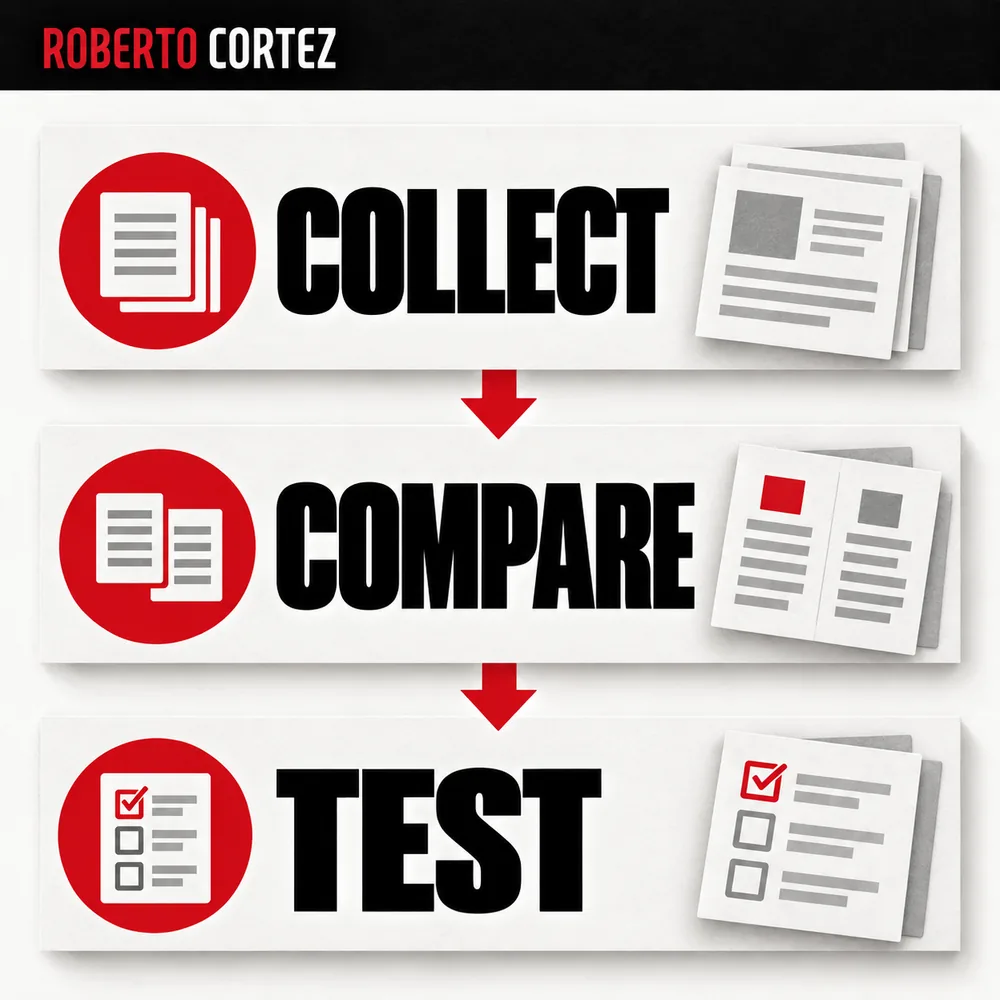
Crossing metrics with context means linking each shift in numbers to the type of content used at that moment, without assuming the number alone proves a cause. A drop in audience could come from the topic, but it could just as easily come from timing, a technical glitch, or plain chance.
I made clear that I give the AI criteria I prioritize, like retention, back taps and exits, but I always ask it to detect patterns and correlations in the data, not to invent reasons. If a text-based sequence had more exits than a more personal one, that's a clue worth testing the following week, not a definitive conclusion about audience taste.
Treating correlation as a lead to explore, rather than a closed verdict, avoids rushed decisions that later become costly to reverse. Instead of scrapping a format entirely because it underperformed once, you adjust a detail and test again, comparing against prior history.
What instructions do you give the AI model to extract patterns?
The instructions I give clearly define what I prioritize as a metric and demand analysis grounded in real collected data, never a generic opinion. Give me the data, explain the rule, and show me where it failed: that's roughly the logic I follow.
In the example I described I use automations in n8n with models like Anthropic's, directed to look at retention, back taps and exit rate, and to build patterns about which storytelling works best with my audience. I don't ask for vague creative opinions like "be more authentic." I ask for analysis of the history already gathered, and only then do I decide, with my own judgment, what to do with that information.
The value sits here: if I feed the machine bad data or weak context, the result is guessing dressed up as analysis. If the context is good, the answer I get back within seconds can replace work that used to take several hours of manual analysis. That can free up real time, even if it's just a few minutes a day, which is still worth having on its own, without needing to be batched into larger blocks to matter.
Explore this decision further: How to use AI in business beyond chatbot prompts.
How do you turn observed patterns into a plan for the following week?
Turning analysis into a plan means taking the hypotheses suggested by the data and adjusting what gets recorded over the next few days, fine-tuning what you already know, with some confidence, works or fails, while keeping the rest of the process stable until more information comes in.
If the analysis shows that sequences opening with a direct question hold attention better than ones opening with a generic greeting, the practical decision is simple: open the next sequence with that question. Then, at the end of the week, compare performance again against the previous history, without rushing to draw conclusions from one data point.
I would start with a simple cycle: observe what's already happening, pick one concrete process to improve, test the data collection automation, and only then bring artificial intelligence into that already structured process. It's the same cycle I described for other parts of the business, like ads or customer support, applied here to Stories.
Explore this decision further: How to turn real customer objections into better content.
What care is needed regarding platform metric access and reliability?
Access to metrics depends on third-party tools and integrations that can change without prior notice, so it's worth maintaining regular human oversight over the data collected automatically. Blindly trusting an automation without occasionally checking the actual numbers is a real risk that can distort decisions.
Nothing in this example guarantees that any specific API or platform will remain available, or that it will keep working the same way in the future. Platforms change permissions, discontinue metrics, and alter access conditions fairly often, and that's a reality any business relying on this kind of data has to account for.
What remains valid, regardless of the tool used, is the underlying reasoning: bad data produces bad decisions, even when the AI involved looks sophisticated. The human role continues to be deciding what to prioritize, checking whether what the AI reports makes sense against what you know about the business, and never fully outsourcing judgment about the brand.