

Make your knowledge useful to someone
Reputation starts gaining substance when another person can recognise value in your work. Choose a problem you understand and show how you think about it, providing enough information to help. You do not need to wait for a large audience before answering a question well or making a decision clearer for someone.
There was a period when I began participating regularly in Facebook groups, answering questions about advertising. I realised that having knowledge was insufficient if nobody knew about it or benefited from it. By helping in those conversations, people began recognising me through the contribution they found in my responses.
At that point, I had no offer to sell and no clear next step. Sharing knowledge was not a formula for immediate commercial results. It was a way to put knowledge at other people's service and make it visible through concrete situations, rather than leaving it in my professional description alone.
The principle remains useful without depending on that particular channel. An answer in a community, an explained example in an article or a professional conversation can show how you approach a problem. What matters is the connection between the question and your contribution, respecting the participants' context and the space's rules.
To prepare your next step, explore Personal branding for business owners.
Explain the work you want to be known for
Help people understand which problems you can work on and where your experience is relevant. An excessively broad introduction can hide your strongest abilities. Choose a concrete description supported by examples, then revisit it as your work develops instead of promising expertise across every area that might attract someone's attention to your profile.
In a hypothetical example, someone developing automation skills might introduce themselves as an expert in every area of AI. That phrase offers little information for assessing whether a request fits. Explaining that they organise sales enquiries and clarify the handover from forms to follow-up describes a more identifiable piece of work.
Your description should correspond to what you can already demonstrate. If you are learning, you can present a learning project with clear boundaries. You do not need to turn it into a supposed client implementation or add experience you do not possess to make the project worth examining.
This clarity also helps when selling services in a competitive market. Someone receiving a recommendation needs to know which situation makes you a relevant option. A useful reputation enables that connection even when only a small group of people knows your work and understands what you can contribute.
Create an opportunity to show actual work
If you do not yet have professional cases you can share, choose a personal project with a bounded objective and take it to a verifiable result. Explain the context, what you built and what you learned. A small completed project can reveal more about your ability than an extensive list of tools studied.
In the automation example, you could create a demonstration process that organises fictional enquiries and identifies missing information. Define the expected result and test relevant cases using appropriate data. Present it as a demonstration without implying that it already operates in a company or produced revenue that never existed.
If a project of your own is being used, show what you can substantiate about that use. It might be an improvement in process clarity or a limitation discovered when applying the solution. Not every piece of work requires an impressive number; it requires an honest account of what happened.
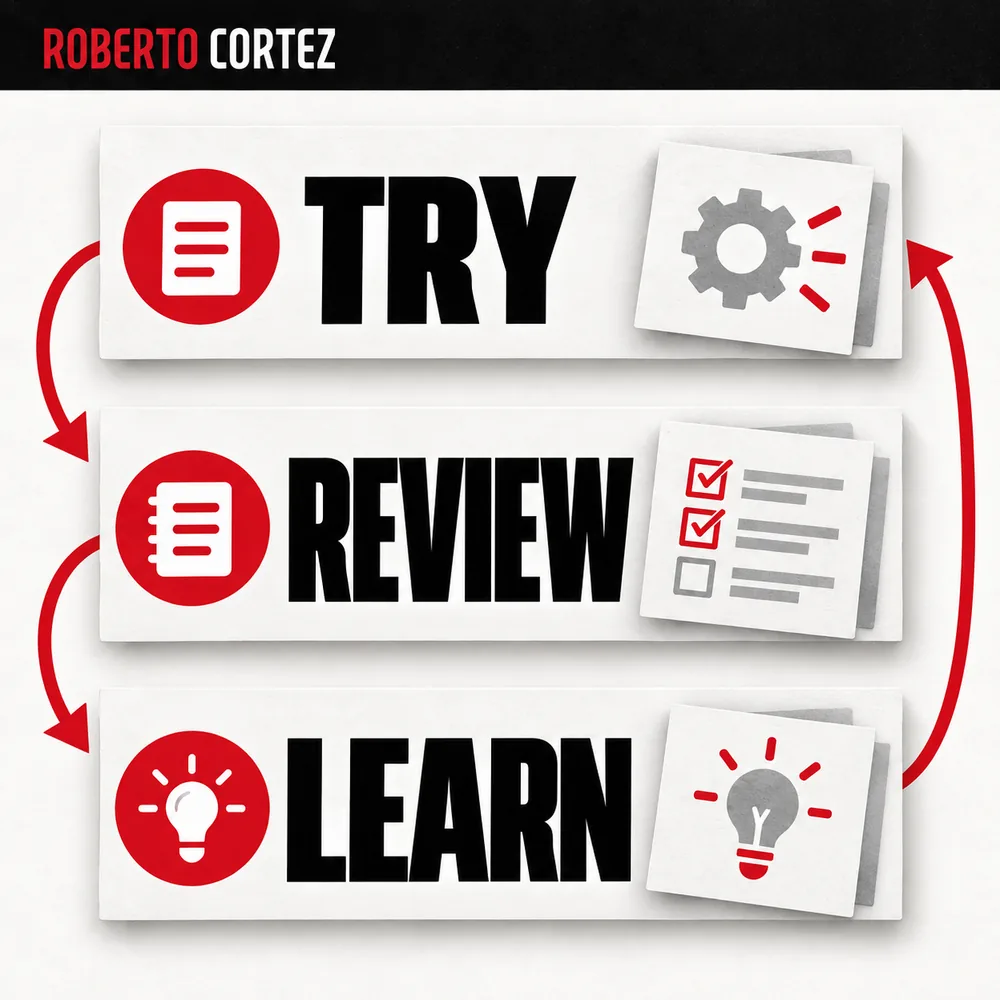
Choose a scope you can finish and review with available resources. An ambitious project that remains permanently unfinished may provide little to assess. The first version should answer a specific question and create a foundation you can improve, without depending on conditions or resources you do not yet have.
Show the decisions that shaped the result
A portfolio becomes more informative when it explains choices, constraints and how the work was checked. The visible result helps, but it does not tell the entire story. Show the original problem, alternatives considered and reasons for the chosen approach, distinguishing what you observed from what you merely hope to achieve later.
You can present a short sequence: the task involved this difficulty, I chose this approach for these reasons, and I verified these behaviours. Identify anything left untested. That explanation allows someone to assess your judgement and understand whether the learning could be relevant to another problem with similar characteristics.
You do not need to expose confidential information to demonstrate your reasoning. Use your own or authorised materials and prepare demonstration examples when necessary. Identify what was changed to protect information, without presenting those examples as original client documents or actual results from an operation in which they were never used.
The same principle helps explain a service's value when execution becomes faster. Responsibility includes understanding the request, choosing an approach and checking delivery. Showing those decisions makes visible a part of the work that execution time alone cannot describe to someone considering whether to hire you.
Contribute consistently without turning everything into promotion
Choose spaces where people ask questions connected to your work and contribute when you have something relevant to add. Consistency needs to fit your availability while preserving answer quality. Repeating the same message across many places may increase exposure without giving people a concrete reason to trust the contribution you are making there.
Read the context before responding and acknowledge missing information. An advertising question may depend on the offer, sales follow-up or delivery capacity. Explaining those dependencies can be more useful than offering a quick instruction about the tool simply to appear confident about an answer you cannot yet support.
If you have content that develops the question further, share it when appropriate and permitted in that space. Avoid using every conversation as a pretext for sending a proposal. The person should be able to benefit from your answer without accepting a commercial conversation they did not request or expect.
Keep a rhythm compatible with the work you can reliably deliver. Thinking about growth with attention to margins and team capacity also applies to time spent on professional visibility. Making your work known should not consume all the capacity needed to continue doing it well for the people relying on you.
Observe the trust your work helps establish
Assess reputation through signs of relevant recognition as well as audience numbers. Observe whether people understand your work, ask more suitable questions and can recommend you for specific situations. Those signals help guide communication without turning every interaction into evidence of commercial results or a promise of future growth for the business.
A small audience may include people who know your approach well. A larger audience may have arrived through content unrelated to the services you provide. That difference does not automatically make one group better; it shows why you should consider who knows you and what they associate with your name.
Keeping commitments is part of reputation too. Delivering what was agreed, explaining a delay and correcting an error provide information about the professional relationship someone can expect. Public content helps present your work, while the experience of working with you adds evidence that a publication cannot provide on its own.
I would start by choosing a problem, producing a useful demonstration and explaining the decisions clearly. Then I would seek conversations where that knowledge could help, learning from the questions that emerged. Reputation can develop through that concrete work without inventing a scale or standing you have not yet established.