
When an application supports enquiries, proposals or customer follow-up, incompatible changes can interrupt the team’s work. Using multiple agents should account for that dependency. Dividing tasks helps when someone owns integration and verifies the behaviour the business needs to preserve during development.
Separate the work from the authority to change it
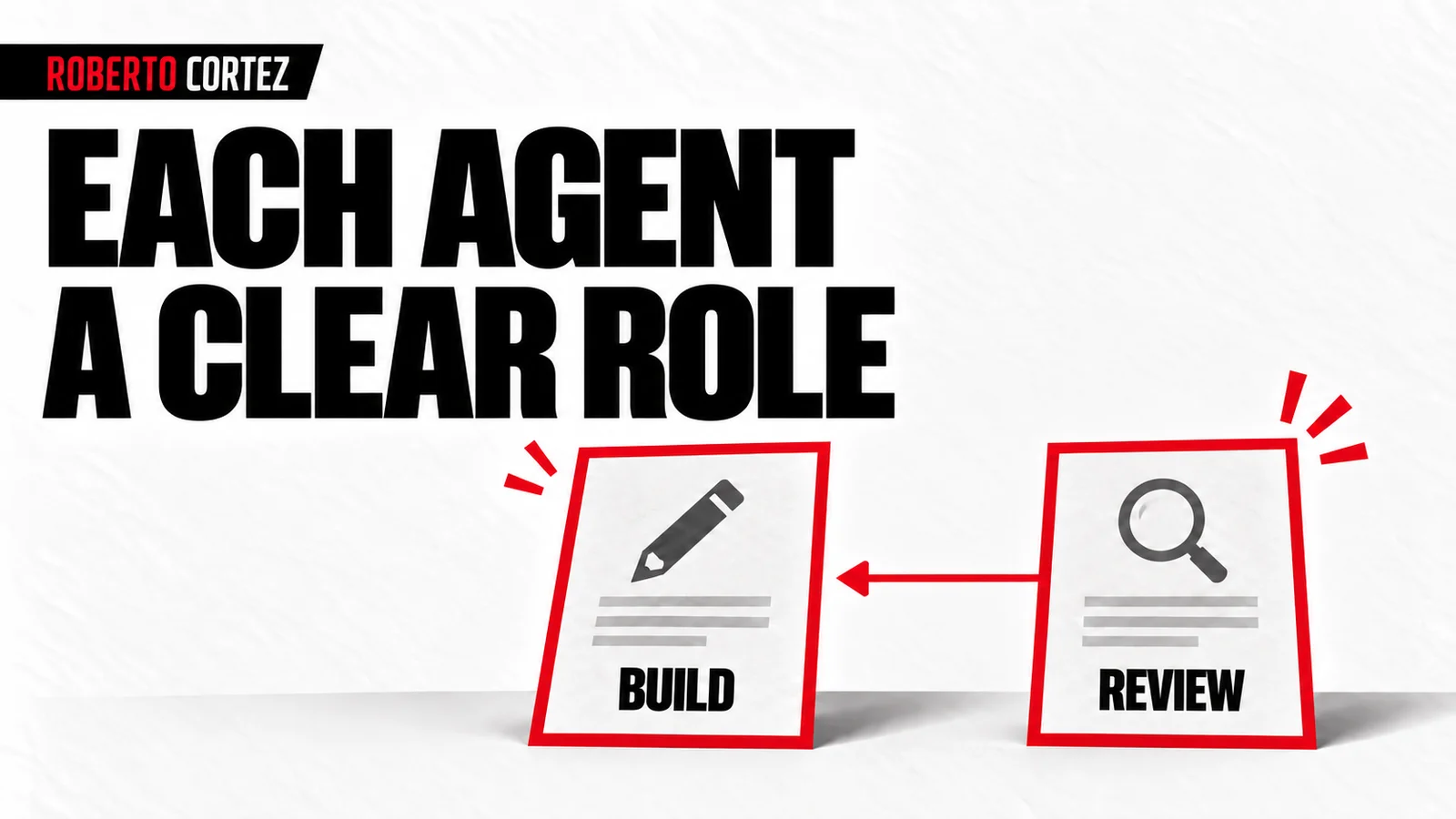
One agent can look for problems while another prepares a correction, but discovering an issue does not automatically authorise the reviewer to fix it. Write that distinction before starting. The reviewer should know that it delivers a report; the builder should know that it evaluates findings and implements accepted changes.
I have used this separation when working on applications: I ask one AI to build and another to analyse. I then take the report to the agent responsible for construction. That lets me benefit from a second reading without having two contributors rewrite the same decision in different ways.
The report is not an instruction to accept everything, either. A finding may misunderstand the expected behaviour, overlook a project constraint or suggest work outside the request. Whoever integrates the changes needs to compare the suggestion with the requirements before touching the code that is already in place.
Imagine an event registration application. One agent changes form validation while another decides to simplify the required fields. Both may consider their work correct, but they are applying different rules about what constitutes a valid registration and who can complete it. Those rules need a common owner.
That is why planning an application before coding also includes deciding who has authority over shared rules. The person coordinating the work must be able to answer a concrete question: if the agents disagree about behaviour, which recorded project decision determines what the application should actually do?
To prepare your next step, explore Developing applications with AI.
Set editing boundaries with concrete examples
Saying that each agent has a different task may be insufficient when those tasks depend on the same files. Identify the areas each can edit and the shared components that require coordination. If a change crosses that boundary, the agent should pause at that dependency and explain what it needs.
In the event application, one agent might prepare confirmation messages while another analyses the accessibility of the form. That division is reasonably clear while the second agent only delivers suggestions. It becomes less clear if both start modifying the structure that generates the confirmation after a registration.
A useful instruction describes both the responsibility and the expected result: review the registration journey, list reproducible problems and deliver recommendations without editing. For the builder, the instruction might limit changes to the form and require a warning before changing the shared rule controlling event capacity across the application.
Avoid assuming that folder names resolve every dependency. A change to a field can affect an export, a message and a query elsewhere. Even with separate files, agents can introduce incompatible behaviour without producing any visible editing conflict. The absence of overlapping edits does not establish that the changes agree.
These boundaries make the points of overlap explicit. When a task needs to cross several areas, it may be clearer to give the whole task to one owner and reserve the second reading for the end. The number of agents should follow the actual division of the work.
Ask for findings that can be checked
A review report should show where the problem is, how to reproduce it and what consequence it has for the user. Phrases such as improve quality or make the code more robust are insufficient. The person implementing fixes needs to distinguish a demonstrated failure, a hypothesis and the reviewer's preference.
In the registration example, a useful finding would explain that a participant can submit the same request twice through a particular sequence. It should describe the observed steps and expected behaviour. Simply suggesting a different form structure does not establish whether there is a failure or just another design choice.
Also ask the reviewer to identify the version it examined. If construction continues meanwhile, some conclusions may stop applying. Before implementing a recommendation, confirm that the problem still exists and that the proposed solution does not interfere with a change completed in the same journey since the review began.
The builder should respond to findings with understandable decisions: fixed and verified, postponed for a concrete reason, or unconfirmed with the available evidence. That response prevents a lengthy report from circulating as though every item were still an active problem with the same urgency for the project and its users.
Integrate changes in a known sequence
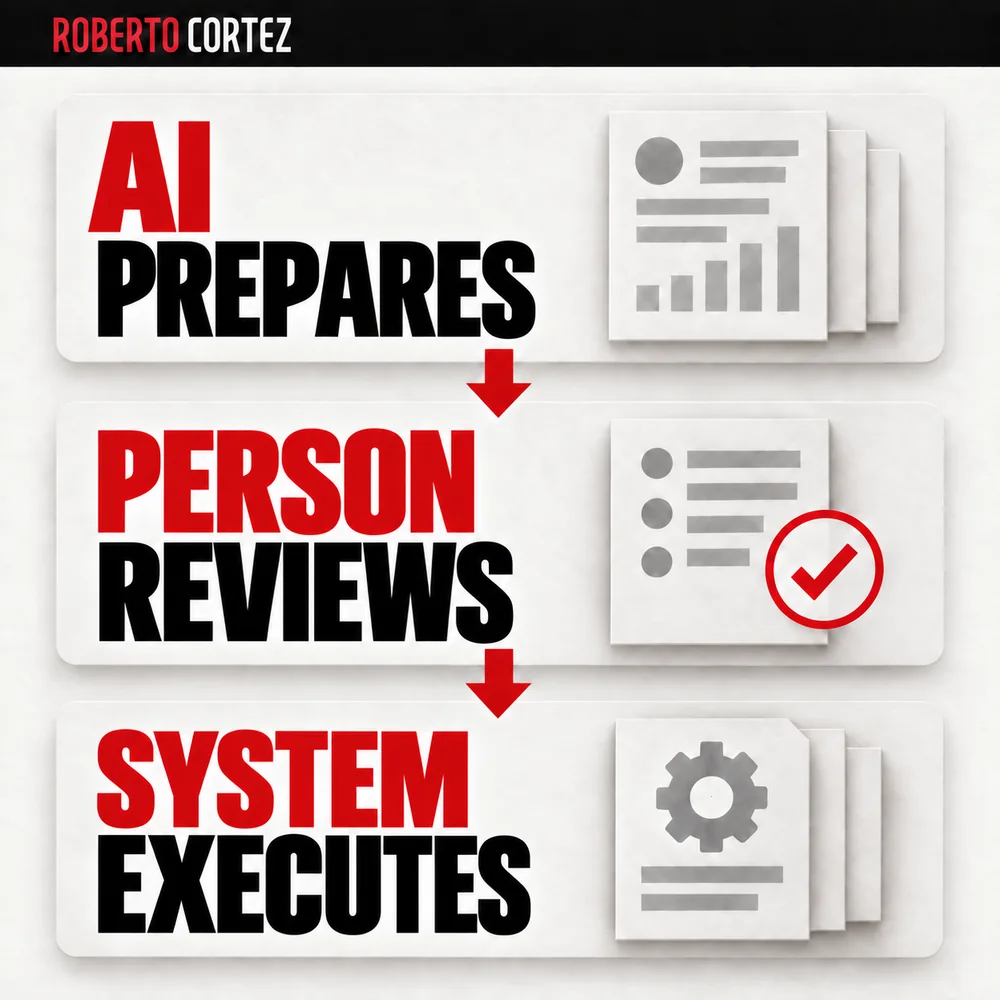
Integration needs an owner and an order, even when parts of the work happened in parallel. Before combining changes, check that they follow the same decision and remain compatible. Then test the complete journey, because two parts that work correctly in isolation can fail when they start working together.
If the form starts requesting an additional choice, the confirmation needs to display it correctly and the event management area needs to receive it. Checking that each screen opens is insufficient. Validation follows the registration from data entry to the result the team actually uses to manage the event.
This discipline resembles testing an automation before handing it over: reproduce the normal case and relevant exceptions, observe the outcome and record what was actually checked. An agent saying it has finished does not replace that observation, particularly when another agent has changed a dependency in the meantime.
If a contradiction appears, suspend edits to the affected part while clarifying the rule. Asking both agents to resolve the conflict simultaneously may produce another round of incompatible changes. Establish the decision, choose who applies it and then submit the resulting version for review against the agreed behaviour.
Hand over context when changing the builder
You can replace the agent responsible for construction as long as the change includes an explicit handover of context. Provide the current state, accepted decisions, outstanding points and completed checks. The new owner needs to continue an existing project whose reasons may not be visible in the files that changed.
Do not provide only the last message from the previous conversation. An apparently strange solution may preserve an important constraint, and a suggested improvement may already have been rejected for a valid reason. Record those decisions alongside the project, briefly enough that they can be consulted while working.
As when deciding who approves each part of an automation project, execution, review and the final decision need distinct responsibilities. Two analyses can improve the decision, but someone still needs to take responsibility for the compatibility of the whole and accept the behaviour that will be delivered.
Before starting the next change, confirm that each area has an identifiable owner, that the reviewer knows what it may do and that integration follows a sequence. If those answers remain vague, resolve coordination first. Adding more execution capacity to that uncertainty tends to multiply the work that must later be reconciled.