
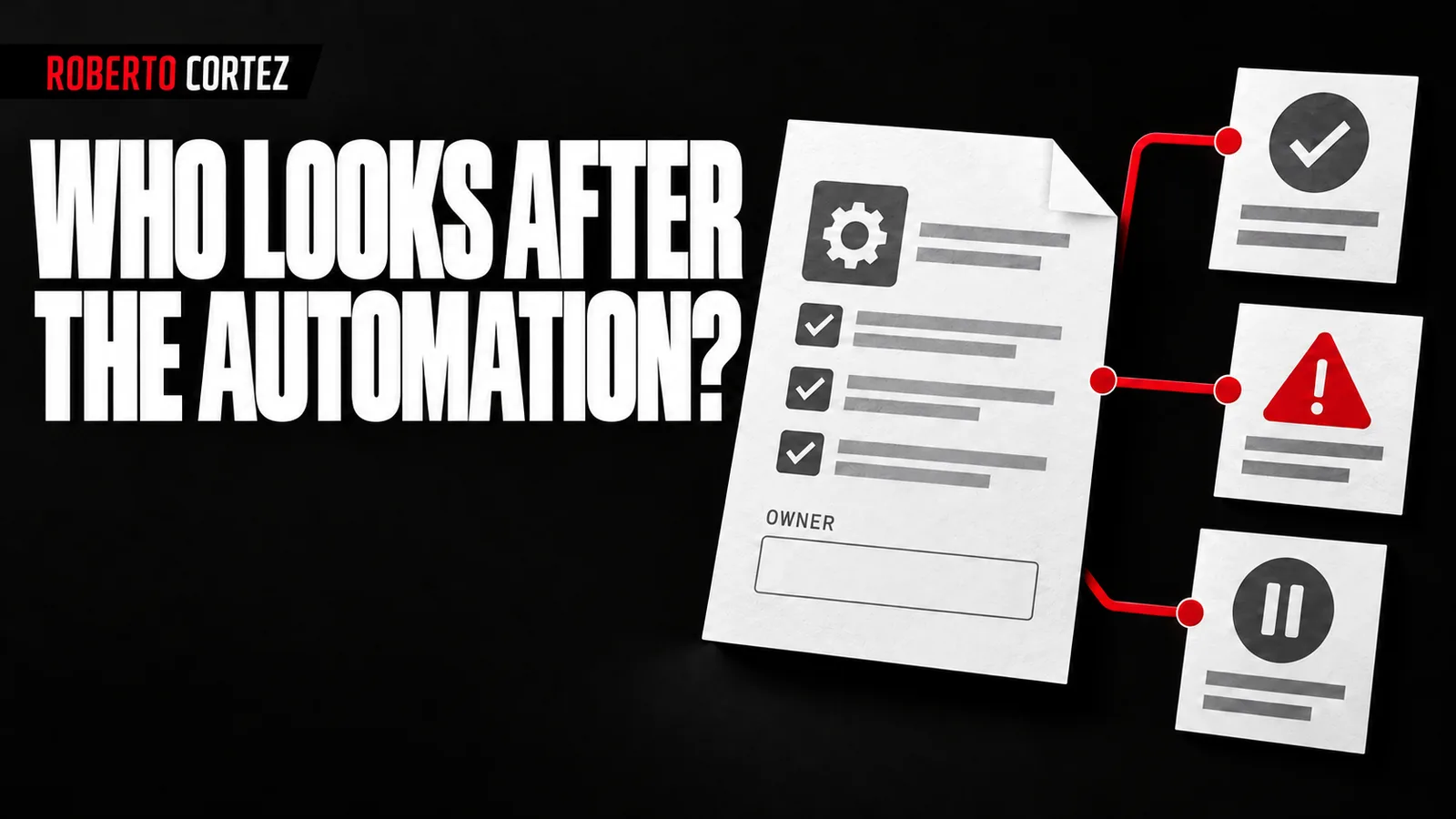
When an automation begins working, attention naturally goes to the time it saves. Requests move forward, information arrives in an organised form and some tasks no longer occupy the team. Preserving that benefit requires someone to understand whether the system still performs the work it was originally assigned to do.
The rules guiding an automation come from human decisions. Even when AI interprets information, somebody has chosen what it may do, which data is available and what counts as a good result. Those decisions need continued attention as the business changes its offers, team, sources and ways of working.
Name an owner for the outcome of the process
Choose someone responsible for the process working properly, with the ability to assess results and decide how exceptions should be handled. Distinguish that role from technical support that fixes the implementation. One person may hold both responsibilities in a small team, provided the work required by each role is clear to everyone.
A technician can confirm that a flow ran without error while still being unable to judge whether a customer response made sense. The process owner needs to understand the intended result, current rules and situations requiring attention. Their assessment includes the content and consequences of the execution, alongside its technical completion.
In a hypothetical proposal preparation process, the owner might be the person who knows the services, approved prices and delivery boundaries. A failed connection between systems requires technical help. A proposal using an outdated condition requires the owner to identify which rule needs revision and what the correct condition should be.
Defining who approves each part of a project helps establish this relationship. After launch, responsibility should remain visible so the team knows who decides without needing to locate whoever originally built the first version or remember an informal conversation from implementation.
To prepare your next step, explore Assessing business readiness for AI.
Monitor the outcome as well as the execution status
Check whether the output matches the intention of the process and reaches the correct destination. A completed execution status provides only part of that information. Monitor untreated inputs, incomplete outputs and differences between what was requested and what the system actually prepared or performed, including the steps after its main task finishes.
An automation can complete without a technical error and produce an empty report because it stopped receiving data. It can also prepare a correct draft that never reaches its reviewer. In these situations, an execution occurred, but the useful work remained incomplete and still requires somebody's attention.
Choose indicators directly connected to the task. For commercial enquiries, these might be received requests, assigned requests and requests still without an owner. For reports, they might include expected data, the correct period and delivery confirmation. An indicator's usefulness depends on the particular process being monitored and the decisions it supports.
The record should make relevant decisions explainable. If an automation changed a campaign, connect the action with the data and rule applied. The same principle applies to other operations: the owner needs to understand why the system proceeded and whether that reasoning still fits the intended process.
Give exceptions a clear destination
Define where unresolved cases are kept and who will handle them. Each exception needs enough information to support a decision, including its source and what has already happened. Avoid alerts with no owner or repeated attempts made without knowing whether the previous action already took effect in another part of the process.
A useful alert explains which stage is pending and what prevents progress. It might require a category to be confirmed, a request clarified or an earlier message delivery checked. The recipient should recognise the required decision without reconstructing the entire route through several systems just to understand the problem.
Group exceptions by cause when that helps the work. If several cases fail because the same field is missing, improving collection may be more useful than treating each occurrence as an isolated problem. The owner uses the set of cases to understand where the underlying process needs to change.
Define urgent handling and cover during absences as well. An alert inbox nobody checks during holidays cannot fulfil its purpose. The process must remain understandable to a second person, with appropriate access and enough instructions to act without depending on the unavailable owner's memory of how the system works.
Keep rules, sources and permissions aligned with the business
Review instructions and access when offers, teams, data sources or decision criteria change. The owner should identify the operational effects and request the necessary adjustments. An automation can continue executing an old rule correctly even after that rule no longer matches what the business intends to do in its current circumstances.
If an offer is no longer available, proposal preparation rules need to reflect that change. If someone leaves the team, destinations and access need review. If a report starts using a different conversion definition, interpretation must remain consistent with the data rather than carrying forward assumptions from the previous version.
Record important changes with their reason, date and decision owner. That history helps explain differing behaviour and supports handover. The team's manual does not need every technical detail; it needs to make clear the decisions that affect daily work and where to look when the expected behaviour changes.
Before a change enters use, check known examples and relevant exceptions. The process owner should participate because that person understands whether the output preserves the business's intention. Technical support confirms implementation; the owner confirms the operational meaning and whether the change solves the need that originally prompted it.
Know when to stop and how to confirm the stop
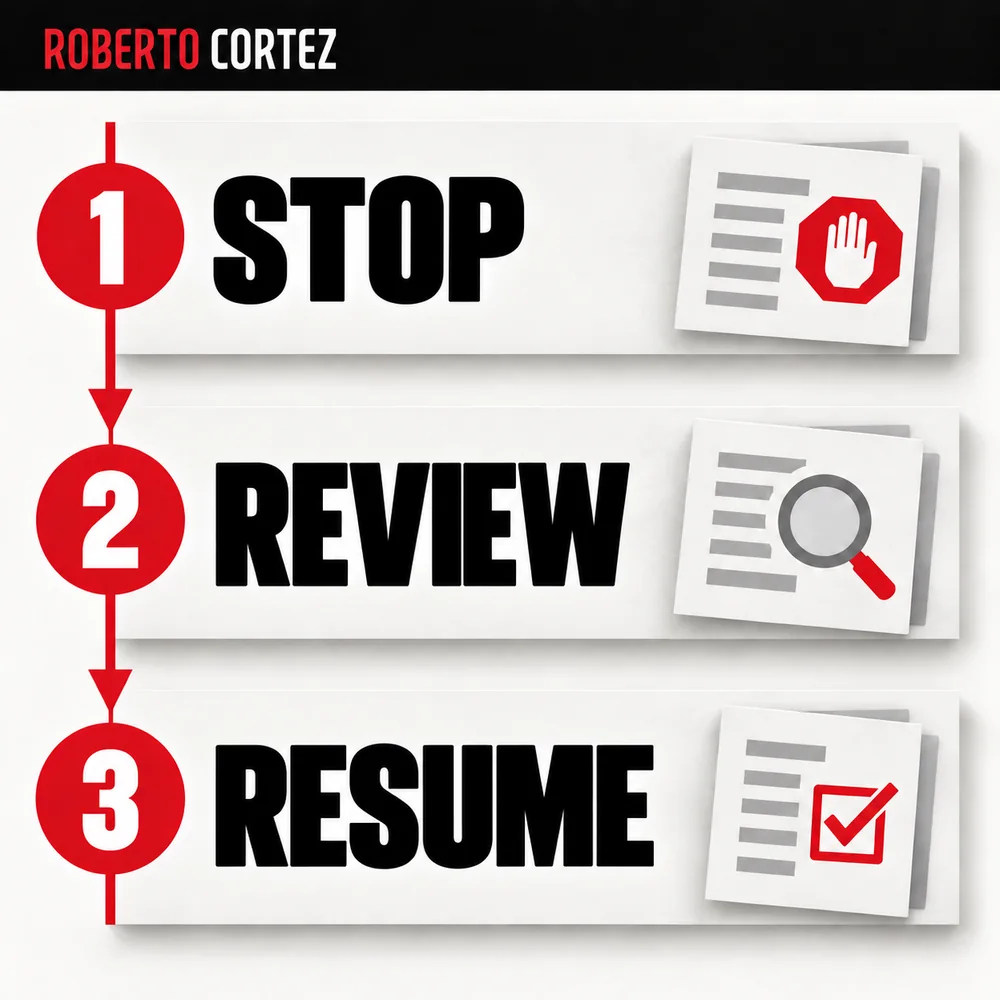
Define situations in which automation should pause and identify who has authority to stop it. Confirm the pause against the actual process state, including work already started. The owner then decides what requires correction and which conditions must be met before another execution is authorised and pending cases can safely move forward.
An error affecting several outputs, inconsistent source data or an unvalidated change may justify suspending a stage. The decision depends on the consequences of that process. It may be possible to continue collecting information while outgoing responses remain paused for review, preserving useful work without allowing the affected action to continue.
It matters to confirm that an automation has actually stopped. Clicking a button and seeing an on-screen message does not, by itself, explain the state of tasks already running or actions previously passed to other systems where they may still be awaiting execution.
When resuming, confirm how pending cases will be handled and avoid repeating completed work. The owner should know what will be processed again and what requires a manual decision. This clarity reduces the chance that recovery creates additional problems while the team is still trying to resolve the original one.
Periodically review whether the automation is still useful
Check whether the automation continues to solve a relevant need with an acceptable supervision effort. Observe usage, corrections and changes to the process. The owner should be able to propose simplification, reduce scope or replace the tool when experience shows that another approach better serves the team's current needs and available capacity.
An automation can have been a good choice and become less useful after the business changes. The task may disappear, information may arrive through another channel or an existing product may acquire the required function. Keeping the old flow without review adds complexity that may no longer produce a worthwhile benefit.
Review frequency should reflect how often the task runs and the consequences of its output. An activity affecting customers every day needs different attention from an occasional internal report. What matters is a real commitment to supervision, using signals the responsible person can interpret and act on within the agreed process.
Ownership becomes clearer when someone can answer four questions: what should the automation do, how do we know it did it well, what happens when it fails and who decides the next change? Those answers support continuity and let the team use automation with an understanding of how its operation is managed.