

Define the outcome in which the advert won
Before extracting a lesson, identify the measure in which the piece outperformed alternatives and the period involved. More clicks, more enquiries and more customers represent different outcomes. A conclusion about the offer needs to follow the journey to the relevant commercial stage, including the quality and cost of those opportunities.
An advert may attract attention with an unexpected phrase and generate visitors who are not looking for the service. Another may receive fewer clicks while opening conversations with people who recognise exactly the problem you solve. The first can help study attention; the second supports investigating a closer commercial connection with the offer.
Also consider the spending and time each piece received. A result from few enquiries may be promising without justifying a general repositioning. Keep the distinction visible between an early indication and a pattern repeated under conditions that allow a meaningful comparison of the outcomes.
If the objective is selling a service, consult proposals, contracts and reasons for lost opportunities when available. Sales may discover that the winning advert promised something the company does not deliver. That expectation needs correcting before apparent success becomes an argument for producing more of the same.
To prepare your next step, explore Positioning and value proposition.
Look for the situation the customer recognised
Break the message into situation, benefit, evidence and next step to identify the hypothesis worth investigating. Look for the moment when the person recognised their circumstances in the description. An effective advert may reveal an existing need without its graphic appearance fully explaining the commercial response that it generated.
Imagine a hypothetical financial monitoring service for small businesses. One piece speaks generally about improving management; another describes the difficulty of knowing which payments fall due before the next receipts. If the second produces relevant conversations, that specific situation deserves investigation with the contacts who arrived.
This does not immediately establish that everyone wants the same solution or that the first advert failed solely because it was generic. The second piece may have reached another group at another time under different conditions. Use the outcome to formulate a more precise question about the identified need.
Preparing advertising variations with AI gains direction when it begins with these questions. Instead of repeating the piece's appearance, you can test other faithful ways to describe the situation that seems to have found a response within the audience.
Check the interpretation through sales conversations
Ask contacts what prompted them to progress and what outcome they expected to find. Compare their answers with the advertising message and the service presented. Conversation helps distinguish problem recognition, curiosity and mistaken expectations without forcing the customer to choose the explanation that the team would prefer to be true.
Avoid questions that already suggest an answer, such as asking whether the person liked the promise of saving time. Ask them to describe the situation they want to resolve and what made them seek help now. Then check whether their description matches the benefit you thought you were communicating.
In the hypothetical example, you might discover that the main need is visibility over commitments, while the team had interpreted the result as demand for better-looking reports. That difference changes the demonstration, discovery questions and proposal sequence. Learning now has consequences extending beyond the original advert.
Also record answers contradicting the hypothesis and contacts who did not progress. A sample consisting only of enthusiastic customers may hide common doubts. You do not need to turn every sentence into a rule; you need to preserve patterns and exceptions that help determine the next test.
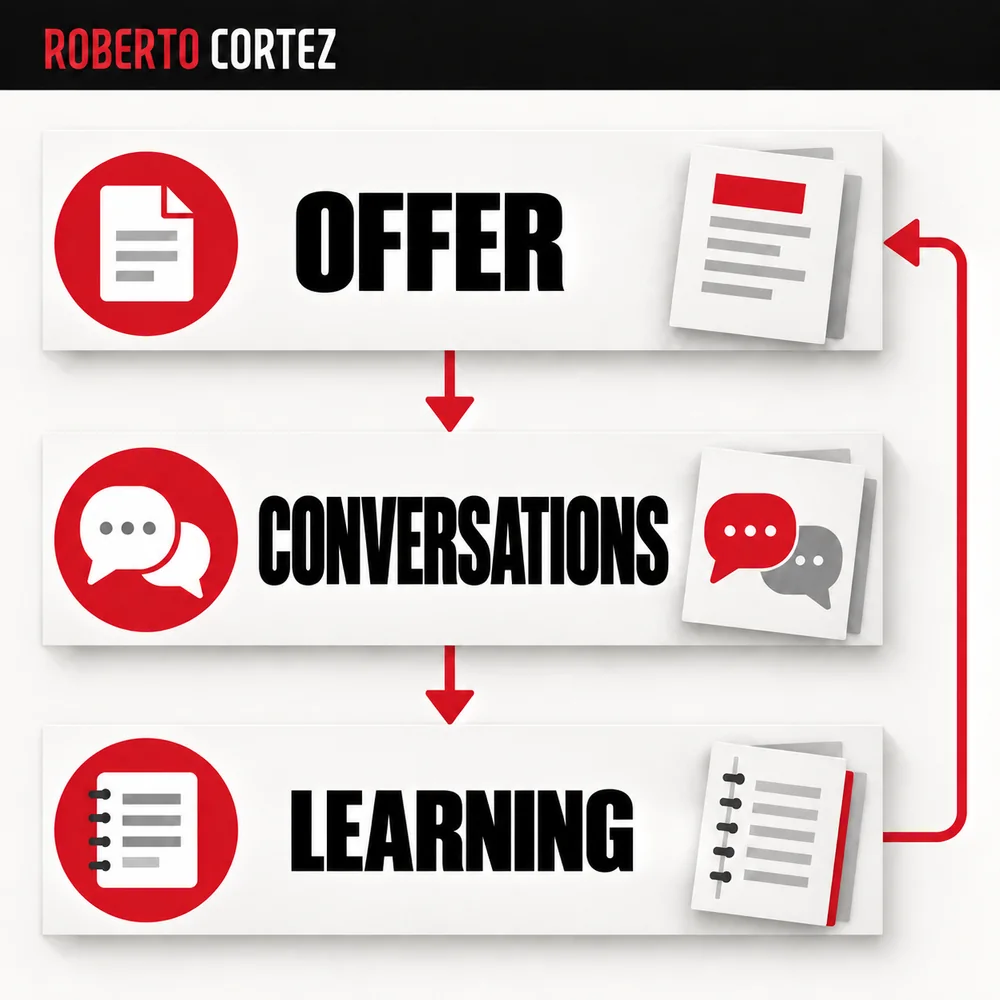
Bring the learning into the page and discovery process
As the interpretation gains support, use it to make the offer's presentation clearer. The page should develop the recognised situation, show how the service addresses it and explain the next step. In sales conversations, adapt questions to check that need while leaving room for customers to reveal other genuine priorities.
If the advert opened a conversation about payments and receipts, a page dominated by a list of tools may lose that continuity. First explain the decision the customer could make with better information, then show the work required. The message must remain faithful to the scope the team can deliver.
During the meeting, investigate how the customer currently monitors commitments, who updates the information and where the difficulty arises. These questions establish whether the service is suitable. Copying the advert's headline into a proposal without understanding the context merely repeats words that appeared to work.
This investigation connects with the diagnosis before proposing a marketing plan. The advert provides a signal about the opening of the conversation; discovery establishes whether the problem, the company's capabilities and the proposed intervention actually fit together.
Review the offer without promising what does not exist
Learning may justify changing the presentation order, clarifying a deliverable or revising the service's composition. Distinguish these decisions before changing the public promise. If the new message requires capabilities or outcomes you do not yet have, develop and validate that part of the offer before advertising it as already available.
Sometimes the service already addresses the identified situation, but the explanation buries that benefit inside a long list of tasks. The main change is then one of clarity. In other cases, demand reveals a need the offer covers only partially, requiring a product and operational decision.
Do not turn a desired benefit into a guaranteed outcome. You can explain the process, required information and decisions supported by the work. Promising that every customer will experience a particular financial effect merely because they responded to a message exceeds what the advert and conversations demonstrate.
When selling services in a highly competitive market, differentiation becomes more concrete when you can explain whom the service suits and which situation it addresses. Advertising can help find that language, but delivery must be capable of supporting what the language communicates.
Test the learning beyond the original creative
A hypothesis about the offer gains strength when it remains relevant in other presentations and subsequent commercial stages. Test the message in a suitable context, observe response quality and preserve the history. If the result appears only in one particular piece, keep the explanation of its effectiveness open to investigation.
You can develop a page section, a discovery question or a second piece exploring the same situation with different evidence. Avoid changing everything simultaneously if you want to understand each alteration's contribution. Define what you expect to observe before you start collecting the new results.
If the message increases enquiries but also creates expectations you cannot fulfil, adjust the promise and monitor opportunity quality. An initial volume increase can create unproductive sales work. The objective is to improve the match between what people are looking for and what you actually sell and deliver.
Save the conclusion as conditional learning with evidence and a next step. A winning advert becomes particularly useful when it helps explain the offer better, ask more relevant questions and prepare coherent delivery, rather than serving only as a visual template for the next campaign.