
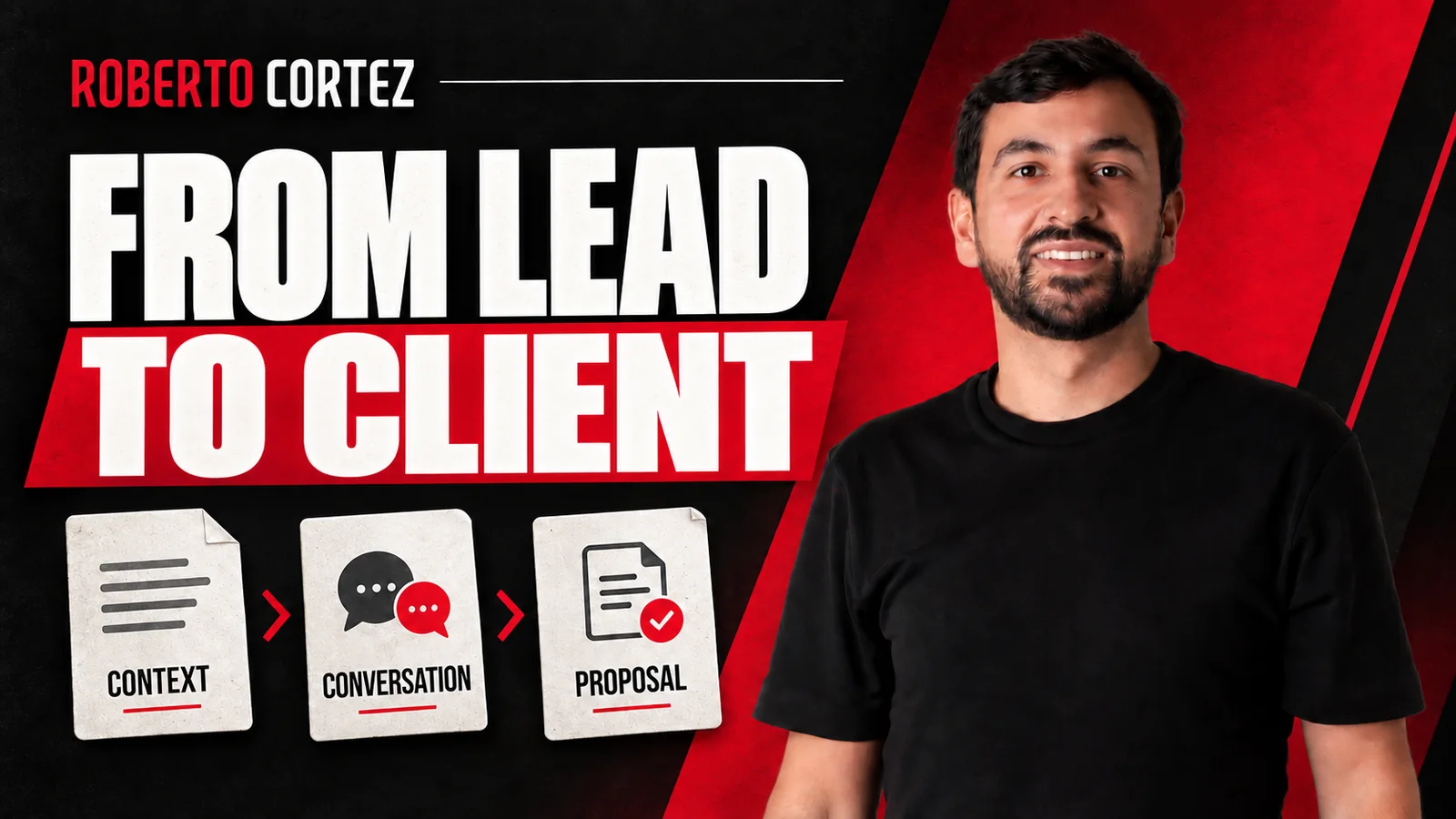
Finding something you would change on a page or in an advertisement is easy. Understanding whether that change matters to the business, which decisions constrain it and why the current work was done that way is harder. An initial review should enable that discovery instead of starting with a verdict on the previous team's competence.
What can you actually observe from outside?
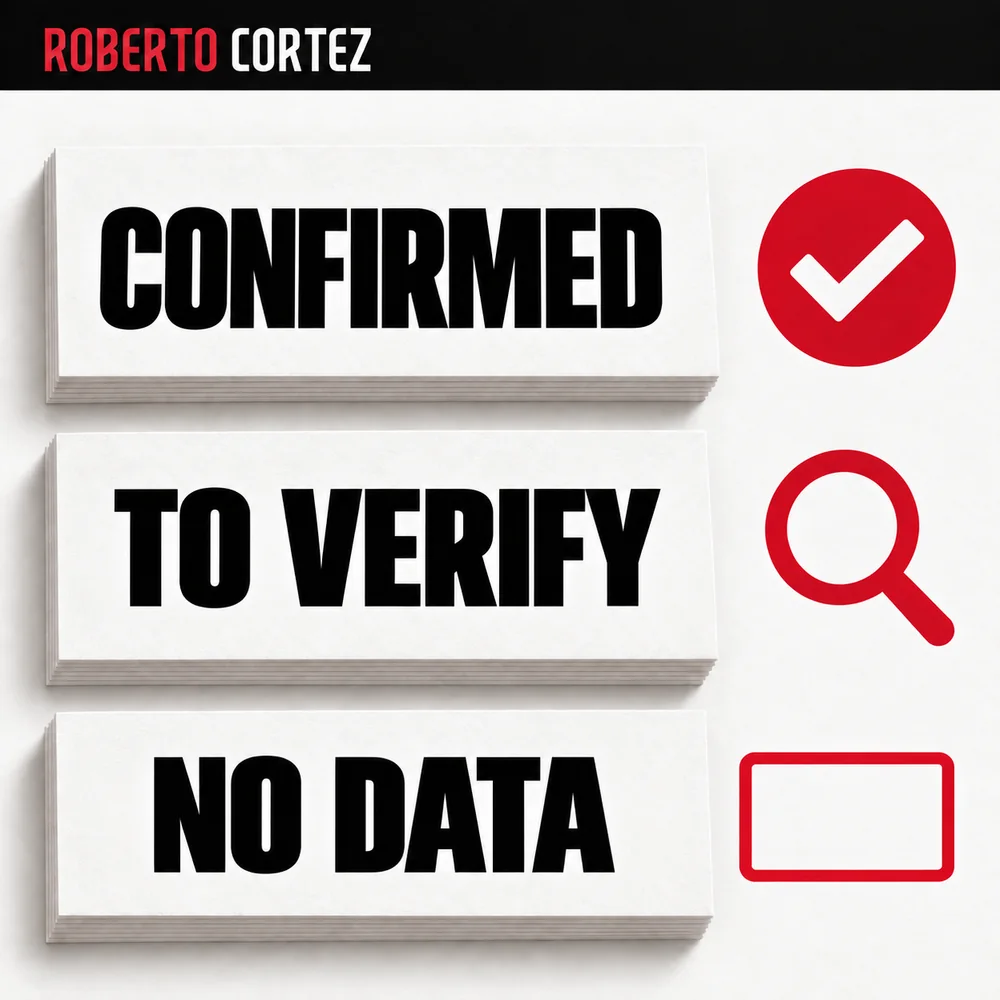
From outside, you can observe published messaging, the visible journey and how an offer is presented. You cannot reliably infer profitability, contact quality or internal constraints. Distinguish what you saw from what you suspect and from the information you still need to request before assessing the impact of a possible change.
In a hypothetical example, a page might present several services without identifying whom they serve. That is an observation about visible content. Claiming the company loses half its sales for that reason would be an unsupported conclusion, even if the page appears confusing to you.
Record where you found each point and when you observed it. A campaign may have changed, a page may serve a different audience or the journey you reviewed may not be the main one. Locating the evidence lets the other person recognise the situation and correct its context when necessary.
Qualification before a sales approach begins with this discipline. Finding a detail about a company does not, by itself, show that it needs your service or wants to speak with you at that particular moment.
To prepare your next step, explore The B2B sales process.
How do you choose points worth discussing?
Choose observations with a clear connection between communication, the visitor's expected action and a business question. Prioritise what you can explain and verify, leaving aesthetic preferences in the background. A short review with relevant points supports a discussion about decisions; a long list of defects may simply show that you looked for things to criticise.
If the offer describes the company's history but says little about the client's need, ask which problem should become clear on first reading. If an advertisement makes a promise that the page does not develop, explore continuity between the messages. Both are specific, observable questions for the business.
Avoid recommending a complete redesign because you dislike the colours or typeface. A visual preference can be legitimate, but it should be distinguished from readability, understanding or accessibility. Without that distinction, the audit becomes a presentation of your personal taste rather than a useful discussion of the work.
A diagnosis before proposing a marketing plan develops this selection further. Before choosing an intervention, understand the offer, the market and the resources already available for carrying out the work.
How do you present a hypothesis without claiming certainty?
Present the observation first, a possible interpretation second and the unanswered question third. That sequence lets you discuss a hypothesis without passing it off as a measured result. Alternative explanations should remain possible until enough data or context exists to decide which change deserves attention within the client's particular business situation.
In a hypothetical example, you might observe that a form requests information the page has not explained, and ask whether visitors tend to seek help there. The hypothesis is that people lack context to answer. However, that form may serve people already informed by another stage you did not see.
A proposed test should say what would change and what you would observe afterwards. If the hypothesis concerns unclear service information, a test might rewrite the explanation while keeping other elements stable. Even then, results must be interpreted alongside the traffic and the period being analysed.
Do not attribute increased sales to a change that has not happened. You can justify investigating something without inventing a forecast. This distinction keeps the commercial conversation useful even if the potential client ultimately decides not to hire you for the work.
How should you discuss existing work?
Discuss existing work through decisions and observable effects, without assuming incompetence, indifference or waste. Ask which objective informed a choice and what constraints existed. The potential client may have valid reasons to retain an imperfect solution, and understanding those reasons is necessary before proposing an alternative the business can actually implement.
A page might be waiting for photographs, approval or a revised offer. An advertisement may belong to a test still in progress. Those possibilities do not invalidate every criticism, but they show why reaching a conclusion about the previous team's competence would be premature.
You can also recognise what already helps the visitor. Identifying a clear explanation or relevant evidence makes the review more precise because useful work can be preserved. You do not need generic praise to balance criticism; you need to observe both with the same care.
If the client defends the current decision, use the response to improve the diagnosis. The conversation need not end with your suggestion being accepted. It may end with a hypothesis discarded and a better understanding of the issue that genuinely deserves attention.
Where does the initial review end and the project begin?
The initial review needs explicit boundaries: what was observed, what was excluded and which question it aims to clarify. A project begins with a confirmed need, defined work and agreed conditions. Demonstrating judgement does not require giving away a complete strategy or promising a solution before you understand the dependencies involved.
An initial observation may justify a meeting to understand objectives and available data. That meeting might reveal a problem with following up enquiries rather than with the page you reviewed. The proposal should reflect what you discovered, even when it differs from the service you originally expected to present.
Information needed before accepting a project helps define this transition. Responsibilities, resources, expectations and implementation capacity shape the work just as much as the initial idea for improvement does.
Explain the proposal so the person can connect the investment with the decisions and tasks involved. The written document should preserve that context for reference and comparison. Agree how questions will be clarified and what comes next, instead of leaving all continuity to chance once the document is sent.
How can you tell whether the audit was useful?
The audit was useful if it helped confirm a need, correct a hypothesis or choose a next step with better information. A booked meeting can signal interest, but does not itself demonstrate analytical quality. Observe whether conversations move forward with context and whether proposals address the problem that was actually identified.
Keep track of questions that revealed new information and points that caused confusion. If potential clients repeatedly correct the same assumption, change your review criteria. If discussions become stuck on details unrelated to the business, shorten the list and improve how you prioritise the points presented.
Someone may appreciate the observation and have no need to hire you. Another person may confirm a need outside your scope. Accepting those outcomes preserves the honesty of the analysis and helps focus sales work on situations where you can make a concrete contribution.