

On my website, I have been using content I already produced as the basis for new articles. AI helps organise and work with that material, but the ideas need to continue reflecting what I stand for. Reviewing it includes both the content and the way the reasoning is presented.
A recording may combine explanations, questions, examples and decisions that deserve different treatments. It may also repeat the same idea several times. Editorial work starts by distinguishing those situations before requesting a long list of titles or filling a publishing calendar with material that has not been assessed.
Start with the decision the reader needs to make
Each article should help the reader understand a question or make an identifiable decision. That purpose guides the selection of passages, the example and the depth of the text. If two proposals reach the same conclusion through the same reasoning, consider combining them or defining their difference more clearly.
Imagine a hypothetical recording about starting to automate a business. It might cover choosing the first task, preparing the data and deciding who monitors the operation. Those questions are related, but each requires its own criteria. A reader who has already chosen a task may only need the second decision.
I would write one sentence for each proposal: after reading, the person should be able to decide this. If that sentence remains vague, the title is probably promising too broad a subject. Productivity can be a category, but does not by itself define what an article will help someone understand.
The same care applies when preparing advertising variations without repeating the same idea. Changing the words does not necessarily create a different approach. In an article, I look for a question, criterion or development that justifies the additional reading time and the existence of that particular page.
To prepare your next step, explore Personal branding for business owners.
Check what the source can actually support
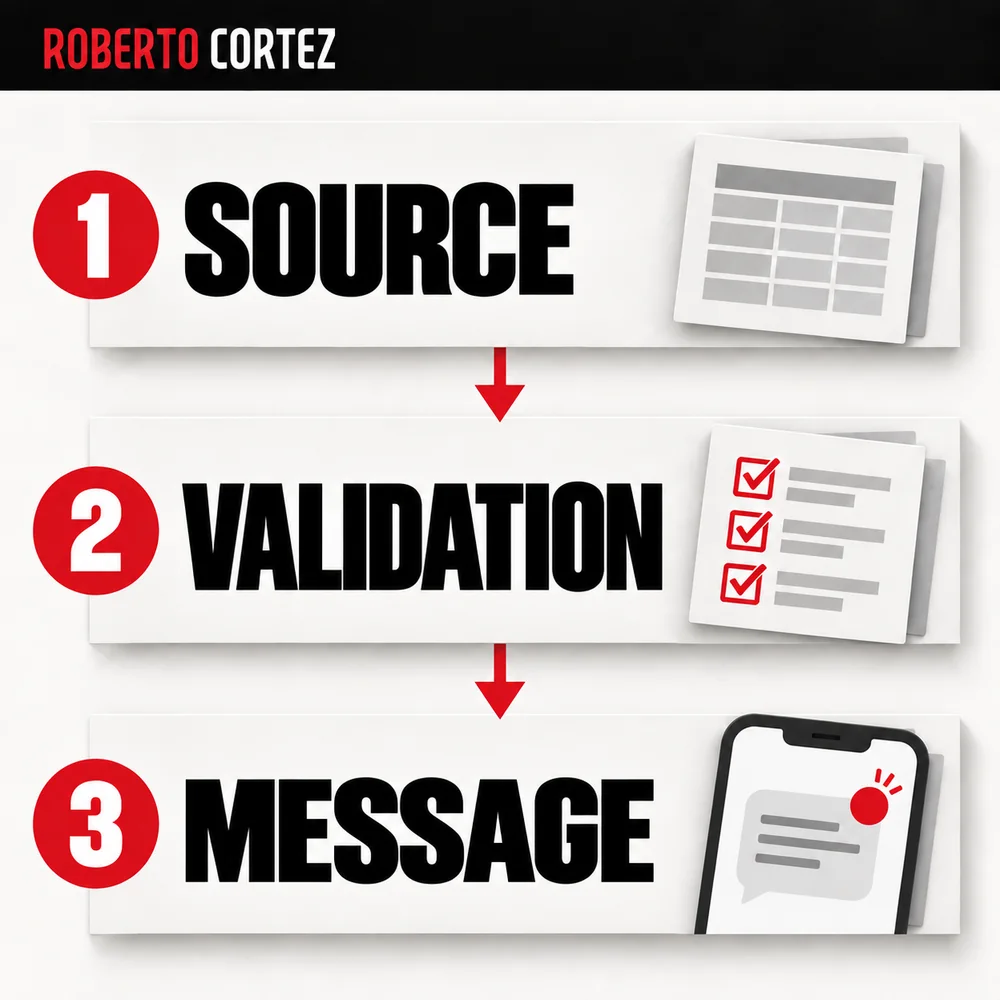
An interesting question should only proceed when there is enough material to answer it rigorously. Return to the relevant passages, read what comes before and after, and identify the speaker. If the supporting material is incomplete, record the gap and clarify it before turning the proposal into an article.
A transcript helps locate content, but may get a negative, a name or a number wrong. When one word changes the conclusion, the original recording needs checking. An isolated sentence may sound like a universal recommendation even though it was answering a question about a very specific situation.
I would also separate an experience described by the author from a participant's question. Two statements appearing next to each other does not mean they belong to the same person. A case shared in a private setting may help us understand the subject internally without being available for a public narrative.
For each proposal, I would save the passages supporting the argument and the limitations found. This is a concrete way of giving AI context with judgement: providing enough information for the task while distinguishing what may be used. The internal reference should make it possible to return to the original when a question arises.
Design a separate structure for each question
Complementary articles need an organisation suited to their particular question. Define the main answer, the necessary criteria and the example that makes them usable. Then compare the outlines side by side, looking for repeated sections, identical conclusions and parts that depend too heavily on another text to make sense.
In the hypothetical automation series, choosing a task can be explained through frequency, stability and effort. Preparing the data requires discussion of sources, necessary fields and possible errors. Responsibility for the operation involves monitoring, exceptions and decisions when the process changes. Repeating those three lists in every text would weaken the series.
Some concepts need to appear more than once so each article can stand alone. A short definition may be necessary, especially when a reader arrives directly on a page. From there, I would use a contextual link to explore the subject further instead of reproducing whole pages that already exist elsewhere.
One useful exercise is to temporarily remove the titles and read the outlines. If identifying which question belongs to each is difficult, the distinction is still unclear. I prefer combining similar proposals and developing the answer more fully to retaining pages whose main difference is the wording of their titles.
Write for someone who did not hear the original conversation
The article needs to introduce the problem, explain the reasoning and develop the answer independently of the recording. That means reorganising spoken language and clarifying incomplete references. Preserving the author's idea requires keeping conditions and limits, even when the written sentence differs substantially from the way it was originally spoken.
In conversation, we may point to a screen, return to something explained earlier or answer only part of a question. In writing, those dependencies need resolving. An expression such as this result loses meaning unless it is clear which result was observed and under what conditions it was obtained.
AI can suggest an outline, group passages and prepare a draft. I check whether the development remains faithful to the argument and whether the example has support. When an example has been constructed purely to explain something, it should be presented as hypothetical without turning it into personal experience or a customer case.
Putting this work into a process is one way of using AI in business beyond questions to a chatbot. Define who selects the proposals, who resolves gaps and who approves the final text. The ability to produce material more quickly does not, by itself, decide what deserves publication.
Review the series as a whole before publishing
The final review should assess each article and the relationship between all the texts in the series. Check fidelity to the source, the usefulness of the answer and whether the development is distinct. Then verify links, titles and publishing order, keeping prepared content separate from content that is already available.
I would begin by reading the openings and conclusions side by side. If several texts promise and deliver the same thing, I would revisit the plan. I would also look for unintended contradictions: an important condition may be explicit in one article and missing from another, making the recommendations appear incompatible.
For links, I would choose only published destinations relevant to the question at that point. An article should not send readers to a page still being prepared. For versions in other languages, I would check that the destination exists in the corresponding language and that the translation preserves the original argument's scope.
I would also retain the relationship between each article and its sources, along with corrections made during review. When the subject comes up again, it will be easier to know what has already been answered and what deserves further development. A useful series grows through questions being clarified, with every new text justifying the space it occupies.