

A hook is an editorial choice about what you present first. You can begin with a question, consequence or relevant decision, provided the rest of the content develops that opening. The work starts with what you have to say and why someone might be interested in hearing an explanation of it.
I look for an opening that helps people recognise the subject and understand what is at stake. Attention is necessary for a message to be heard, but the relationship continues beyond the first few seconds. The way you begin should prepare the explanation you are actually in a position to deliver.
Identify the answer before writing the first sentence
Before searching for a hook, summarise what the person will understand by the end. Identify the problem, criterion or decision the content clarifies and confirm that sufficient development exists. This answer helps you choose a specific opening without resorting to a promise broader than the material can actually support in the explanation.
As a hypothetical example, imagine a video about comparing the cost of two services. If it explains how to check what each proposal includes, the opening can raise that question. Promising to reveal the cheapest service changes the subject, especially if the content neither presents prices nor compares specific providers operating in the market.
I would first write a simple sentence about the delivery: the viewer will learn how to check differences in scope between proposals. Then I would find an interesting way to introduce that decision. This order avoids choosing an attractive phrase and spending the rest of the edit trying to justify an expectation unrelated to the content.
Specificity also matters when selling services in a competitive market. A message becomes clearer when it addresses a recognisable situation. That does not require inventing a pain point or exaggerating a problem; it requires knowing who the explanation is useful for and at what stage in the decision process.
To prepare your next step, explore Personal branding for business owners.
Choose a tension the content can actually resolve
A hook can raise a question, reveal a consequence or introduce a difficult choice. The important point is that this tension relates directly to the argument and is resolved by the content. Curiosity invites people into an explanation when they subsequently find the information the opening led them to seek out.
In the service proposal example, you could begin with uncertainty about what the price includes. That prepares a comparison of deliverables, responsibilities and support. Beginning with an accusation that every provider deceives customers introduces a claim the example cannot support and changes the conversation from a useful comparison to an unsupported generalisation.
A story can also generate interest, provided its role is clear. An example constructed to explain something should be presented as hypothetical, without names or details that make it appear real. If you use your own experience, check what happened and avoid improving the narrative by adding details that were never established.
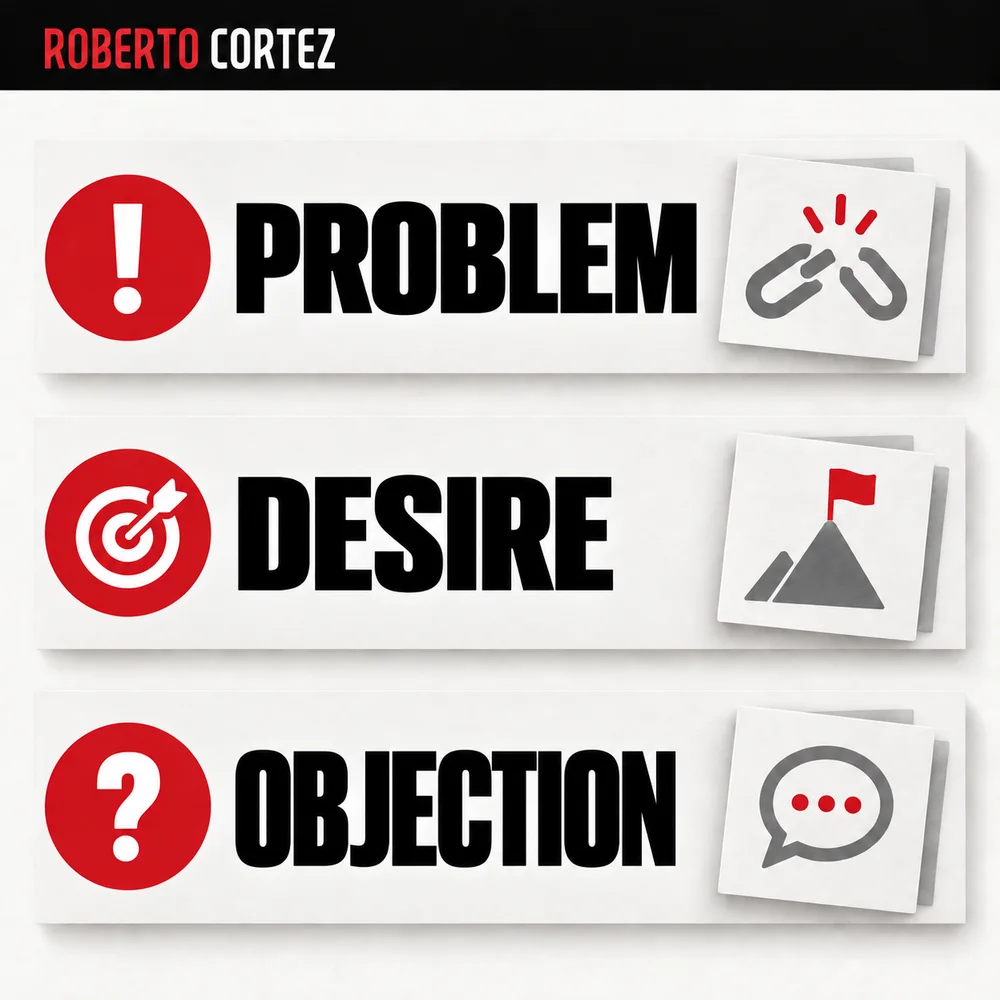
When preparing advertising variations with different ideas, we can explore problems, desires and objections as distinct entry points. Those options do not authorise changing facts between versions. The same offer or explanation needs to remain recognisable even when the first sentence draws attention to a different aspect of the subject.
Preserve meaning when moving a strong sentence forward
Moving a sentence from the middle can create a more direct opening, but requires checking its original context. Keep conditions that affect meaning and avoid cutting essential negatives or qualifications. Then prepare a brief transition so viewers understand which situation the sentence refers to and can follow the reasoning that comes next.
A sentence such as this solution is not worthwhile may refer to an infrequent task. Placing it at the beginning without that condition may make the audience think you reject the solution under all circumstances. The hook appears stronger, but now says something different from the argument you actually intended to make.
Editing needs to resolve that dependency without adding a lengthy introduction. You can keep the condition inside the sentence or restore it immediately in the transition. Viewers should not have to reach the end to discover that the opening omitted the part that completely changed the recommendation and its proper scope.
I would also check the visuals accompanying that moment. An overlaid headline, image or cut can intensify a claim beyond the spoken words. If someone is explaining a hypothesis, graphics should not present it as a confirmed result. Coherence needs assessing across the complete combination the audience actually sees and hears.
Move from the hook into the explanation without changing subjects
After gaining attention, the content needs to advance the question it opened. Present the necessary context and start developing the answer, avoiding a lengthy detour into personal introductions or generic messages. Every part should bring people closer to the promised explanation, with detail proportionate to the format and subject being discussed.
In the hypothetical proposal video, I would start by showing how two service descriptions can conceal different scopes. Then I would explain what to compare and why. If the opening discusses price but the development becomes a list of the company's qualities, the initial expectation remains unanswered despite the continued flow of information.
In writing, the opening may announce the decision and the first section explain the criterion. In a carousel, each image needs to add information. In video, speech and editing can create pace, but movement should help people follow the reasoning without taking the place of the explanation they came to hear.
The final step should also match the journey. If you invite someone to request information, the destination needs to continue the same conversation. When organising a lead funnel the sales team can support, coherence between the initial message, request and response helps establish which expectation was created before the person made contact.
Review attention and fidelity together
Reviewing a hook should establish whether the opening is understandable, relevant and faithful to the development. After publication, attention signals may help compare versions, but they require context. An opening that retains people while creating the wrong expectation still needs correcting, even if some of the measured indicators appear better than before.
Before publishing, I would read or watch the beginning alone and write down the promise I take from it. Then I would compare that interpretation with the actual delivery. If I need to explain verbally that this was not quite what I meant, the opening may still be vague or suggest unjustified certainty.
When data exists, I would distinguish retention, clicks, enquiries and sales. They represent different stages and do not automatically demonstrate the quality of an isolated hook. A comparison also needs to account for the audience, distribution and accompanying content, so a difference caused by other changes is not attributed to the first sentence alone.
I would save the hook used, its corresponding development and what was learned during review. That record helps improve the next choice without creating a list of supposedly infallible phrases. The opening deserves to be strong precisely because it introduces an idea you can develop clearly and support all the way to the end.