

Distinguish activity, results and usefulness
Activity is what the team did, results are the changes observed and usefulness is the relevance of those changes to the client. These dimensions can be related without being equivalent. Separate them first so that a task list is not presented as automatic proof of the benefit the client expected to receive from the service.
Creating a page, reviewing messages and monitoring campaigns may all be necessary work. The client may nevertheless be concerned about the quality of commercial opportunities or the effort their own team must put in. Presenting tasks should help explain that connection rather than leaving it for the client to infer.
Imagine a hypothetical project in which sales materials were created on time but salespeople still do not use them. Delivery exists, but usefulness has not yet been confirmed. Find out whether the issue is access, suitability for the process or participation by those expected to use the materials.
This analysis should not devalue preventive or preparatory work. Explain its role honestly: what is ready, which difficulty was removed and what still depends on application. That allows progress to be recognised without describing an intermediate stage as though it were the final outcome of the project.
To prepare your next step, explore Customer retention and experience.
Recover the agreed criteria for value
Discuss perceived value against the objectives and conditions agreed, checking whether they remain relevant. Ask which improvement the client expected to observe and when they intended to assess it. If priorities have changed, bring that into the conversation before the team continues demonstrating progress in a direction that is no longer important to the business.
A client might initially want more enquiries and later discover that the sales team lacks capacity to respond. In that hypothetical case, increasing volume may cease to be the immediate priority. Review the work against that change rather than insisting on a metric that no longer describes the current need.
There may also be differences between the people involved. Whoever follows execution may value speed and clarity, while the person deciding continuity wants to understand the economic effect. Do not assume a satisfied contact automatically communicates that assessment to everyone else involved in the decision.
Client retention in a service business requires following these changes in context. The useful question extends beyond whether the client is satisfied. It asks whether the service still contributes to what they need to resolve and whether that contribution is understood by the people involved.
Show evidence the client can interpret
Choose examples and indicators that connect delivery to the decision under discussion, explaining the period and limits of observation. An isolated number may appear positive without addressing the client's concern. Present what changed, the comparison used and what you cannot directly attribute to the team's work using the evidence that is currently available to you.
If you show more enquiries received, explain what you know about their commercial relevance. If you show faster response times, confirm how they were measured and what changed in use. You do not need to turn every benefit into money to make it understandable, but you must describe the specific change.
A work sample may be more illuminating than an extensive report. Showing a recurring question and how it is now answered helps the client assess improvement. The sample should be genuine and representative of the point presented, without concealing situations that contradict the conclusion you are drawing from it.
When deciding what belongs in a campaign report, start with information that enables action. The delivery channel does not make a report useful by itself. Usefulness depends on the connection between data, explanation and the decision someone needs to make after reading it.
Confirm understanding without turning the conversation into a defence
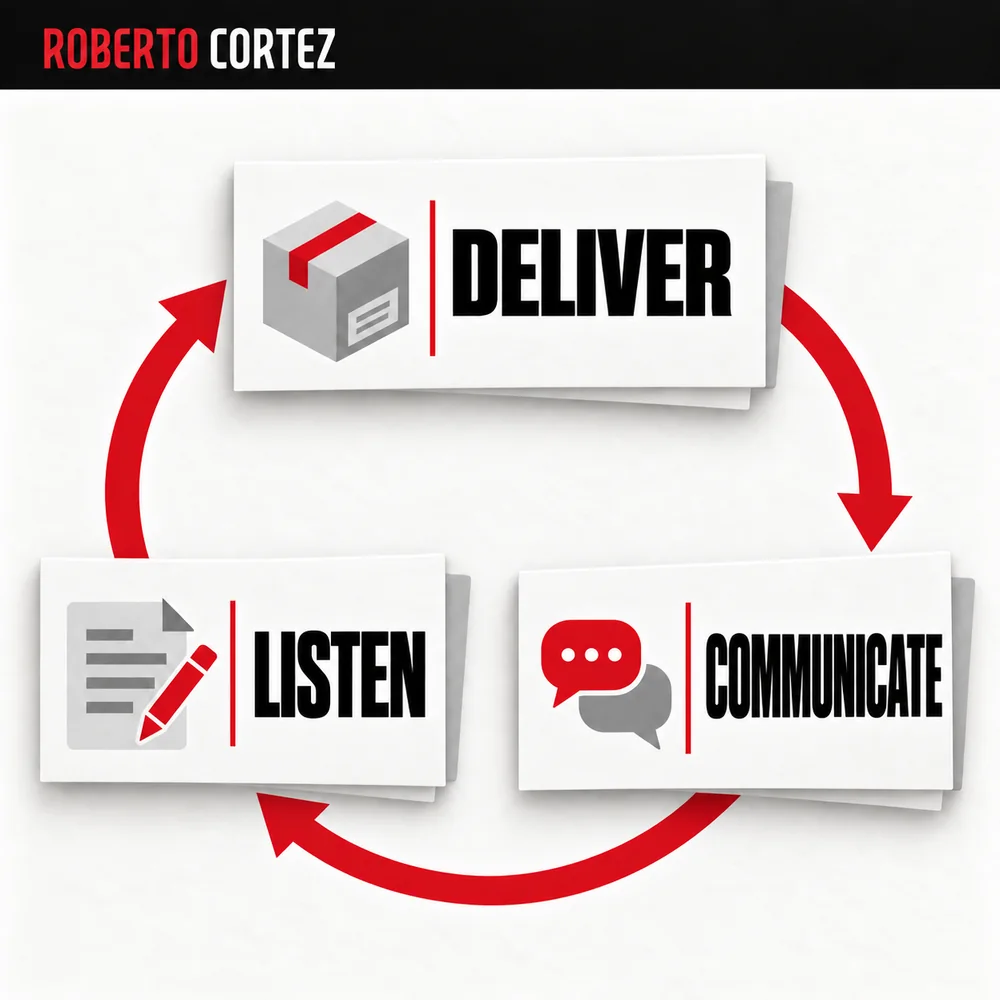
After explaining delivery, ask the client to identify what was most useful and what remains unresolved. Listen before adding justifications for the work. This conversation checks understanding and suitability; it should not be designed to make someone agree with the assessment the team has already made of its own performance on the project.
Questions such as “which of these changes did your team notice in its work?” bring the conversation closer to actual use. “Do you understand the value?” can make the client feel there is an expected answer. The wording influences how freely they describe what is happening in practice.
If the answer reveals unfamiliarity, find out where context was lost. Information may have reached the wrong person, arrived in a difficult format or failed to explain its consequence. Correcting that communication differs from simply increasing the number of messages sent to the client every week.
If the answer reveals a lack of usefulness, return to delivery. A client can understand the work perfectly while still believing it does not address the need. Insisting on presentation then consumes time that should be used to decide what must change in the service itself.
Explain efficiency gains without simulating work
When the team starts executing faster, explain how it continues to ensure quality, responsibility and support. Clients do not need to see repeated tasks merely to feel activity exists. They need to understand what they receive, what is checked and how freed capacity contributes to the delivery that was agreed with them at the outset.
Automation may reduce manual interventions without reducing care for the result. It can also create new review and maintenance needs. Explain the process insofar as it helps the client understand who remains responsible for quality and what happens when an exception needs to be addressed by the team.
Do not attribute benefits to time savings before those benefits occur. If the team gained availability, identify how that time was actually used, where applicable. It may support deeper analysis, better responses or planned work; spare capacity alone does not prove an improvement for the client.
Tool selection remains subordinate to delivery. The client may have requirements concerning methods or data use that must be respected. Explaining efficiency requires considering those commitments rather than assuming any faster execution will automatically be acceptable to the client or suitable for the agreed work.
Record the conclusion and observe whether anything changes
After the conversation, record what the client recognised, which uncertainty remained and the action agreed. Define how to check whether the change improves understanding or use of the service. Without follow-up, you may repeat the same explanation across several meetings and still not know whether the perception of value has changed in any meaningful way.
A dashboard identifying clients who need attention can retain these signals without turning every comment into an alarm. A specific uncertainty requires context and a response assigned to someone. The record should support the next conversation while preserving the meaning of what was actually said.
Value becomes clearer when the client and team can discuss the same delivery using understandable criteria. The conversation may reveal good work that was poorly explained or a necessary improvement to the service itself. Both conclusions are useful because they connect decisions to the actual relationship between delivery and the client's needs.