
In a recent class on the media buyer's role in the AI era, I made a point that's easy to miss: artificial intelligence can run and even optimise campaigns based on rules, but what I call the "postmortem" of a campaign or a partnership, meaning what you learn when something gets paused or a client relationship ends, stays human work, my work.
Why AI doesn't replace this part
A useful review connects results with the conditions in which the campaign ran. I record the offer, audience, objective, and changes made during the test. When I return to the figures, I can then separate what I observed from the explanations I still need to check.
AI analyses faster than any person could. It can look at thousands of rows in a CSV and spot patterns in seconds, something that would take me hours by hand. The machine only knows what counts as a good or bad result because I defined that criterion beforehand; it won't go fetch the business context, the customer, the offer, or the conversation that happened behind the numbers on its own. I have to bring that context, because I lived the conversation with the client, I know why the offer got adjusted halfway through, and I know what was already tried before and failed.
In the class I describe the automation system I built for the Ad Summit: a matrix with my own rules, built from my experience and the event's targets, that runs on its own every hour without calling any language model. It's automation executing rules I wrote, not an intelligent decision made on its own. The person who set the limits and decided what to do when something fails was me, and setting those limits is work I want to keep doing myself.
What's worth recording when a campaign pauses
The test record should include the limits set beforehand and the reason for each change. If I paused an ad set, I want to know what it spent, what result it produced, and which rule applied. That information gives me context for reviewing the decision later.
When an ad set pauses because it hit a defined spending ceiling without producing results, that's a data point worth keeping, not an episode to forget. In the class, I showed concrete rules from my AdSummit matrix: no ad set gets paused before spending 60 euros, a condition I defined for those campaigns. I describe this as an acceleration and validation phase, where I spread spend across many creatives to find which ones deserve to scale, then concentrate budget on those.
What matters to record here goes beyond "we paused it because it didn't work." I record what hypothesis was being tested, what limit I set before starting, and what the numbers actually showed about that hypothesis. You could, for instance, write down before launching a test what the maximum acceptable acquisition cost is and at what point you decide to stop; then, when you pause, you confirm whether the decision followed that rule set in advance or was a reaction to that day's noise.
What I expect from a media buyer in the AI era
How to convert more leads into clients in a service business
Short-term results hide what matters
To assess a campaign, I also record the role that purchase played in the business. An entry product may lead to later purchases, but I need a way to follow that journey. Looking only at the first sale leaves out information that could change the assessment.
One example I share in the class is a course sold at 7 euros through Meta ads. The campaigns generated over 50,000 euros in course sales, with roughly 22,000 to 23,000 euros spent on ads. That leaves a difference of around 30,000 euros before other costs, over two or three years, a figure that on its own doesn't cover the bills of the business. What changes the reading is that those same customers, over time, generated over half a million euros in follow-up sales.
The practical lesson I take from this is to look at customer lifetime value before closing the verdict on an entry-level campaign. Judging a campaign only by immediate dashboard return stops at the easy part of the equation. When the client can't say where long-term sales actually come from, that's where a post-campaign review needs to start: separating what the campaign generated in direct sales from what it generated in lifetime customer value over the following months.
External factors that also need recording
When a campaign produces disappointing results, I review the offer, the market, and the sales follow-up alongside the advertising. Recording those checks helps me explain which part of the customer journey needs attention. Otherwise, I risk changing the ads while leaving the underlying difficulty untouched.
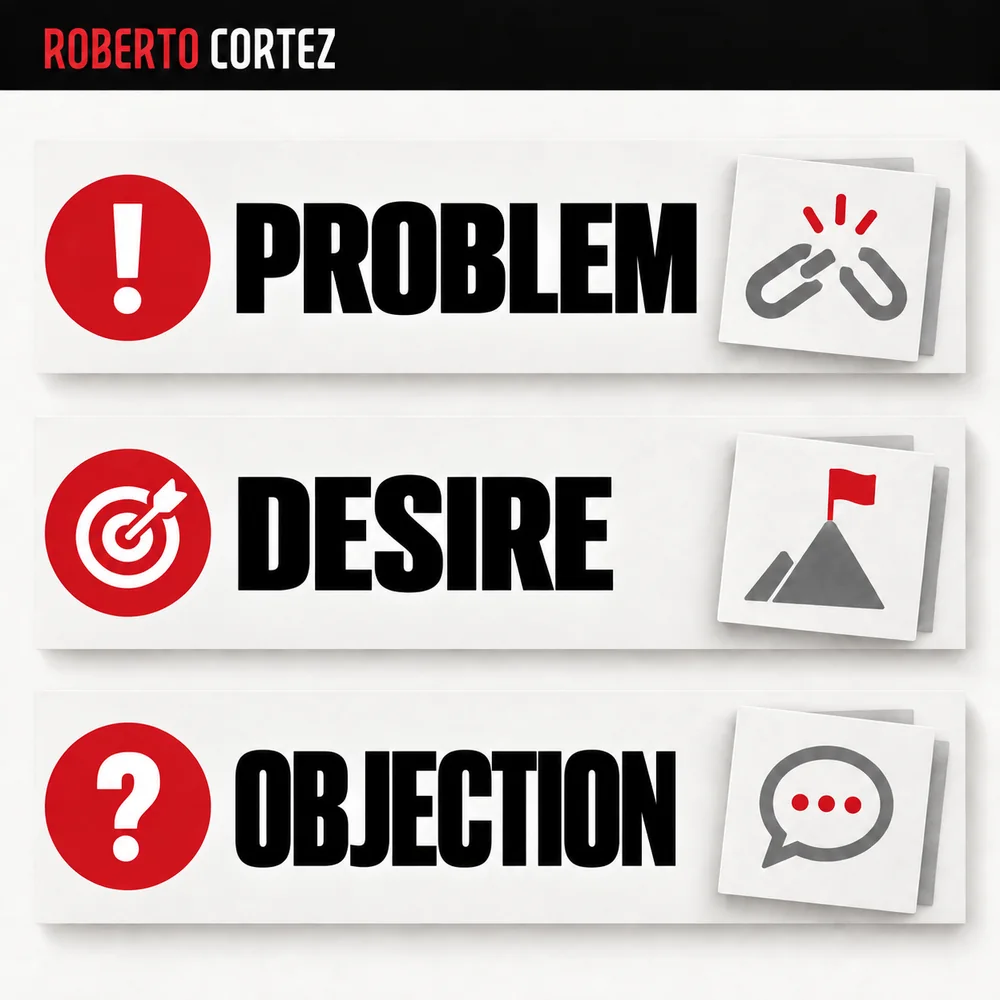
I'm blunt about this: a campaign's bottleneck isn't always in the ad. It can be in the offer itself, which isn't compelling enough or is misaligned with the market. It can be in the market, which simply doesn't have enough demand. It can be in sales follow-up, a lead going cold because nobody responded in time, or a missing basic automation in an e-commerce store that should have flagged an abandoned cart.
A media buyer who only looks at their own ad operation, without looking at the whole funnel, loses sight of these causes. It's worth asking explicitly when closing out a campaign: was the problem in the ad, or was it somewhere else in the funnel that wasn't under my direct control? Writing that distinction down protects the project's history and stops a healthy acquisition channel from being cut because of what was actually a commercial or logistical problem.
Rushed conclusions and the weight of accountability
The person managing the campaign remains responsible for the decision. In the record, I identify who set the rule, what information was available, and what action followed. If the data was insufficient, I keep that limitation visible instead of treating a tentative explanation as a settled conclusion.
Whoever chooses to use an automation still needs to monitor its decisions and results. I stressed that responsibility in the class. When data is scarce, I want the conclusion to say what we do not yet know: limited spend and no conversions may be insufficient to assess a creative. Those two numbers alone do not establish whether the platform has exited its learning phase or demonstrate that the ad failed. The record should retain that limitation so the team does not turn a suspicion into certainty in the next campaign.
I want to understand what changed and what I need to decide is roughly the posture implicit in how I describe the process: the matrix alerts, but I'm the one interpreting and deciding. Give me the data, explain the rule, show me where it failed is essentially what I ask of my own operations dashboard, which sends me hourly WhatsApp updates about what changed and why, so I can act with context instead of blindly.
Carrying the learning to the next client
I also record the conditions that may limit how a lesson applies to another account. Budget, available data, offer, and market all affect how a test should be read. A decision that worked for one client deserves another assessment before I repeat it for someone else.
A strong point in the class is the distinction I draw between managing one large account with abundant budget and data, and managing many small, different accounts. With more data, decisions become easier, almost to the point where the decision turns automatic from a results matrix. It's in the smaller accounts, with less data, where I have to decide without all the information I'd like to have, and that's where I feel real strategic judgment develops, the thing I talk about so much.
I managed traffic for the legal sector in Brazil for three years, generating up to 1 million leads a month. That made me a specialist in that specific niche. I compare that experience to managing dozens of small, different clients in an agency context, and both paths taught me things, just differently. No end-of-campaign record is a fixed formula to apply to the next client unchanged; it's a hypothesis revised in light of what happened, ready to be tested again with the next similar business.
Source
This article is based on the class Sextas Ímpares #151, on the media buyer's role in the AI era. From around the 27-minute mark I talk about the difference between AI running and optimising campaigns versus the learning that comes from a paused campaign or an ended partnership. Around the 32-33 minute mark I show the rules matrix I built for the Ad Summit, and later, around the 40-minute mark, the automatic WhatsApp reports I receive about what changed in the campaigns and why. You can watch the full class here: https://www.youtube.com/watch?v=SYe0ebyVZ5c.