

The commercial team may feel the difference before it appears in a report. There are more contacts to answer, more questions about the service and more conversations that do not progress. Meanwhile, the marketing dashboard shows growth in visits and submissions, creating two apparently incompatible readings of the same period.
I would begin by turning that impression into an observable question. Which enquiries have started arriving, why are they considered less suitable and what happened after they entered? The answer may reveal a change in demand, an expectation created by communication or difficulty keeping up with the new volume.
Changing the form immediately may reduce the number of enquiries without addressing the source of the difference. It may also remove opportunities that only needed clarification. Before adding obstacles at entry, it helps to understand where the relationship between attracted people, expressed need and capacity for follow-up is changing.
Define what it means for an enquiry to lose quality
Translate “weak enquiries” into criteria related to the offer and the possibility of progressing. Distinguish an incompatible need, unsuitable delivery conditions and information that is still unknown. Without this definition, you may call enquiries low quality when they simply require more clarification or arrived at a time when the team had less capacity to respond.
Consider a fictional example: a company provides an ongoing marketing support service. After changing its promotion, it starts receiving more contacts from people looking for a single task. Those enquiries may represent real, legitimate needs, but they do not correspond to the service the company is presenting.
In this case, the reason for incompatibility is identifiable: the type of intervention sought differs from the offer available. That is different from an enquiry that does not yet explain the need or a person who did not answer the first contact attempt. Grouping everything under “poor quality” conceals different decisions.
Define what needs to exist for an opportunity to move forward. It might be a need covered by the service, compatible delivery conditions and availability for a concrete next step. The criteria should reflect the actual offer without adding requirements the team had never considered necessary before traffic increased.
Create a category for insufficient information as well. Not knowing the budget, timing or decision-maker does not automatically demonstrate that an opportunity is unsuitable. It may mean the conversation needed to understand those points has not yet happened, particularly if the initial form only collects basic information.
It is worth reviewing some enquiries with marketing and sales together. Ask each person to explain the classification using the same criterion and the available evidence. Differences in interpretation may explain part of the apparent decline without the audience having changed in the way the team initially assumed.
This foundation should accompany a lead funnel the team can actually work with. The record needs to distinguish who arrived, who has been understood and who can progress. A useful label guides the next decision; a vague one merely accumulates opinions about the contacts received.
Compare periods using equivalent criteria and follow-up
Choose periods that allow enquiries to be observed using the same criteria and a similar level of follow-up. Separate assessed cases from those still pending. Comparing older contacts that have been worked with recent contacts still awaiting a response can make quality appear lower when part of the difference comes from the time available to clarify them.
Start by recording when each group of enquiries arrived and the point up to which you are observing its journey. Comparing submissions from two weeks is not enough if one group had much longer to talk and receive a proposal. The stage observed influences what you can conclude about suitability.
You should also check whether the team changed its classification method. A new owner may require different information or use a label more narrowly. If the criterion changed during the period, record that change and avoid presenting both results as though they were obtained using the same rule.
Observe absolute numbers and proportions together. A lower percentage of suitable enquiries can coexist with more suitable opportunities in total. The reverse can also happen: an apparently better percentage may result from far fewer contacts arriving, including people the team had the capacity to help.
You do not need to choose only one of these readings. The number of opportunities helps explain useful demand; the proportion helps assess the composition of enquiries. The effort needed to understand them adds another dimension, especially when commercial capacity is limited and additional work affects the response people receive.
Also separate repeated entries, automated messages without commercial interest and contacts that do not represent new enquiries. A change in counting can increase the report total without increasing actual demand. Preserve the source records so you can explain what was included in each comparison and why it belongs there.
This stage may produce a limited conclusion: an observed difference exists, but too many enquiries still need clarification. That already guides the next step. Completing assessment of pending cases is preferable to changing acquisition based on a classification that remains incomplete and cannot yet support the proposed decision.
Break down the increase by source, message and offer
Locate where growth came from and check whether the composition of enquiries changed across sources, messages or offers. An aggregate result can hide groups with different behaviours. Use available records to compare concrete journeys, keeping contacts whose source you cannot identify visible rather than assigning a cause to them based on an assumption about where they came from.
In the fictional example, the company may have maintained promotion of its ongoing service while adding a more generic message about solving marketing difficulties. Total visits increase, but the new invitation may attract people seeking individual interventions. The diagnosis needs to examine that difference in expectations rather than simply the additional volume.
Begin with what changed during the period: published pieces, destinations used, investment, searches leading to the page or promotion by partners. Do not assume the most recent change explains everything. Use the list to find groups of enquiries that can be connected to an identifiable message or journey.
Whenever there is enough information, connect the contact's source with the reason for classification. One source may bring suitable enquiries that progress slowly; another may concentrate needs outside the offer. These situations require different responses and become invisible when all contacts are assessed only through the monthly total.
Keep the limitations of the records explicit. A person may have discovered the company earlier and returned through a different route from the one that initiated their interest. The destination recorded at submission helps reconstruct part of the journey, but it does not explain every previous contact or demonstrate causality on its own.
The relative weight of existing groups may also have changed. A journey that always brought less suitable enquiries may now represent a larger share of the total. In that case, the aggregate decline does not necessarily mean every journey deteriorated; it may reflect a change in the composition of incoming demand.
The aim is to choose where to investigate more deeply. If the difference is concentrated in one message, review its promise and the enquiries it attracted. If it appears across several sources at once, also look for changes in the offer, classification or follow-up before concluding that all traffic lost value.
Reconstruct the expectation with which the person arrived
Read the entry message, page and invitation to make contact as one journey. Ask what someone would reasonably expect to receive by proceeding and compare that expectation with actual delivery. Suitability can deteriorate when communication attracts a different need from the one the service can address, even when each individual piece appears clear on its own.
In the marketing company example, a generic invitation to “solve your problem” may be interpreted as one-off help. The page may present ongoing support further down, but that distinction may not be visible before contact. The person arrives with an expectation consistent with what they understood, even if it is incompatible with the offer.
Read real enquiries and look at the words people use to describe their needs. Do not limit the investigation to whether they selected the right category in the form. A short description may reveal that they seek specific execution, training, a quote or initial guidance that the message left open to interpretation.
Bring these observations together without turning a single case into a rule about the whole audience. Look for recurring patterns and check whether they also appear in contacts considered suitable. A common expression can have different meanings depending on context and needs to be interpreted alongside the conversation that produced it.
Then compare the expectation with what the team actually presents during the first contact. If someone expected a direct answer and encounters a sequence of stages they did not know about, they may withdraw before clarifying their need. That withdrawal does not prove on its own that they were never suitable for the service.
Relevant conditions should be clear where they help people decide. The type of intervention, the client's responsibility and the next step can guide the choice more effectively. This does not require a hostile page or endless exclusions; it requires explaining what the person is requesting before they share information.
A diagnosis before the marketing plan helps check whether the offer is sufficiently defined to be communicated. If the team itself disagrees about the service it wants to sell, adding form questions merely pushes that decision onto the person trying to contact the company.
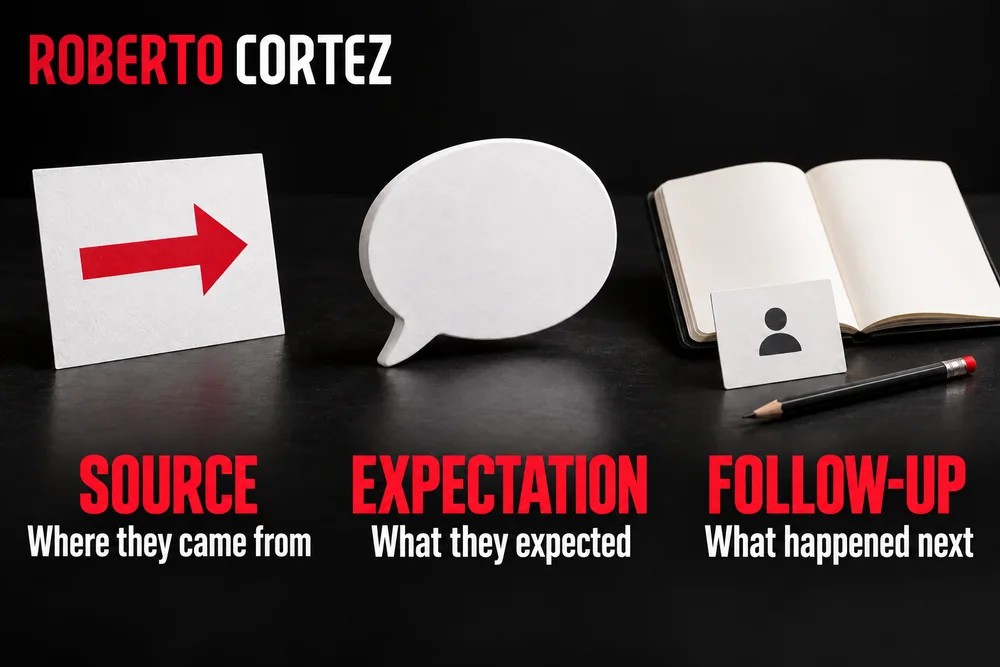
Check whether follow-up changed with volume
Compare how enquiries were handled before and after the increase in entries. Observe allocation, time to contact, information used and continuity of conversations. More demand can change response capacity, and an opportunity that is still poorly understood may end up classified as unsuitable when the commercial process no longer gives it enough follow-up to clarify the situation.
Growth may have arrived without a corresponding change in team capacity. The responsible person continues handling the same projects and now divides attention among more enquiries. Some remain unanswered, others receive a less contextual response and others never reach the conversation in which suitability could have been assessed properly.
This hypothesis needs evidence. Consult the journey records and observe whether waiting time, attempts made or handovers between owners changed. Do not automatically attribute every outcome to the commercial team, just as you should not automatically attribute every unsuitable enquiry to the source of the traffic bringing people in.
In the fictional example, the company may discover that one-off needs are clearly identified and that, in addition, a substantial group still requires clarification. Both problems can coexist. Correcting the promise helps address the first; organising the response may be necessary to understand the second.
It also matters whether collected information is being used. If someone described their need and receives a reply that ignores that context, the conversation begins with repeated work. The form may be collecting useful data while the handover to follow-up loses precisely the information that would support better qualification.
The analysis should consider the experience of the person requesting contact. Someone who does not answer may have lost interest, found another solution or failed to understand the next step. Silence alone does not provide a reason for disqualification; record what is known and distinguish non-response from confirmed incompatibility with the service.
Turning leads into clients in a service business involves both acquisition and follow-up. Here, the point is to check whether the change in volume altered the team's ability to understand opportunities. The diagnosis becomes more useful when it identifies the concrete stage that needs attention rather than assigning a general label.
Choose a change linked to the best-supported hypothesis
Select the first change using the evidence gathered and the effect you want to observe. It might clarify the offer, correct a message, adjust a question or reorganise follow-up. Write the hypothesis before acting and define how results will be compared, avoiding several simultaneous changes that make the role of each one difficult to understand.
If incompatible enquiries are concentrated around an invitation suggesting one-off work, the first change may be to make the ongoing intervention explicit. The evaluation question is whether contacts start arriving with expectations closer to the offer. The total number of submissions alone does not answer that question about the quality of understanding.
If the main difficulty involves enquiries still awaiting clarification, allocation and follow-up may be the priority. Adding fields does not necessarily resolve a queue nobody is handling. Before asking the interested person for more information, confirm that the team can use the information it already receives.
An additional question can make sense when a concrete decision depends on it. In the example, distinguishing the type of intervention sought may help guide the response. That question should be easy to understand and have a defined use, without turning technical language into a test of someone's ability to explain their problem.
When evidence is insufficient, the next action may be to improve the record. Recovering the known source, separating pending cases and recording reasons for incompatibility can support a better decision later. This does not mean postponing indefinitely; it means choosing the missing information needed to examine a specific hypothesis.
Also define what needs to be preserved during the experiment. A change that reduces incompatible enquiries but prevents suitable opportunities from arriving requires a fuller assessment. The criterion should not simply be making the team's list shorter, especially if the company still needs useful demand in order to grow.
Record the date, change and comparison conditions. If another change occurs during the same period, include it in the interpretation. An improvement observed after editing the page may support the hypothesis, but it does not establish by itself that the edit was the sole cause of the outcome.
Assess useful opportunities and effort without hiding pending cases
Review the change by looking at suitable opportunities, the composition of enquiries and the work needed to follow them up. Present quantities, proportions and open cases using consistent criteria. The decision should show whether the company is receiving demand it can support and serve, without declaring success merely because traffic increased or the number of contacts fell.
In the fictional example, clarifying the service may reduce one-off enquiries while retaining opportunities for ongoing support. It may also reduce contacts who were suitable but interpreted the new message too narrowly. The assessment needs to observe what happened instead of assuming that every reduction represented an improvement in quality.
Connect understood enquiries with the effort used to assess them. A change may save triage time and allow better follow-up of other contacts. That available time is an operational outcome to observe, but it does not automatically equal lower costs or more completed sales for the business.
Acquisition cost should accompany this analysis without replacing assessment of the opportunity. A cheaper submission may require considerable work without revealing a suitable need; a more expensive submission may also fail to justify the difference. Use the real journey and available outcomes to understand what each group is bringing to the business.
Keep pending enquiries visible in the report. If many remain unworked, the conclusion about quality is still incomplete and the team needs to know why. Do not distribute unknown cases between success and failure simply to complete a percentage or present a definitive result that the evidence does not yet support.
The guide to positioning and value proposition helps return to the underlying question: who the offer exists for and which need it addresses. Traffic, message, form and follow-up should allow that fit to be understood. The investigation ends in a better-informed decision about the journey, with criteria you can use again when demand changes.