

Service providers use the vocabulary of their work every day. A client may experience the same difficulty without knowing any of those terms. To communicate clearly, understand how the situation appears inside the company before translating it into the technical name of the solution you believe might address it.
Where should you look for client language?
Look in enquiries, sales conversations, support questions and responses about needs or buying decisions. Each source reveals a different stage of the relationship. Record that stage so you do not confuse the explanation of someone still discovering a problem with the opinion of someone who already knows and uses the service in their daily work.
Someone seeking help for the first time may describe delays or repeated work. After implementation, they may describe the process using terms learned from you. Both responses are useful, but they answer different questions about acquisition, delivery and the continuing relationship with an existing client.
Include opportunities that did not proceed when you have enough context to understand the decision. Listening only to satisfied clients can conceal difficulties that deter other suitable people. At the same time, one refusal does not automatically represent a widely shared view across the whole market.
Communicating services in a competitive market benefits from this range of situations. Language should bring you closer to an actual need without turning every phrase discovered into a promise or a new segment that the business must pursue.
To prepare your next step, explore Positioning and value proposition.
Which questions help produce concrete answers?
Ask what happened, how the person tried to resolve it and what prompted them to seek help. Request examples and clarification without suggesting the answer you want. A concrete question about a recent situation usually reveals more context than asking only for an abstract opinion about your service or the idea behind it.
Ask what led to the enquiry, when the difficulty appears and how the team handles it today. If the answer is saving time, request a description of a task where that need arises. The objective is understanding experience rather than pressuring someone to validate the solution you are proposing.
Avoid asking whether they would like a tool that saved many hours and solved everything. The wording supplies an attractive conclusion and may produce agreement with little information. Asking how the last similar request was handled reveals existing steps, difficulties and decisions without proposing the answer first.
Information needed before accepting a project connects these responses with possible work. Listening to market language also helps discover resources or expectations that still need clarification before a suitable proposal can be developed for that client.
How do you retain phrases without losing context?
Keep each phrase with an internal reference, the question prompting it and the situation needed to interpret it. Identify summaries as interpretations rather than verbatim quotations. Retain only information needed for the work and separate identifying details from material used to analyse patterns or prepare communication that may later be shared more widely.
In a hypothetical example, someone says they always have to ask who replied to an enquiry. That may indicate poor visibility, but does not establish that nobody replies. Immediately turning it into losing every contact changes the meaning and exaggerates the difficulty that the person actually described.
Another person may say they need more sales, then explain they cannot handle existing enquiries. The first phrase alone points towards acquisition. Context may reveal a need for capacity or organisation before bringing in more demand that the current team cannot effectively process.
Keep those differences beside the extracts. A file of strong phrases detached from original questions and situations makes striking copy easier and understanding the client harder. The record should allow a return to the origin whenever somebody questions the interpretation made by the team.
How can AI group material without inventing conclusions?
Use AI to suggest thematic groups and connect each group to references in the supplied responses. Ask it to preserve differences, flag ambiguity and avoid completing statements with imagined needs. Then review the originals: a coherent summary can conceal contradictions or combine situations requiring very different commercial decisions within your particular business and service.
A useful structure might distinguish initial difficulties, reasons for delaying and expectations after purchase. Within each group, retain referenced examples alongside the summary. This lets you check whether the group title matches the responses or simply reflects a plausible interpretation introduced by the model during organisation.
When giving context to AI, explain the research question and the material's limits. A collection of responses should not be treated as a complete market portrait. The model should not create composite quotations and present them as the words of a real individual client either.
If requesting counts, check duplicates and the unit being counted. Three messages from one person do not necessarily mean three clients with the same need. Distinguish mentions, people and frequency within available material without automatically extrapolating any of them to the entire intended audience.
How do you turn research into clear messaging?
Turn research into messaging that preserves the meaning of responses and explains your offer in recognisable language. You need not copy every expression literally or publish client information. Choose a well-supported difficulty, connect it to the intervention and check that the wording remains accurate for the recipient and the scope you can actually deliver.
In the example about who replied, messaging could describe making enquiry follow-up visible. That preserves the need to know status and ownership without claiming every contact gets lost. The service description should then explain how that follow-up will be organised with the team involved.
Distinguish problem language from solution language too. Someone may request software because it is the only alternative they know. The conversation should clarify the objective before concluding that selling that tool is the right response to their actual difficulty or the best use of available resources.
Before using a quotation publicly, confirm permission and accuracy. For most messages, explain the pattern in your own wording while keeping its origin internally. The value lies in understanding rather than exposing a client to make the copy appear more convincing to future buyers.
When should you return to client conversations?
Return when responses are vague, groups contradict one another or interpretation requires assuming something nobody said. Review research when the offer, audience or context changes too. Collected language is evidence from a moment and a set of people, rather than a permanent description of the whole market or every future client you may serve.
If an expression appears repeatedly but you do not know which situation it describes, prepare a deeper question. If new clients use different terms from existing ones, compare their journeys and knowledge. The difference may reveal changed needs or simply learning that occurs during the working relationship.
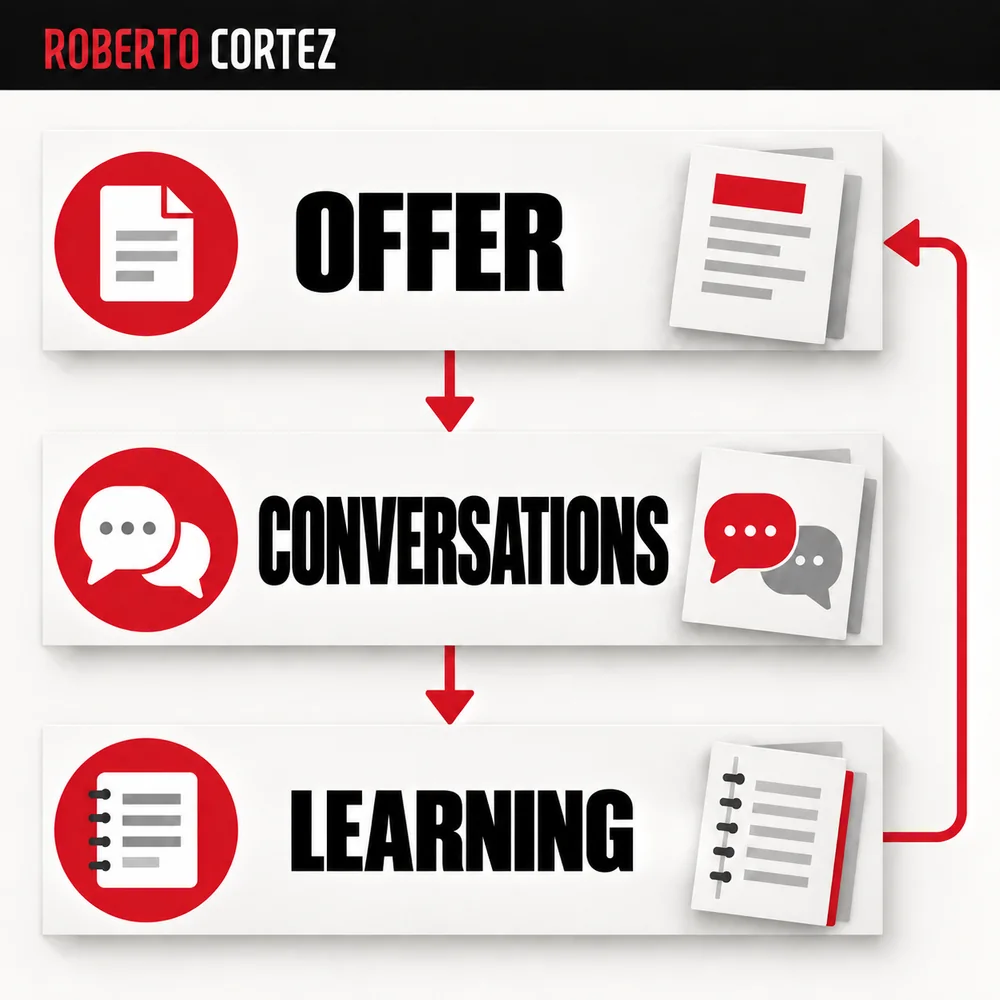
Use conclusions to improve questions, messages and service decisions, then observe subsequent conversations. Useful research reduces assumptions and makes it easier to recognise what you still do not know. That discipline allows you to communicate closely without pretending to understand clients better than the available information supports.