

What information should accompany each contact?
Transfer the original enquiry, the offer that attracted interest, the known source and the answers the person has already provided. Include earlier interactions and relevant questions. Sales should be able to understand why the contact arrived without reconstructing the history across several tools or asking everything again from the beginning of the relationship.
In a hypothetical example, someone fills in a form about acquisition support and explains that they already have a team handling enquiries. The handoff should preserve both facts. If sales receives only a name and phone number, it loses context for understanding how that team works and what support it needs.
Where campaign parameters exist, keep them alongside a readable description of the offer and message. A technical code may identify the source, but it does not explain what the person saw by itself. Nor does it prove that ad was their only encounter with the business before filling in the form.
This principle applies to a lead funnel the sales team can handle. Each stage should use what was learned at the previous stage. Asking for all the information again can make the conversation tiring and suggest that the earlier contact was not taken into account.
To prepare your next step, explore CRM integration with artificial intelligence.
When does responsibility move to the other team?
Define an observable assignment point and confirmation that someone has taken responsibility for follow-up. The rule should specify who receives the contact, how receipt is checked and what happens if that person is unavailable. The presence of a notification does not, on its own, demonstrate that sales work has actually begun.
In a small team, marketing and sales may be the same person at different times of day. The organisational need remains. Distinguish an acquired contact, an assigned contact and a contact actually worked on, so the handoff does not depend on memory or someone remembering to check a message.
If several people are involved, avoid a queue where everyone can assume someone else will respond. Assign a responsible person and maintain a way to replace them when necessary. The transfer should preserve history and make the new responsibility visible without generating duplicate approaches to the potential customer.
Set working times compatible with the service and actual availability, including what happens outside operating hours. An automatic confirmation can say the enquiry was received, but should not promise analysis that has not happened. If the queue grows, make that visible before the team continues acquiring contacts it cannot handle.
How do you distinguish qualification from information to confirm?
The handoff should show the criteria used to consider the opportunity relevant and the information still missing. An incomplete answer should not automatically become a negative answer. If a classification or score exists, sales needs to understand its basis and be able to correct the record as it confirms the context through conversation.
A person may omit a budget because they are still working out what kind of service they need. That differs from confirming an incompatible budget. The distinction helps determine which question to ask instead of closing an opportunity simply because one field remained empty in the original form.
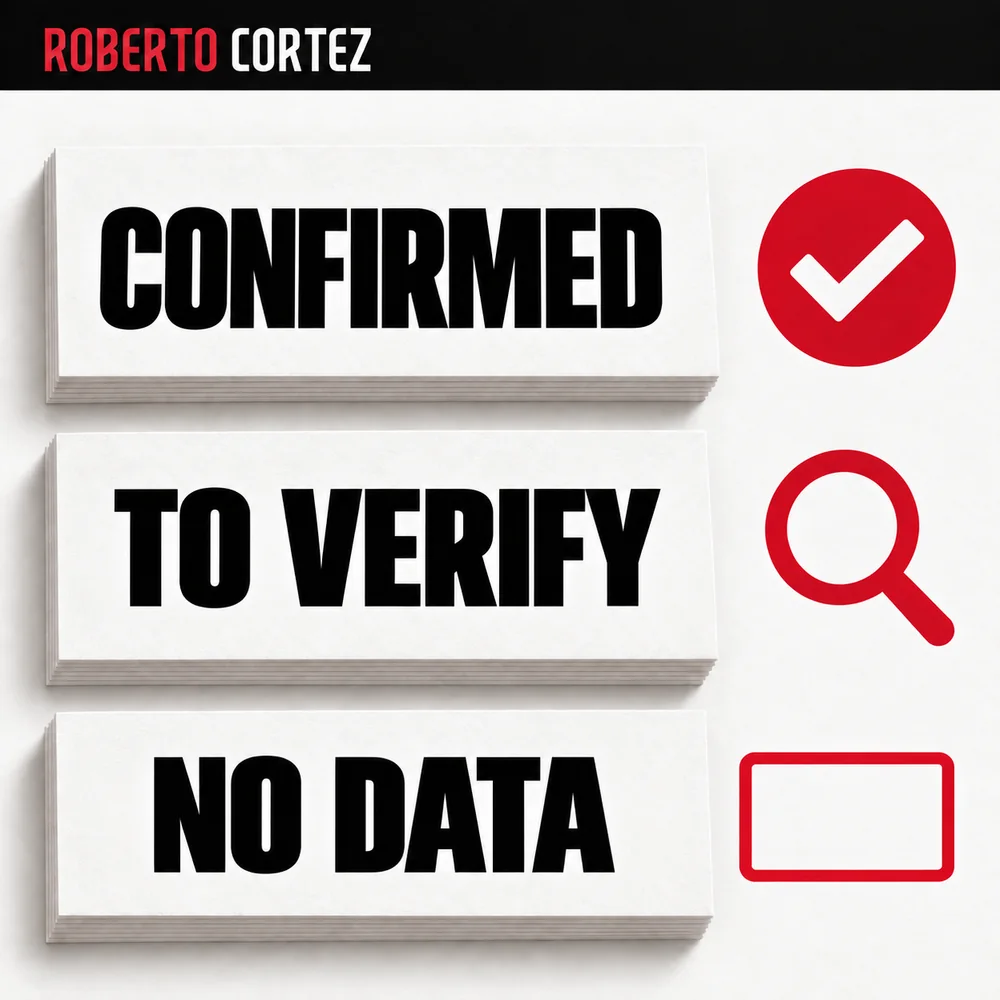
The same care applies to company size, urgency or someone's participation in the decision. Preserve what was actually said and avoid turning a deduction into confirmed data. Public company information may help prepare the conversation, but it may also be incomplete or out of date.
To develop the opportunity, understand the customer's goals and resources before accepting a project. The handoff need not contain the entire diagnosis. It needs to tell the person continuing the conversation what has been clarified and where to focus their attention next.
What role can AI and automation play in the handoff?
Automation can route the contact and create a task, while AI can help summarise the conversation and suggest a classification. Define permitted actions and how they are reviewed. The summary should preserve uncertainties and limits without inventing commitments or replacing access to the original enquiry when someone needs to verify the information.
Imagine a summary stating “customer wants to proceed” when the original message said “I want to understand whether proceeding makes sense”. The wording changes only slightly, but the decision changes significantly. Sales may start negotiating terms before understanding the need because it received certainty the person never expressed.
Ask the system to keep the contact's statements, interpretations and unanswered fields separate. If a rule assigns priority, retain the reason for that assignment. A useful classification guides work; it should not prevent review of opportunities that were misunderstood or placed in the wrong category.
Plan for routing failures too. If the integration fails to create a task or find a responsible person, there should be a way to detect and resolve that exception. A fast summary cannot compensate for an enquiry lost between tools, and automation does not remove the need to check that someone is handling the queue.
What should sales return to marketing?
Sales should return follow-up status, the context confirmed and relevant reasons for progressing, postponing or closing the opportunity. Marketing needs that information to review acquisition and messaging. If the conclusion is uncertain, record that uncertainty instead of reducing every situation to a label that says the lead was of poor quality.
Someone may have expected a service you do not provide, lack capacity to implement or simply not have replied. Those situations require different actions. The first may require reviewing communication; the second can inform qualification; the third still does not explain whether the contact is a suitable fit.
Preserve the distinction between the reason communicated and the salesperson's interpretation. A comment such as “seems to be only comparing prices” does not carry the same weight as an explicit answer about what the person wants. Feedback should inform decisions without turning impressions into certainties about an entire campaign audience.
This cycle is part of turning more leads into customers in a service business. If only the sales count returns, you lose information about what happened between enquiry and decision. If every detail returns without organisation, marketing may be unable to use the information it receives.
How do you check whether the handoff works?
Review a sample of contacts from entry to the next sales step and compare statuses with the actions actually recorded. Look for enquiries without an owner, lost information, duplicate contacts and repeated questions. Measure handoff time too, without confusing assignment speed with response speed or the quality of the conversation that follows.
A contact may be assigned immediately and remain untouched. Another may receive a quick automated reply and wait several days for a conversation. Distinguish those intervals because they indicate different failures and do not necessarily improve through the same change to the process or tool.
Include cases that progressed and cases that stalled in your review. Looking only at won customers may hide failures affecting abandoned opportunities. Compare periods and teams with similar context before concluding that a handoff rule caused an improvement in sales, rather than merely coinciding with one.
Choose one concrete correction at a time: a relevant field, clearer assignment or a way to detect exceptions. Then check whether the observed problem stopped happening. The handoff is organised well when its recipient can continue with context and responsibility, and the team that acquired the contact can learn from the outcome.