
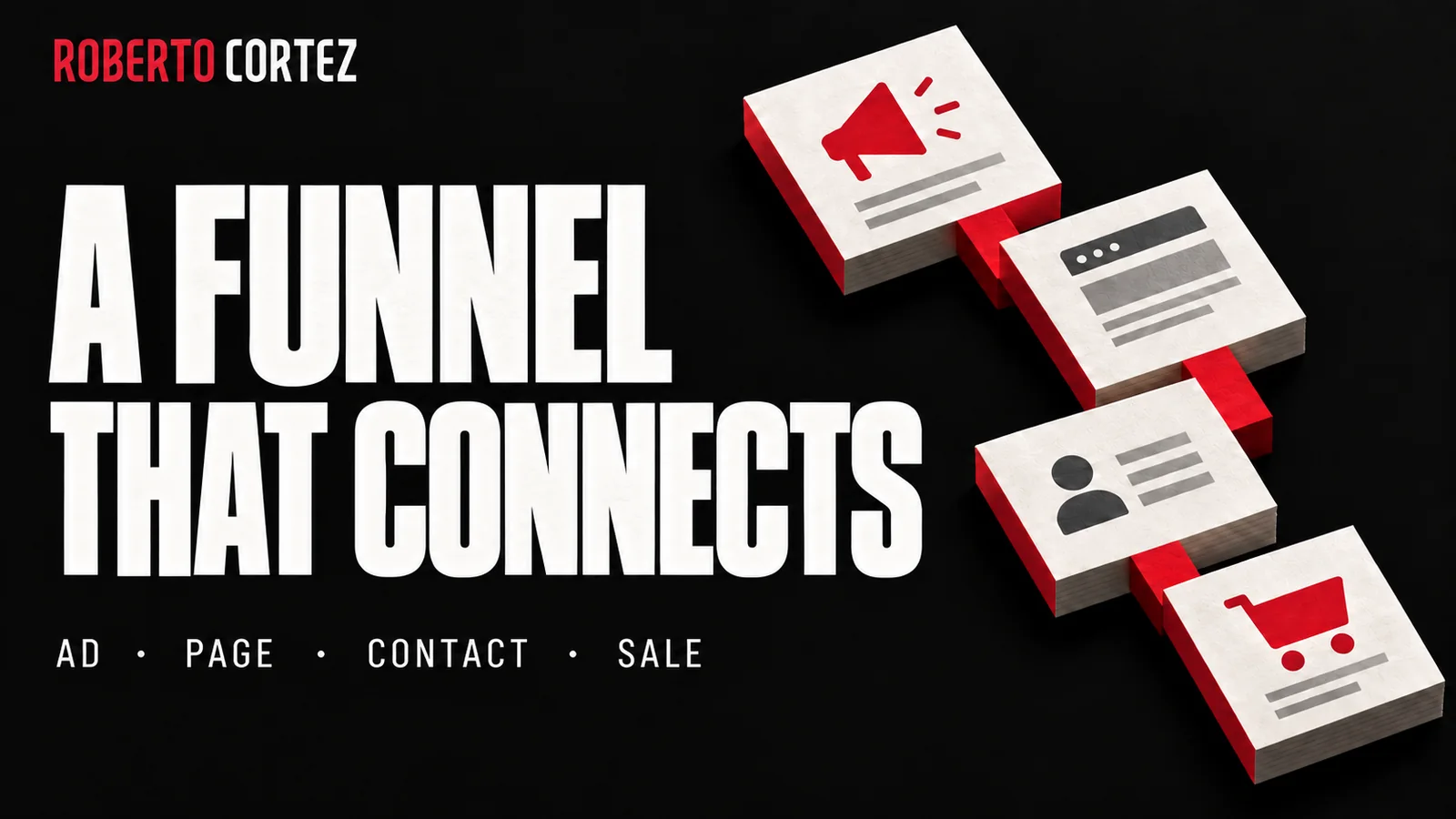
Which target are you trying to reach?
First define whether the target concerns new customers, contracts, contracted value, invoicing or cash receipts. These outcomes do not necessarily occur at the same time and are not interchangeable. To plan proposals, choose a clear commercial measure and period, keeping the others as separate checks on the viability of the plan and business.
Imagine a hypothetical target of ten new contracts, each with a one-off value of €2,000. The objective represents €20,000 of contracted value. That does not mean the €20,000 is invoiced, collected or recognised as a result in the month when the contracts are signed.
If services have different prices, contract count alone no longer explains the target value. You can use groups of similar proposals or an average supported by your own history. Identify the expected mix, because closing more small contracts may not produce the same commercial value as another mix.
Choosing indicators that show whether the business is improving helps avoid this confusion. Sales activity needs a connection to results, but contracts, revenue and available cash must remain identified by their own names and relevant periods when you assess the plan.
To prepare your next step, explore The B2B sales process.
How do you calculate a useful close rate for planning?
Use a set of comparable proposals with a consistent definition of a win and enough time to observe the decision. Count unique opportunities without treating every document revision as a new proposal. Show how many remain open and avoid mixing wins from old proposals with newly sent proposals simply because they occurred in the same month.
In a hypothetical example, a group of eighty completed proposals produced twenty won contracts and sixty losses. The observed rate is twenty divided by eighty, or 25%. That rate describes that group and the conditions under which it was handled; it does not characterise every service or salesperson.
If a group of proposals remains open, do not erase it from the analysis to make the rate look better. Show its size and observation time. When using only completed decisions, state that opportunities taking longer may change the final reading of the group once their outcomes become known.
Compare source, service, size and follow-up process too. A meaningful change in these elements can make the earlier rate unrepresentative. Turning leads into customers involves several decisions, so the same proposal count can produce different results depending on how those proposals were prepared and followed up.
How do you turn the target into a proposal count?
Divide the desired contract count by the assumed close rate expressed as a decimal. The result is a volume reference under that assumption, not a minimum that guarantees the target. If the calculation produces a fraction of a proposal, round upwards and keep the rate used in the estimate clearly visible.
For the ten-contract example, an assumed rate of 25% gives 10 ÷ 0.25 = 40 proposals. The correct reading is that forty proposals at that average rate correspond to ten expected contracts. Sending forty does not force customers to decide or remove the possibility of closing fewer contracts.
Calculating scenarios is a useful way to expose uncertainty. At a rate of 20%, the same target implies fifty proposals; at 40%, the reference falls to twenty-five. These are hypothetical assumptions to understand the plan's sensitivity, without assigning probabilities to the occurrence of each scenario.
Do not choose the highest rate just because it makes the plan more comfortable. Ask which conditions would support it and whether you have enough information to use it. If your history is small or the service has changed, begin with explicit scenarios and revisit them as real decisions arrive.
How many opportunities do you need to produce that volume?
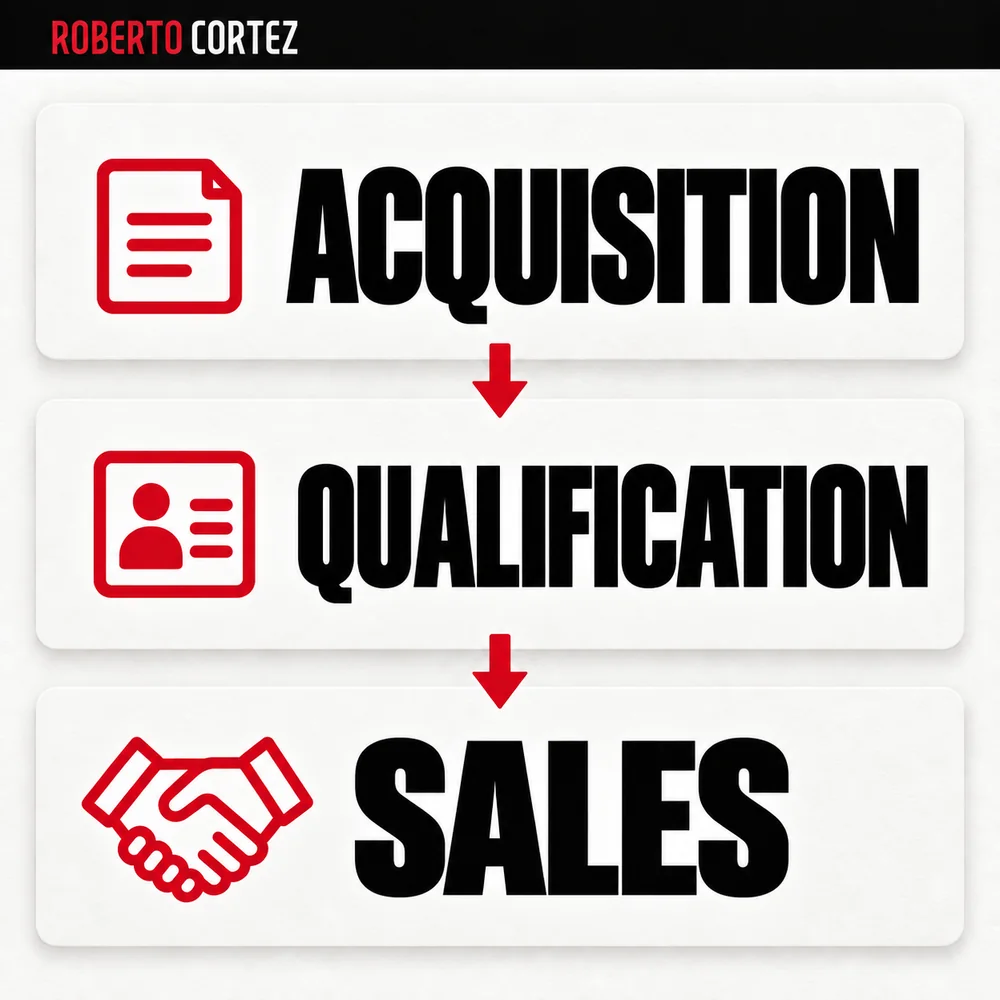
Connect the proposal count to earlier stages using rates defined for your process. If not every opportunity reaches a proposal, account for that transition. Do the same for contact qualification, retaining the same population and avoiding combinations of percentages from channels, periods or services that cannot be meaningfully compared with one another.
Keep the forty-proposal example and assume, solely for illustration, that half of qualified opportunities reach a proposal. The reference becomes eighty opportunities: 40 ÷ 0.50 = 80. If half of contacts become qualified opportunities, you would need one hundred and sixty contacts: 80 ÷ 0.50 = 160.
These three rates are not added together. In this scenario, 0.50 × 0.50 × 0.25 = 0.0625, or 6.25% of contacts reaching a contract. The sequence is consistent with ten contracts from one hundred and sixty contacts, provided every stage belongs to the same journey and has time to take place.
When building a funnel the sales team can handle, check where volume meets a real limit. Planning more proposals achieves little if there is no capacity for meetings, gathering information or preparing an appropriate recommendation. A proposal sent before it is ready can increase recorded activity without bringing the target closer.
How does the time between proposal and decision affect the plan?
Distribute activity according to the time opportunities usually need to progress. A proposal sent near the period's end may only contribute to a later target. Separate opportunities already in progress from those still needing to be created, and check whether the calendar allows all necessary stages to finish before the intended date.
A monthly plan should not assume every contact acquired that month will meet, receive a proposal and decide before the final day. Even where an average duration exists, some opportunities take longer. Examine the distribution in your history and the specific conditions of each negotiation before relying on that average.
Open proposals count towards planning too, but not as guaranteed contracts. Identify their status, last interaction and next expected decision. A large value in the CRM can reflect stalled work, outdated estimates or opportunities that no longer have the conditions needed to progress towards an agreement.
Connect the sales calendar to delivery. If the target is reached, can you take on those customers without compromising service? The plan should consider both acquisition and execution, because selling beyond capacity can create delays and costs that a proposal count does not reveal.
How do you review the plan without confusing activity with progress?
Monitor volume, opportunity quality, proposals sent, decisions and time in each stage. When results diverge from the scenario, identify which assumption stopped working. Use that information to revise the activity target or process, without assuming that increasing the number of documents sent can resolve every gap between performance and your commercial objective.
If opportunities are sufficient but proposals are scarce, diagnostic capacity may be missing or contacts may be unsuitable. If proposals exist but decisions are scarce, check scope, follow-up and timing. The same gap against the target can have different causes, each requiring its own intervention.
Keep the plan version and the assumptions used. This lets you distinguish a poorly supported forecast from a change in business conditions. Review should improve the next decision without rewriting the previous scenario to make the outcome appear to have been predicted from the beginning.
Proposal count is useful because it translates a target into observable work. It becomes misleading when treated as a sufficient cause of revenue. Use the calculation to coordinate acquisition, preparation, follow-up and capacity, while keeping actual results as something to observe and learn from rather than an automatic consequence of pressing send.