
Prepare the meeting around pending decisions
Before meeting, identify the decisions that need information or agreement between people. These might involve adjusting investment, resolving a sales delay or choosing a hypothesis to test. Preparation lets you select the necessary data and invite people with the context or authority to decide, instead of routinely walking through every available number.
A question such as “should we increase acquisition this week?” requires more than cost per enquiry. It needs information about quality, response capacity, open opportunities and availability to deliver. Without that preparation, the meeting may end with a shared opinion that lacks a sufficient basis for execution.
Send a short summary beforehand, showing the period analysed, main results and proposed decisions. Participants should be able to identify where they need to prepare context or clarify a difference. A detailed document can remain available for reference without filling the agenda with a reading of everything that was measured.
Start by revisiting commitments from the previous meeting. Check what was implemented, what remains pending and what changed in the expected conditions. If an intervention never happened, do not assess results as though it had been running throughout the entire period under discussion.
To prepare your next step, explore AI data analysis for businesses.
Confirm that the numbers answer the same question
Data needs comparable definitions, periods and statuses to support the conversation. Confirm what each indicator includes, when it was updated and whether meaningful measurement gaps exist. Differences between reports may arise from different rules, so clarify them before using those differences as an argument for changing the way the operation works.
One team may present contracted sales while another discusses payments received. Both can be correct while answering different questions. Name each status, show outstanding items and avoid treating the discrepancy as someone's mistake before understanding what is being counted in each report.
For sales enquiries, distinguish recent groups from those that have already had time to complete their decision. A campaign started a few days ago may still have open opportunities. If you compare completed sales with an older period, identify that maturity difference and monitor intermediate indicators without calling them sales.
A campaign report delivered through WhatsApp can support preparation if it preserves these definitions and points to the necessary detail. A convenient format still requires validation. Readers need to know what the numbers represent and where limitations could change the decision they are considering.
Select deviations that have business consequences
The meeting should prioritise differences that could change results, commitments or resource use. Connect each deviation to the objective and the stage where it arose instead of reacting to the visual size of a percentage. Consider the volume involved and usual variability before proposing an intervention in response to that change.
A conversion increase based on a few sales can look large while remaining difficult to interpret. A small change in a higher-volume operation may have meaningful economic consequences. Bring absolute values alongside rates so the team can understand the actual scale of what it is discussing.
In a hypothetical example, an initiative has a target of one hundred sales and has reached eighty with ten days remaining. The gap is twenty sales, requiring an average of two a day until the end. This calculation describes the pace needed to meet the objective; it does not predict regular demand or demonstrate that the current plan can achieve it.
Use the gap to discuss hypotheses and execution conditions. The issue could be demand, sales response, offer clarity or simply time for existing opportunities to close. The indicators that show whether the business is improving should help distinguish these situations, including contribution and capacity when relevant.
Separate the fact, explanation and proposal
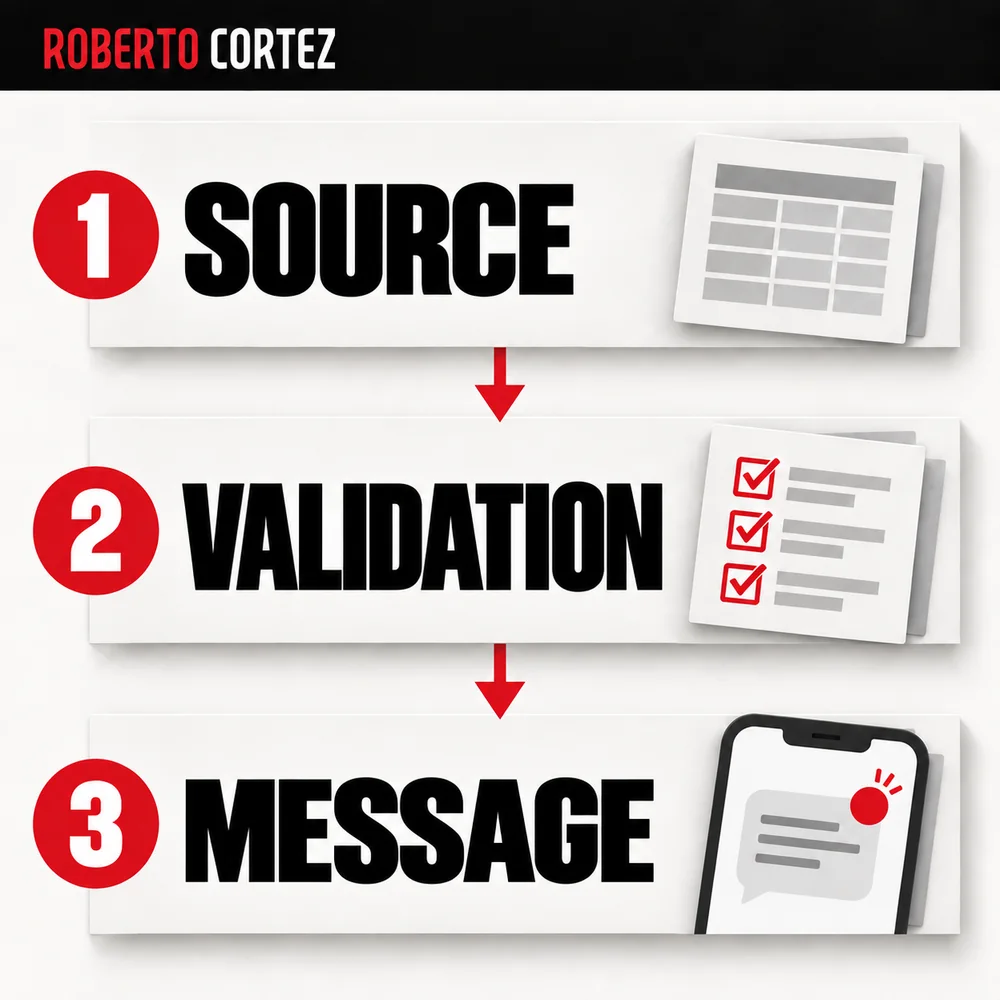
For each significant topic, first present the observation, then the interpretation and finally the suggested action. Identify evidence supporting the explanation and alternatives that remain possible. This sequence makes discussion clearer and allows someone to disagree with a hypothesis without denying the data or preventing the team from making a practical decision.
“More enquiries remain unanswered beyond the agreed response time” may be a fact verifiable in the system. “Assignment between salespeople became uneven” is an explanation to confirm. “We will redistribute the queue and check each person's workload” is a proposal whose usefulness depends on what that investigation finds.
Ask for proposals to include the expected outcome, required effort and main limitations. If several actions appear possible, compare their likely contribution to the pending decision and your capacity to execute them. That comparison does not need to become a scoring system with precision the underlying information cannot support.
When information is insufficient, the action may be to inspect a sample of enquiries or clarify a measurement error. Define what that investigation needs to resolve and who will do it. “We need more data” only guides work when the team knows which uncertainty it is trying to remove.
Close with a few priorities, owners and conditions
Each approved decision should identify an owner, action, deadline and signal to review. Confirm dependencies and availability before adding work to the team. If several initiatives compete for the same resource, choose an explicit order and record what comes later, preventing every request from being treated as equally urgent by default.
A task such as “improve the campaign” does not clarify what should happen. A more executable decision identifies the message to review, the reason for reviewing it, who prepares the proposal and when it will be assessed. If the change depends on sales information, that contribution also needs an owner and deadline.
Record decisions to maintain the current approach as well. Keeping investment unchanged while recent enquiries mature may make sense, as may waiting for a data correction before comparing results. Define when and under which conditions to revisit the topic so waiting remains a monitored decision rather than a way of forgetting it.
Avoid ending with a task list as long as the report. Every action takes time and can interfere with other changes. A productive meeting helps choose what deserves execution now, while making it clear what was postponed and why another priority took precedence.
Review decision effects without transferring responsibility
The next meeting should examine both execution and the results of previous decisions. Ask what was done, what happened and what can be concluded under the observed conditions. Tools and automations may prepare information or perform tasks, but someone must remain responsible for interpreting the findings and choosing the next step.
If the campaign changed alongside the offer or service process, preserve that context. A subsequent improvement does not, on its own, demonstrate the isolated effect of the intervention discussed. The team should learn from observation without presenting a degree of causal certainty that has not been established.
The role of a media buyer in the AI era includes understanding the business and supporting choices, even when report production becomes faster. Technology can make preparation easier, but priorities still depend on objectives, resources and consequences someone needs to assess.
Keep a short record of decisions, owners and review dates linked to the data used. Begin the next conversation with that record and update what you have learned. The meeting then creates continuity between analysis and execution, allowing the team to assess whether its choices are helping the business move forward.