
Having many recordings, documents and publications stored away can create a false sense of readiness. The information exists, but it remains difficult to tell which version is current, who made a particular statement or whether an example can be reused. Those uncertainties enter the text when the archive does not help resolve them.
I want stored material to support decisions and accurate content production. That requires more than folders with similar names. The archive should preserve the differences between an idea of mine, someone else's question, an observed fact and a hypothesis that still needs clarification before it becomes part of a public argument.
Preserve the source before you start summarising
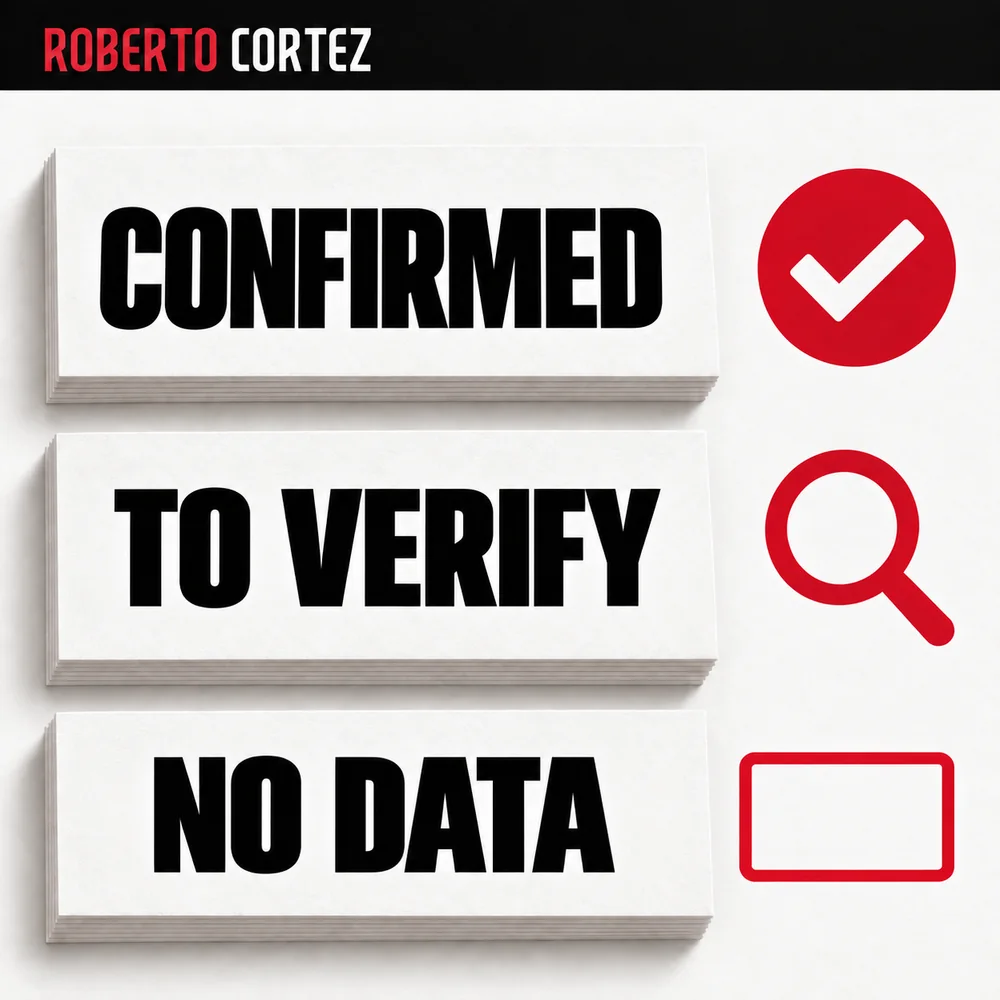
The first record should identify the original material and make it possible to return to it without relying on an AI summary. Save its location, content type, known authorship and available dates. When a detail is unconfirmed, mark that absence rather than completing the record with an assumption presented as fact.
A recording may have a creation date and a different upload date. A document may have been written at one point and revised much later. Those dates answer different questions. Keeping only the most recent may make an old idea look like a current statement, especially when the text discusses tools, prices or events.
If there is a transcript, I would retain its link to the recording and indicate whether it was generated automatically. The transcript is useful for searching, but does not replace the original when a significant doubt arises. I would also keep a stable identifier to avoid confusing similarly titled files or copies of the same material.
Organisation can start simply, with an index and consistent folders. The criterion is whether the origin of a claim can be reconstructed. Choosing a more sophisticated application does not resolve missing authorship or context, just as planning an application before building it requires defining the information it will need to support first.
To prepare your next step, explore AI assistants for internal knowledge.
Separate the passage from your interpretation of it
A passage should retain the relevant words and enough context to preserve their meaning. Editorial interpretation can sit alongside it, clearly identified as interpretation. This separation allows a conclusion to be reviewed without changing the source, and helps reveal when AI adds a reading that still needs to be confirmed.
As a hypothetical example, imagine a recording in which the author explains that automation saved time on one specific task. The record should not turn that passage into a claim that every automation reduces costs. It would need to preserve the task, the conditions in which it operated and what was actually observed.
A useful record might contain a short summary, a locatable passage and a note on its limits. The summary describes the subject; the passage preserves the evidence; the note clarifies what cannot be concluded. If some words are uncertain, that doubt stays with the record until it is resolved against the original.
This makes it possible to give AI context without piling up information indiscriminately. Writing about one decision may only require a few well identified records. Providing the entire archive at once makes it harder to understand which passage supports each part of the answer that is eventually produced.
Record what may be used publicly
The archive needs to distinguish access to material from permission to reuse it. Information available to the team may be unsuitable for public publication. Identify private content, third party contributions, sensitive examples and conditions of use before asking AI to turn them into a narrative or an image for an audience.
Removing a name does not automatically make a case anonymous. The combination of activity, location, problem and timing may still identify a person or company. If the value of the example depends on those details, someone needs to decide whether permission exists or whether the example should be excluded from the content.
I would also separate contributions within a conversation. A participant's question does not become the author's opinion because it appears in the same file. A result reported by another person still requires attribution and verification, even if AI has grouped it with the experiences of the person responsible for the project.
In practice, I would use short, unambiguous notes about permitted scope. One record might be for internal understanding only; another could support a general explanation without reproducing the case. When permission is uncertain, the record should retain that uncertainty so the next person does not confuse it with a decision already made.
Keep history separate from the current context
A rigorous archive preserves past statements while identifying decisions that remain in force. When a preference or piece of information changes, record the update and its relationship to the previous version. AI can then consult the history without treating every instruction and statement as being current at the same time.
A past event date, a discontinued offer or an abandoned tool may still help explain an experience. That does not mean they should appear as current information in a new article. The record needs to make the difference between describing the past and recommending action today clear to the person using it.
In the project instructions, I would periodically check whether the described state matches work already completed. A new decision should not remain hidden only in the conversation where it was made. Keeping the history also makes it possible to understand why guidance changed, without erasing the previous choice or confusing the two.
I would avoid records that promise permanent validity for every subject. Some principles change little; prices, software capabilities and commercial terms may change quickly. The date of the latest check helps determine what requires new research before use, but does not turn an old verification into a guarantee of current accuracy.
Test the archive with a specific editorial question
To assess the archive, request a content proposal and check whether you can trace each claim to its source. Also examine what the search omitted and which uncertainties it found. An archive works better when it makes review easier, including the decision not to use a particular passage in public content.
I would choose a narrow question, such as explaining the criteria behind a professional decision. I would ask AI for relevant records, a summary and any gaps. Then I would open the originals to check a sample and every passage supporting decisive claims before authorising text production based on that particular set of material.
This connects the archive to a concrete use of AI in business beyond a chatbot. Search prepares the editorial work, but selection and review still need owners. If the tool returns vague results, improving the records is worthwhile before increasing the amount of content being requested from the system.
I would record what was used, in which piece and with which relevant changes. That helps avoid repetition and locate publications affected by later corrections. The archive then supports both content creation and maintenance, with a verifiable connection between what you stored and what you ultimately chose to communicate to an audience.