
Define the event's role before choosing its price
An event can introduce a field, explore a problem or provide a first paid experience of your work. That role influences the audience, the programme and the follow-on offer worth proposing. Starting with a low price alone leaves unanswered the reason someone should want to participate and what they will gain from it.
In earlier editions of AdSummit, I designed the event as a lower-friction entry for people who did not yet have enough confidence to buy a more demanding offer. The experience let them get to know my work and encounter different perspectives. That was a choice within the strategy I was pursuing at the time.
What I take from that experience is the importance of intention. The event had its own function and a relationship with other offers, without needing the ticket to carry all the business's profitability. This does not turn historical prices or the products presented then into current recommendations for every person planning an event.
Before deciding on a price, write down what participants receive and why this first step suits the audience. Then assess the resources required to deliver the experience. An accessible price only makes sense when the proposition remains understandable and there is a responsible way to support the overall project and fulfil its commitments.
To prepare your next step, explore Online events as part of a business.
Deliver an experience that justifies the first purchase
The follow-on relationship begins with what participants receive during the event. Someone buying a ticket should find an experience consistent with the original promise, even if they never buy anything else. The content, organisation and access should justify that decision in their own right, without depending on the presentation of another offer.
Buying and participating are different behaviours. Someone can pay for a ticket and never attend, or follow only part of the programme. If the relationship with your work depends on the experience, you need to consider how people understand the programme, find access and make use of what they have decided to purchase.
It also matters to distinguish contacts from customers. Someone leaving an email address on a free form has a different relationship with you from someone who has paid for the event. This does not mean the buyer will purchase the next offer, but it changes their previous experience and your responsibility to deliver the promise.
Organising the journey benefits from the same clarity used to build a funnel that the team can follow up. Each stage needs an objective and an understandable transition. Adding sessions or messages without a purpose can make the event more demanding without helping participants move forward with the problem or opportunity that brought them there.
Connect the next offer to a recognisable need
The next offer should address a need that the event helps people understand, without reducing the value of what they have already purchased. That connection might involve implementation, support or deeper exploration of a subject. It needs to be clear enough for participants to understand why a distinct next step exists.
Imagine a hypothetical example: an event helps small businesses identify weaknesses in their sales process. Participants leave with criteria for examining their own process. A follow-on offer could provide support for addressing those weaknesses, with defined scope and responsibilities, instead of simply repeating the same content and presenting it at a different price.
The proposal should explain whom it suits and under what conditions. Some people will have the resources to apply what they learned independently; others may need support. Having attended the same event does not remove those differences or justify treating the next purchase as an obligation for getting value from the first experience.
When preparing this connection, I try to describe it without relying on a list of bonuses. First I explain the need, then the work that the offer makes possible and the limits of support. Only afterwards do I consider additional elements, because more material does not repair a commercial transition that remains difficult to understand.
Assess the economics of the journey using separate figures
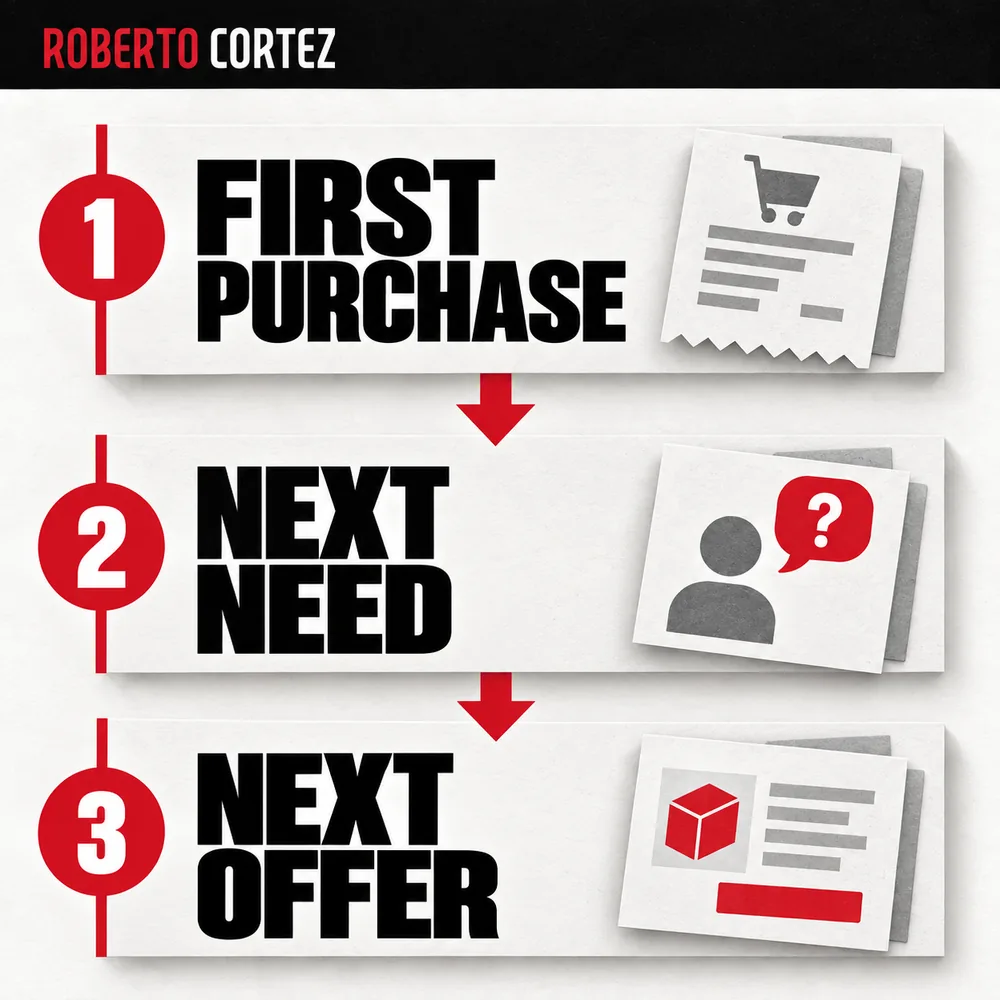
An entry event may have economic objectives beyond ticket sales, but this requires organised tracking of revenue and costs. Advertising, production and delivery of the follow-on offer all belong in the analysis. Counting on future sales without observing whether they happen makes it difficult to establish what you can actually spend on acquisition.
For a previous event, I accepted an acquisition cost above the ticket price because the event played a role in selling a subsequent offer. That decision depended on the journey and the conditions of that particular project. It does not establish a rule that losses at entry will be recovered through later purchases.
To assess the whole, separate event buyers, attendees, people interested in the next offer and buyers of that offer. Record delivery costs and the period observed as well. Revenue minus advertising is not net profit, and a later purchase should not automatically be attributed to the event merely because the person had registered for it.
This connects with understanding which sales a campaign is helping and deciding how much you can pay for a lead. The reasoning considers the journey while keeping its stages distinct. A spending limit needs to rest on observed information and a concrete ability to support the test, including the work required after a successful sale.
Prepare the offer without filling the programme with sales pitches
Having a follow-on offer should guide the organisation without occupying every contribution to the event. Decide who presents the proposal, at what moment and how it relates to the content. Speakers need to understand this arrangement so the experience does not accumulate conflicting requests directed at the same participant throughout the programme.
In earlier editions of AdSummit, I set limits on collecting contacts and direct selling by guest speakers. That choice aimed to preserve the coherence of the event and its planned commercial proposal. Other formats may adopt different rules, but they also need to communicate them before guests start preparing what they will present.
Clarity extends to what happens after someone buys. People should understand access, when support begins and what they need to do next. Those who do not buy remain entitled to everything included in their ticket, without the original experience being devalued in an attempt to make the next offer appear more attractive to them.
An entry event becomes better defined when I can explain these two commitments separately. There is an experience worth attending and a follow-on offer that may suit part of the audience. Their connection becomes stronger through the quality of the work and the suitability of the proposal, with results that still need to be tracked.