
Save the conditions that made the result possible
Record the specific objective, the instruction version and the materials available during execution. Include decisions that changed the request during the conversation, distinguishing initial requirements from later adjustments. Anyone repeating the task should be able to reconstruct the relevant conditions without searching scattered messages for clues or relying on the memory of whoever supervised the original work.
It is easy to save the final answer and forget everything that made it possible. Perhaps you supplied a corrected table, explained a commercial exception or removed an outdated source. Without that information, an apparently identical request may produce a different answer because the context actually used is no longer the same.
Imagine a fictional company using AI to prepare a weekly summary of customer requests. The accepted result came from a file with revised categories and an instruction to separate confirmed requests from questions still requiring clarification. Saving only “summarise the requests” loses precisely the choices that made the work useful to the team.
Keep a reference to the materials used and identify their version. If they contain information requiring restricted access, the record should point to the authorised location without copying everything into an open library. Reproducing the process does not require unrestricted distribution of the data from which the result was produced.
Selection is part of giving AI relevant context. Save what explains the result and makes the next request possible. Side conversations, abandoned files and attempts unrelated to the final decision can remain in the history without filling the instructions that the team uses in its everyday work.
Record practical dependencies too. The process may assume access to a folder, a particular column structure or a current product list. Make those conditions visible so that a blocked execution is recognised as blocked, instead of being completed through assumptions about information the assistant was never given in the first place.
To prepare your next step, explore AI assistants for internal knowledge.
Explain why the result was accepted
Connect the approved result to observable criteria, such as fidelity to the data, coverage of the request and usefulness for the next decision. Keep the version actually accepted and identify who validated it. An example without explanation can encourage copying the appearance of the work without showing the conditions that made it appropriate in that particular situation.
In the fictional company's summary, a concise and readable text could still omit important requests. The record should explain that all eligible requests were considered, categories match the file and uncertainties remain flagged. Approval becomes meaningful when connected to checks that another person can repeat with the same materials and a clear objective.
Distinguish the AI output from the final version prepared by the team. If someone corrected classifications or added a necessary condition, record that intervention. Otherwise, the documentation credits the automatic process with a quality achieved only after human review, creating the wrong expectation for the next execution of the same task.
You do not need to preserve every punctuation change as an important discovery. Prioritise changes affecting meaning, accuracy, required format or decisions. A note saying “we separated duplicate requests before counting” explains a relevant operation; saying only “we improved the text” does not help anyone understand what was missing from the first output.
Also save what remained outside the approval. The team may have validated the summary's organisation without checking every fact in an external source. It may have approved a draft for internal use without authorising delivery to customers. Those boundaries prevent one specific acceptance from turning into permission for any subsequent use.
A useful example helps people recognise quality in different work. Describe the criterion in plain language and connect it to the part of the result that demonstrates it. The next person should understand the reason for the decision and apply it to other data, even when the final wording or structure changes.
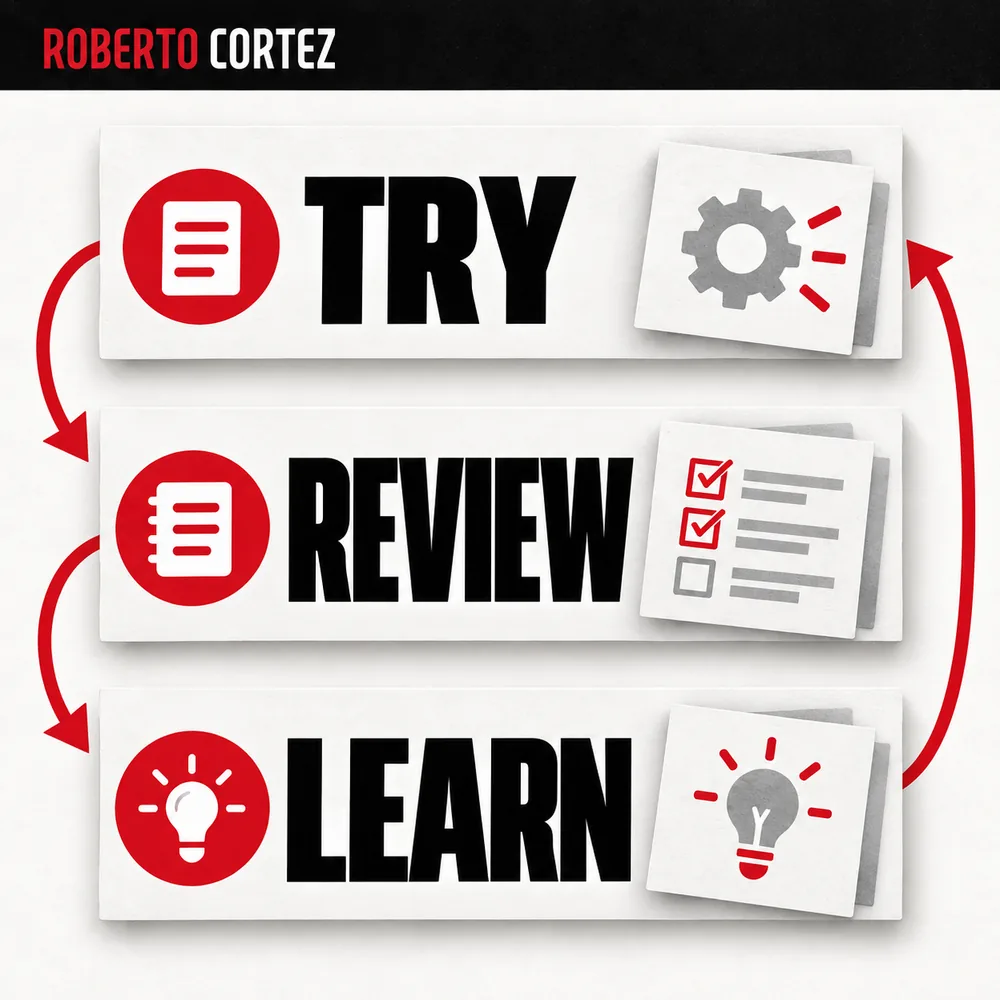
Check that the process works beyond the first example
Repeat the task with another dataset and verify the same acceptance criteria before treating it as an established procedure. Include an incomplete or ambiguous situation to observe the assistant's response. One success shows that a good result was possible; repetition helps reveal the conditions on which that result depends and where further intervention may still be needed.
Do not look for a word-for-word copy when the task allows several valid answers. A summary can change its wording and remain correct. The test should focus on the properties that matter: coverage of requests, absence of invented details, handling of uncertainty and the team's ability to act on the information presented.
In the fictional company's second case, a request might have no category. The procedure should explain whether AI sets it aside for review, asks for clarification or follows an existing rule. If the assistant invents a category simply to complete the table, the initial success does not yet justify regular use of the process.
This connects to testing automation before handing it to the team. Check the complete sequence, including data preparation and final review. Correct text does not prove that the right file was used or that the result was saved in the expected destination with the appropriate access and version.
Record relevant differences between executions. If an instruction works only with a particular structure, make that dependency explicit. If human review still requires substantial changes, keep that step in the procedure and investigate the causes before considering the task ready to run without someone checking how it was completed.
When a test fails, preserve the case and an explanation of the failure. The library then shows expected behaviour alongside known limitations. That information prevents another identical attempt without changes and helps you decide whether to improve instructions, correct the data or narrow the task to something the process can handle reliably.
Leave a procedure another person can continue
Organise the record into a short sequence: objective, materials, instructions, steps, acceptance criteria and situations requiring intervention. Identify the current version and the person maintaining the process. Documentation should let someone continue the work with understanding, without reducing them to following steps while remaining unsure what they are checking or when they should stop and ask for help.
Ask a teammate to execute the procedure using only that record and the necessary access. Questions that arise reveal real gaps in the documentation. If you need to explain an essential choice verbally, incorporate that explanation in the appropriate place instead of concluding that the other person should somehow have guessed it.
Keep the current procedure separate from the learning history. The first guides execution; the second explains decisions, alternatives and changes. As with recording what a campaign taught you, the purpose is to inform the next decision while preserving the context that makes the conclusion meaningful and helps people understand its limits.
Update the record when materials, rules or quality criteria change. An older version may remain useful as a historical reference, but it should not appear as the current instruction. Identifying the change helps explain why a previously accepted process now needs different data or a different kind of review before its output can be used.
Saving these elements does not mean retraining a model or guarantee that every tool will remember them. You need to provide the relevant instructions for the next task and confirm that they still apply. Organisation creates value only when the team can find and use what was learned from the previous execution.
I want a successful attempt to leave more than a finished file. It should leave an understandable process, verifiable criteria and known limits. The team can then build on earlier work, adapt it to new requests and recognise when intervention is needed, without depending on luck to recreate the conversation that happened to work well.