
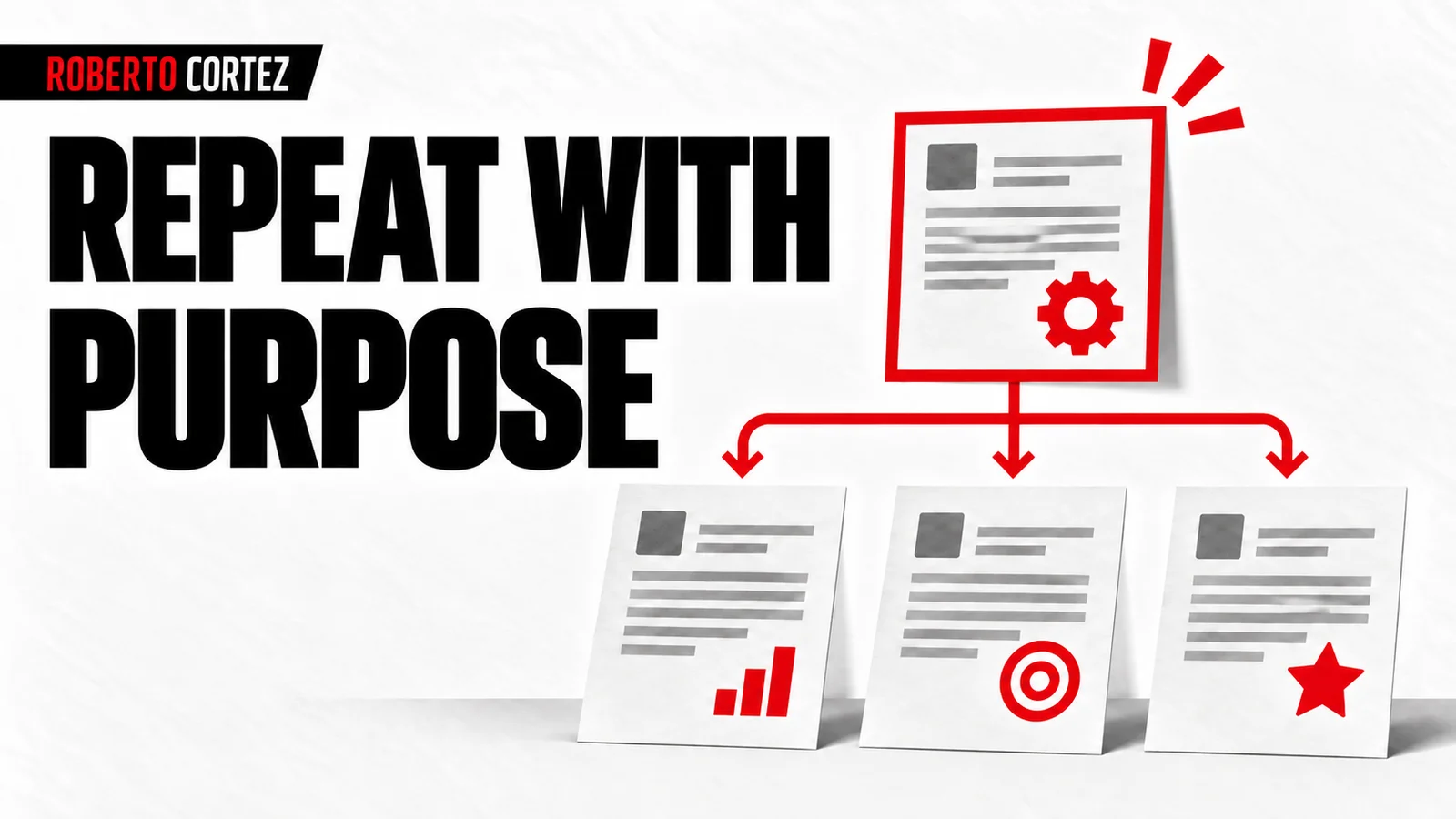
In a business, this decision arises when a team repeatedly prepares the same kind of report, proposal or review. Documenting the procedure makes expected results and limits discussable before asking AI to execute it. Usefulness depends on the quality of that work, not the number of installed skills.
Look for repetition in the process, not just the result
A task deserves a reusable procedure when decisions and checks recur across different pieces of work. Identify that common part before writing the skill. Two deliveries can share a format while requiring different reasoning; preserve the working method that remains appropriate when the content changes, rather than copying the first result.
When editing my videos, decisions about identity, captions and image use need to be respected across several pieces. Feedback on those choices can become guidance for the next edit. That does not mean every video should have the same editing sequence, because pacing and visual elements need to follow the message.
Correcting a result helps reveal the procedure. If you repeatedly ask for the original photograph to be preserved or for an image to match the precise context of the spoken words, there may be a reusable rule. Distinguish those decisions from a preference that only made sense in one particular piece.
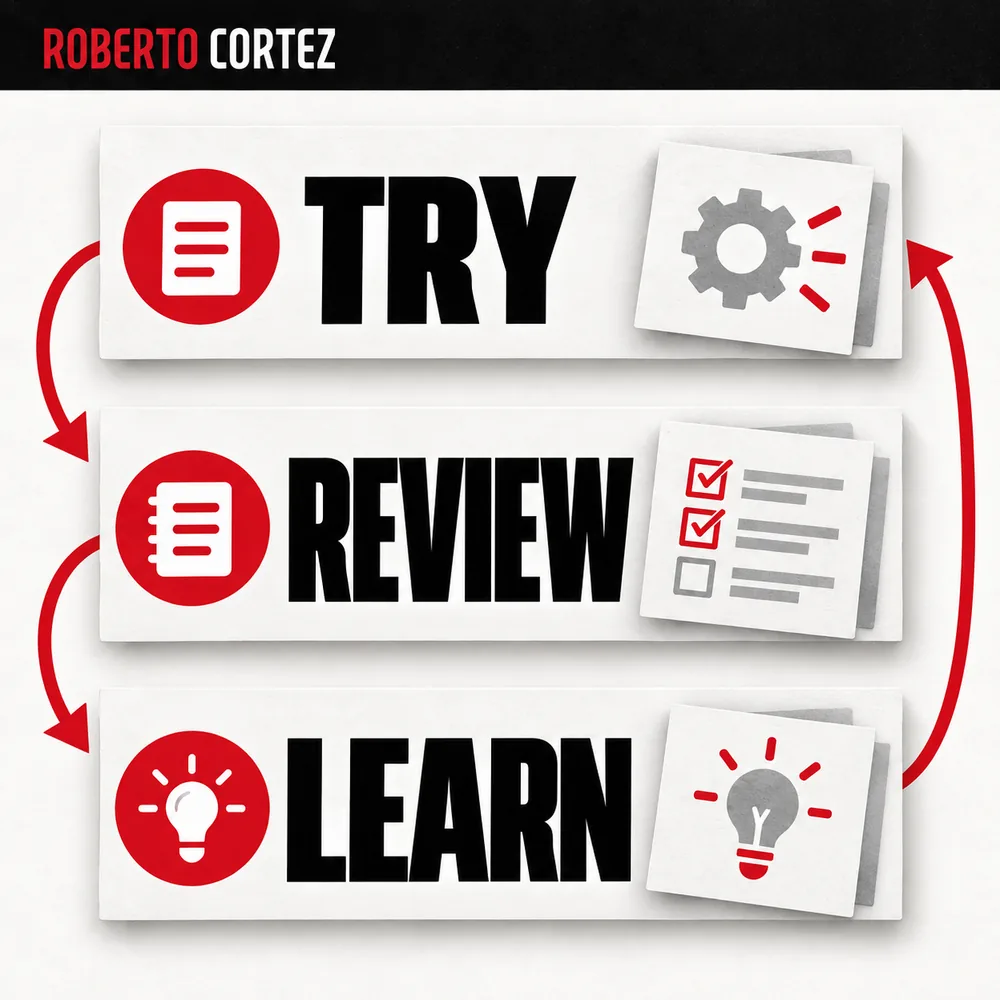
You do not need to begin with an extensive skill. Perform the task first, observe what needed explaining and identify which corrections have general relevance. Documenting too early can fix a method that is not yet understood and lead the agent to repeat steps that no longer serve a useful purpose.
To prepare your next step, explore AI agents for businesses.
Define when the procedure should be used
Describe the skill's purpose and the requests it applies to, including neighbouring situations outside its scope. The description should help select the right procedure. An attractive name or a broad list of keywords can cause unsuitable instructions to be applied to tasks that only appear similar to the intended type of work.
In a hypothetical example, a skill for preparing advertising variations could organise angles, arguments and review criteria. It should not authorise campaign publication or replace approval of the offer. Its expected result is a set of proposed texts with explainable differences, within the boundaries established for that specific task.
The work of preparing advertising variations without repeating the same idea helps identify steps worth preserving. A skill could require each proposal to start from a different argument while retaining approved facts. The product, audience and purpose of the request still need their own context for each new piece of work.
In tools supporting skills, confirm how they are identified and loaded before depending on that behaviour. The term appears in environments with different usage arrangements. For the business, the essential point is finding the procedure when relevant without imposing its method on every task carried out in the project.
Write down inputs, decisions and completion criteria
Organise the skill around required information, decisions guiding execution and conditions a delivery must satisfy. Explain what to do when a fact is missing or an exception appears. Steps need to serve the outcome, allowing the agent to recognise when it lacks the conditions required to follow the ordinary path through the procedure.
For advertising variations, inputs could include the approved offer, the audience and permitted claims. The output should show distinct proposals and identify any gap preventing completion. If the price is missing, the procedure should request it or make its absence explicit instead of inventing a commercial condition to finish the text.
Selecting useful context for AI helps separate general instructions from materials belonging to each request. The skill explains how to work; task documents provide the facts to use. Saving temporary information as a permanent rule can cause an old offer to reappear in a new task where it no longer belongs.
Include examples of an acceptable delivery and an error to avoid when they clarify the criterion. Explain why an example works rather than requiring it to be copied in every situation. A presentation template can preserve structure without forcing repeated arguments, expressions or visual choices that only belonged to its first case.
Test the skill on a new case and an exception
Before treating the skill as an established procedure, apply it to a task that did not form the basis of its creation. Check that it produces useful work without excessive additional explanation and handles incomplete information correctly. Include a similar request that should not activate it, testing the boundary of its intended use.
For the advertising example, change the offer and observe whether the angles remain distinct and relevant. If the agent repeats references to the earlier product, the procedure may have mixed method with content. Correct that dependency and compare again with the criteria, preserving enough examples to verify the change.
A request to analyse campaign results, although related to advertising, may need a different procedure. If the variations skill produces new copy instead of answering the analysis question, its description is too broad. Quality includes recognising where the method ends, rather than only executing it well when it has been correctly selected.
The habit of planning before building an application offers similar discipline: objectives, boundaries and verification come before turning execution into a routine. A skill need not automate every step to be useful. It can organise preparation and review while leaving consequential decisions with the person responsible for the work.
Update rules from confirmed decisions
When feedback changes a recurring criterion, revise the skill and identify what has been superseded. Do not add every observation as a general rule without assessing its scope. The procedure should reflect confirmed, current decisions while retaining enough context to prevent a local preference from governing other tasks where it does not belong.
A decision about how many versions to deliver, for example, may change over time. If the earlier rule remains active in another paragraph, the agent receives incompatible guidance. Update the current instruction and keep history somewhere it can explain the change without imposing the old requirement on future deliveries.
Keep the main procedure readable and place extensive references in supporting materials where the environment permits. If the skill includes scripts or other resources, understand what they do and which access they require before using them. A reusable procedure can repeat unwanted effects too if those dependencies are ignored.
Its usefulness has a practical measure: can the team repeat quality work with less reconstruction of instructions while retaining control over decisions? If that does not improve, simplify or revise the procedure. The skill exists to support a real task and should remain subject to the same usefulness criteria as any other tool.