
Changing format may help find a clearer way to communicate. An explanation that works well in conversation may need reorganising for an image; a written comparison may become clearer through demonstration. Adaptation deserves testing, but it helps to know which part of the idea is actually being put to the test.
If you change the argument, offer, audience and presentation at the same time, you may produce a better piece without discovering why. That can help creation while limiting what you learn about formats. I would start by deciding what I want the comparison to explain and which changes need to remain documented.
Write the message that should remain
The main message should identify what you want someone to understand and why it matters to them. Record the claim, context and conditions that make it valid. This small core becomes a reference for reviewing every version, preventing adaptation from introducing new promises or removing information that changes the meaning of the explanation.
As a hypothetical example, imagine a company explaining why people should prepare information before requesting a proposal. The central idea might be that clear objectives and needs help make the conversation more specific. That does not become a guarantee of a lower price merely because video favours shorter sentences and direct opening statements.
I would also write down the expected next step. If the content invites people to prepare a brief, every version should make that invitation understandable. A piece asking for an immediate purchase is testing a different stage, even if it uses the same colours and mentions the same customer need at the beginning.
This separation complements creating advertising variations with different hypotheses. There are times to explore different arguments and times to compare ways of presenting the same one. Identifying which task you are performing helps frame the question and interpret whatever happens once the pieces reach the audience you have selected.
To prepare your next step, explore Personal branding for business owners.
Adapt the explanation to each format's possibilities
Keeping the message does not mean reproducing exactly the same words across every medium. Each format organises attention, time and detail differently. Preserve the argument and essential conditions, but choose a presentation that makes them understandable: a sequence in text, a concise image or an explanation developed over time in video.
In the briefing example, text can explain the necessary fields and show how they relate. An image can highlight a small comparison between a vague request and a specific one. A video can develop that difference through speech. All three must explain the same decision without pretending to provide exactly the same depth.
Simplicity may suit a context when it brings presentation closer to how people consume that content. This does not establish that simpler production always wins. The degree of polish should support understanding and credibility, considering where the piece will appear and which resources are available to produce and review it properly.
If you turn an image into video, check what movement adds. An animated background may attract attention, but needs to preserve the readability of the text. The message has not been retained if it disappears too quickly, becomes covered or forces viewers to guess words that the animation has made impossible to read.
Record changes so you know what you compared
Before launching the versions, save a record of the message, format and changes introduced in each piece. Include the opening, example, duration or length and final invitation. This helps establish whether you compared equivalent presentations or different sets of decisions whose individual effects cannot subsequently be isolated from the available information.
A simple spreadsheet may be sufficient. I would give each version a code and save its corresponding file. If the video contains a demonstration while the image presents only a sentence, I would note that difference. The observed result belongs to the complete piece and its distribution conditions, rather than an abstract category called video.
I would also record changes during the test. Replacing the opening sentence halfway through or changing a button's destination may alter the journey without being obvious in the final report. The published version needs to be connected to the period in which it was available, avoiding comparison of one piece with another's results.
Preserving what gets recorded when a campaign ends is useful here. Learning depends on reconstructing the decision and its context. Keeping only the format name and a final number leaves out details that might explain the difference and help determine what should be tried in the next piece of work.
Give the comparison conditions that make signals interpretable
A comparison needs to consider who received the content, in which context and with what opportunity to respond. Define what you will observe and when you will review it. If conditions differ substantially, treat results as exploratory signals and explain the limitation instead of declaring a universal winner among the tested formats.
Text published to an audience that already knows you is not directly equivalent to video shown to new people. Timing, distribution and subject may also influence responses. Every experiment need not become a complex study, but conclusions should not be stronger than the comparison permits given the conditions under which it took place.
When advertising is involved, check whether the advertisement had suitable conditions and budget for testing. A version receiving little exposure may not provide enough information for a decision. Spending more also does not automatically fix a confusing message or a destination that fails to work for visitors trying to use it.
I would separate attention indicators from those describing subsequent actions. Views, reading time, clicks, enquiries and purchases are not interchangeable. The selected measure needs to match the initial question; otherwise, you might choose a piece because it generates curiosity when the purpose was to clarify who should proceed to a conversation.
Use the result to improve the next decision
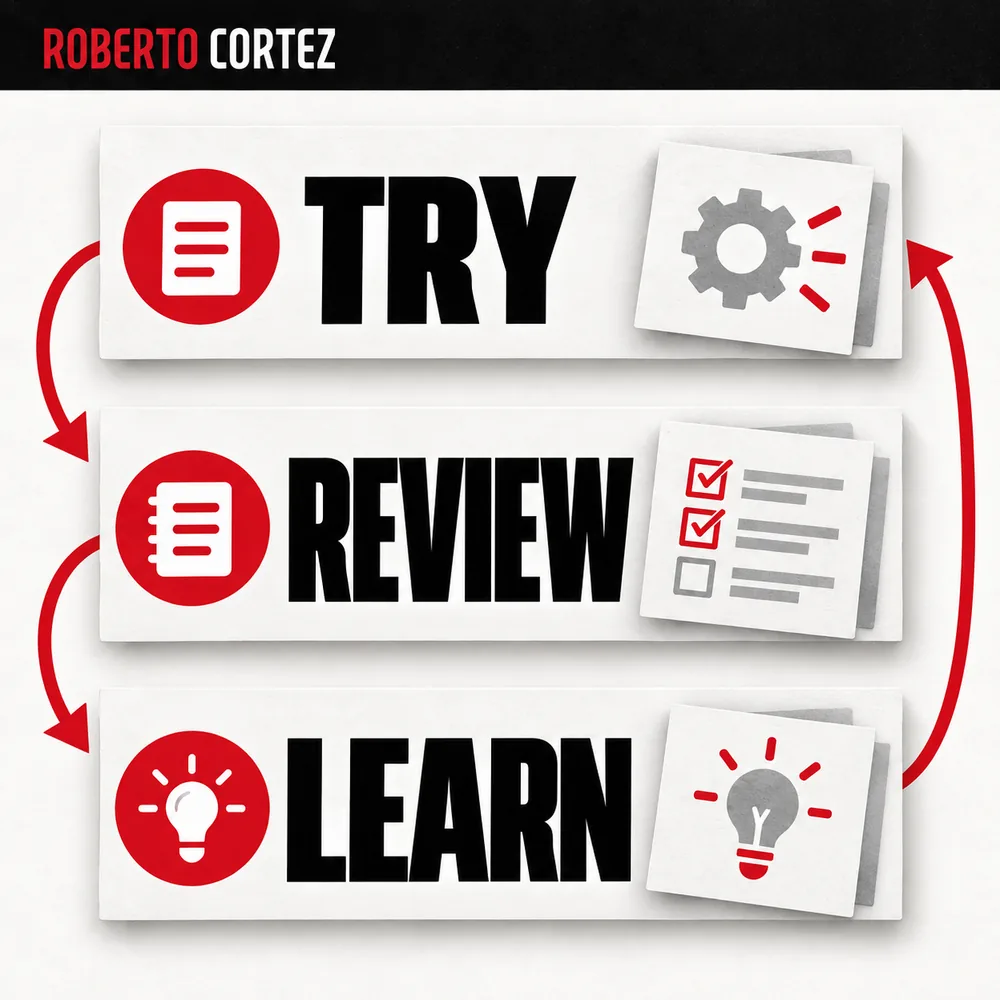
At the end, compare the observed response with the hypothesis and review the fidelity of each version's message. Decide what to keep, what to correct and what remains uncertain. A useful result may reveal a promising presentation, weak execution or simply the need to repeat the comparison under more suitable conditions.
If video appears to generate more interest, I would check whether its advantage might lie in a demonstration found only in that version. Testing the same explanation in a clearer image or better organised text could be worthwhile. The next question emerges from the observed difference, without turning one experiment into a rule for all future content.
I would also consider production and review work. One format may require additional resources that make sense only for certain subjects. The choice should connect usefulness, effort and the ability to maintain quality, rather than always adopting the most elaborate format or the one that attracted most attention in a particular publication.
I would save the conclusion with its scope: what worked, for whom, under which conditions and with which uncertainties. That makes learning reusable without freezing creativity. The purpose is to find clearer and more relevant ways to communicate the same idea, keeping the message recognisable when the presentation changes between formats and pieces.