
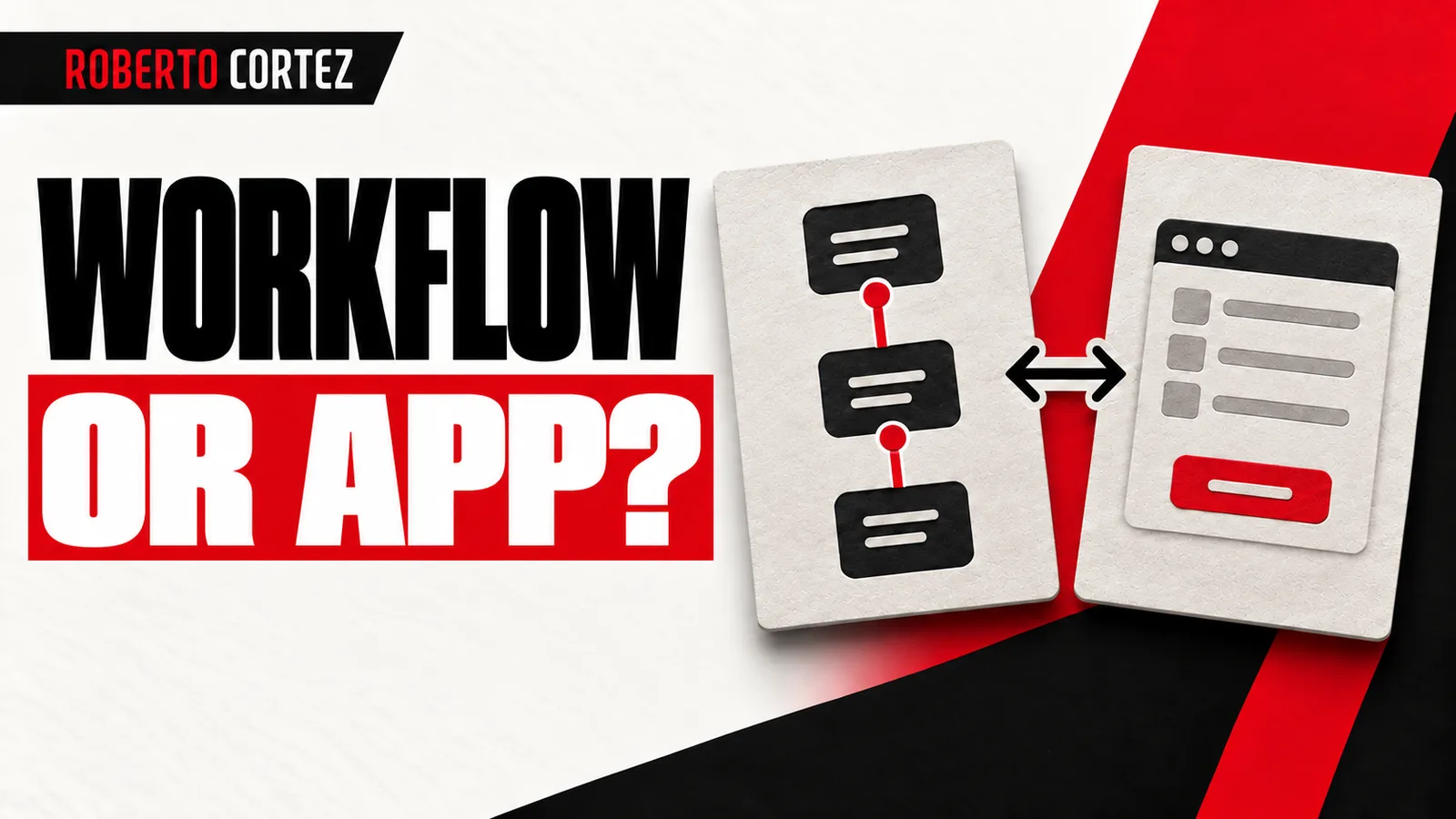
An automation can start with one specific task and end up serving several people. Something that previously transferred information between two tools begins receiving requests, waiting for approvals and displaying different statuses. At that point, the technology decision should follow what the process has come to require from the business.
The number of steps alone does not determine the change. Establish where the difficulty lies: understanding the workflow, changing rules, following cases or enabling the team to work effectively. A custom application can help with some of those issues while adding responsibilities previously handled by other tools and their providers.
Identify the kind of growth that is causing difficulty
Describe the observed problem before choosing a solution: more integrations, more people, more exceptions or more information to store and consult. Each kind of growth may require a different response. A workflow that is hard to read may benefit from reorganisation, while a team lacking suitable access to request statuses may need a dedicated interface.
Imagine an automation that receives a request, checks commercial information and prepares a document. Adding a second source of requests increases integration work. Adding three people who need to review different parts of the document also changes how decisions are organised and how each person follows the case through the process.
In this hypothetical example, the two kinds of growth should not be treated as the same problem. The second source may fit into the existing process. Collaboration between reviewers may justify a dedicated workspace, with information, permissions and actions designed around what those people need to do together.
Record where the team loses time and what people must do to recover context. If the main effort goes into finding out the status of a request, writing more automation steps may not resolve the difficulty. The decision starts with the task that remains poorly served by the existing arrangement.
To prepare your next step, explore Developing applications with AI.
Organise the workflow before declaring it insufficient
A visual workflow may remain suitable when the work mainly involves coordinating tools and transforming information between known stages. Before replacing it, separate responsibilities and clarify the data entering and leaving each part. Maintenance difficulties can originate in the current organisation without establishing that the tool itself has reached its limit.
N8n allows work to be divided into subworkflows and provides configurable error handling. These capabilities help separate reusable parts and make failures more visible. Using them requires defining what each part receives, what it returns and what should happen when it cannot complete the task it was given.
Duplicating the same rule in several places creates work whenever that rule changes. Reorganisation can bring that responsibility into one identified place and reduce inconsistencies. The benefit depends on process clarity and the tests performed, rather than simply making the diagram take up less space on the screen.
Also keep separate the decision about using AI or rules in an automation. A visual workflow can coordinate stages with and without AI, just as a custom application can. Choosing where the process runs does not automatically determine how each decision within it should be made or reviewed.
Consider an application when interaction becomes central
A dedicated application deserves assessment when the team needs to consult information, make decisions and act through a specialised experience on a recurring basis. Describe the users, case statuses and actions permitted at each stage. The application should meet that usage need, with access and maintenance responsibilities the business is capable of taking on.
In the commercial document example, each reviewer may need to see only their section, understand what changed and return a correction. The responsible person may need to consult the history before authorising a send. That experience has requirements beyond connecting one tool to the next in an automated sequence.
This does not mean every form justifies building software. An existing interface may fulfil what the team needs, and some requirements remain straightforward even with several participants. Compare the available experience with the required experience before deciding that you need to control every element of the solution yourself.
The work of planning an application before starting to code helps make these requirements explicit. Define what a person sees, what they can change and how they confirm a decision. Then compare the effort of adapting the existing process with the effort of building a dedicated experience.
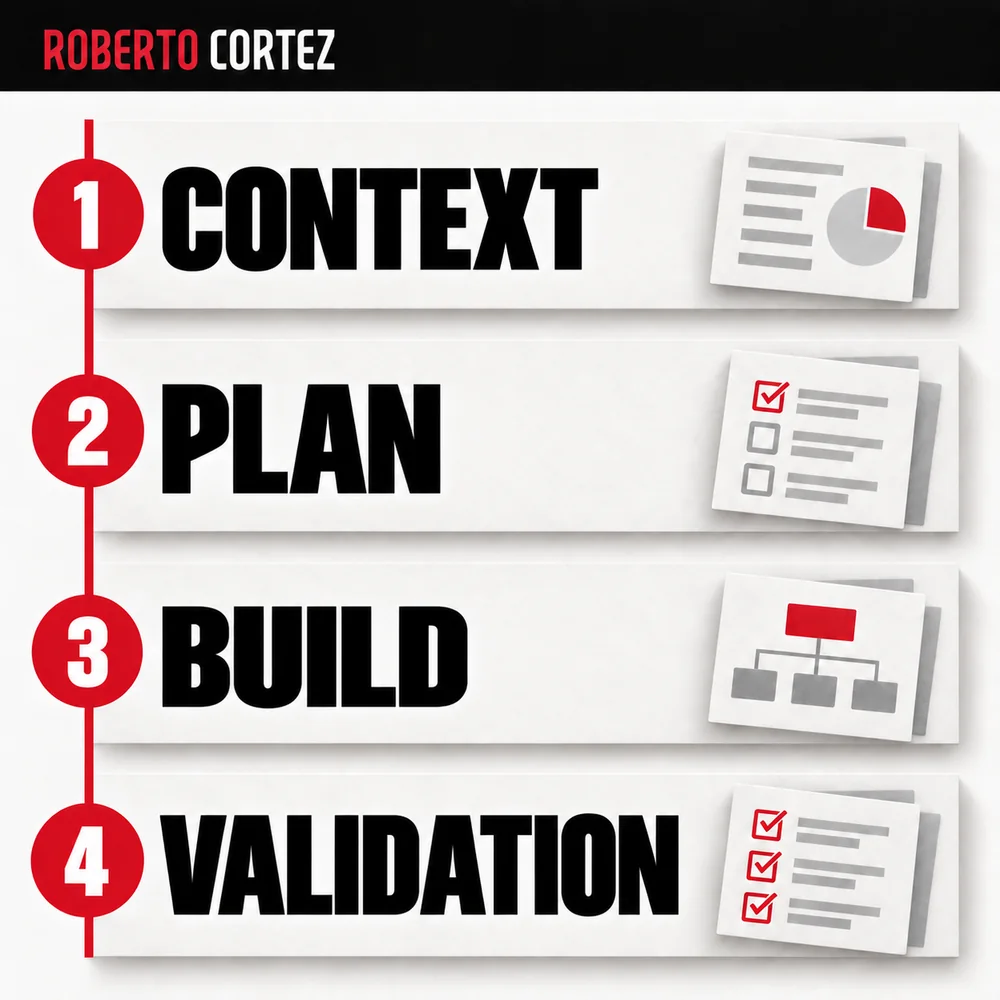
Decide where business data and rules belong
Identify which system holds the reference information and which component controls the rules that must remain consistent. This matters in both a workflow and an application. If the same commercial condition is maintained in several places, changing tools may carry the inconsistency into the new arrangement instead of resolving it.
Somebody may update a request's status in an application while the automation continues working from an old copy. To prevent that mismatch, define where the current status is checked and how a change becomes available to the next process. A clearer interface does not, on its own, repair a poorly defined connection between data.
You also need to know what happens when an action stops halfway through. Creating a document and failing to notify the responsible person produces a different situation from failing before creating the document. Recovery should recognise what has already happened so that it does not unnecessarily repeat a completed action.
These decisions belong to process design, regardless of the technology chosen. Ask the team to explain the source of a value, the rule applied and the current status of a case. If that explanation depends entirely on the person who built everything, the evolution should include documentation and knowledge transfer.
Compare the cost of maintenance as well as construction
The comparison should include construction, adaptation, review, operation and the ability to resolve problems over time. A custom application needs somebody responsible for its functioning; a workflow also needs supervision of connections and rules. Assess the alternative against available skills and a realistic way to ensure continuity when the original author is absent.
Using only part of a tool can justify reconsidering the choice, but it does not establish that building an alternative will cost less. Less visible parts may include access management, recovery, updates and support. Identify which responsibilities would move to the business and how they would actually be handled.
Also compare the effort needed for a typical change. If the commercial offer changes, who can update the rule and check its effect? If somebody leaves the team, how is access changed? These questions make maintenance concrete and prevent a comparison between a known subscription and future work that nobody has estimated.
When using AI in business beyond the chatbot, the capacity to build increases, but responsibility for the process remains. Producing a first version faster does not eliminate the work of keeping that version useful, understandable and suitable for real operations as the business and its tools evolve.
Evolve one part and confirm the benefit
The decision may be to retain the workflow, reorganise it, build an application or combine components with distinct functions. Choose a limited change that resolves the identified difficulty and compare the result with the previous situation. Avoid migrating the entire process before establishing whether the new structure improves the work that prompted the change.
An application can provide the review workspace while a workflow continues coordinating integrations in the background. That combination needs clear boundaries: who stores statuses, who authorises actions and who confirms completion. Having two components helps only if it reduces difficulty without creating contradictory decisions or an unclear division of responsibilities.
Start with a representative path and record the effort of using, changing and recovering it. The choice becomes more solid when you can show what improved and what now requires supervision. The aim is to have a structure suited to the process, with room to evolve when its needs change again.