
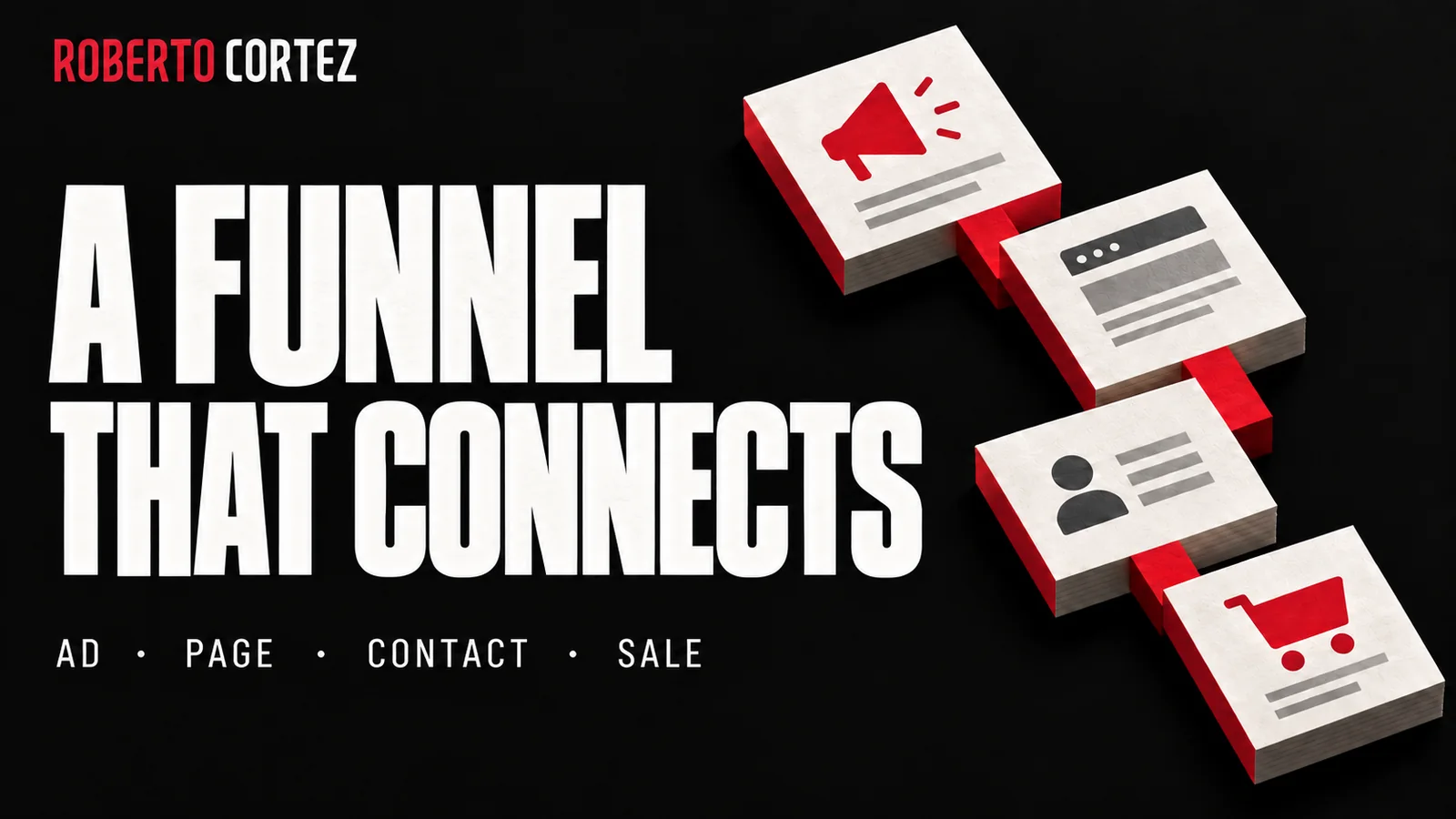
It is possible to sell an initial offer successfully and still struggle to find clients for the service you want to develop. An accessible price may make a decision easier, but it does not determine the buyer's need. Before increasing promotion, check whether the first promise attracts people towards a relationship you can actually build.
What connection should exist between the entry product and the main offer?
The connection should lie in the problem, the client's context and the usefulness of continuing. The initial product can solve a defined part of the need while leaving other decisions for later. It does not need to be an incomplete version of everything, nor should it manufacture a difficulty to force someone into buying the next solution.
In a hypothetical example, a guide to organising enquiry follow-up may interest someone who needs to improve that process in a business. A subsequent service could help implement the organisation when complexity justifies it. There is an understandable relationship between the two interventions, although not every guide buyer will need the service.
An offer about a popular topic unrelated to that operation may gather many people without creating the same fit. Their initial interest is still real, but it belongs to a different need. A larger audience does not, by itself, correct that difference in intention.
When building a lead funnel for services, describe this connection before choosing channels. The path needs to make sense from the perspective of the person taking it, beyond the sequence of products you would like to sell.
To prepare your next step, explore Positioning and value proposition.
How do you recognise a message that attracts the wrong audience?
Compare the promise that led to purchase with the needs of arriving customers and the criteria for the main offer. Look for recurring differences in objectives, context or ability to apply the product. A message can sell the initial product effectively while being poorly suited to attracting people who would benefit from the service you hope to present afterwards.
If the guide promises only to save anyone time, it may attract people organising personal tasks. If the main service requires a commercial process inside a company, acknowledge that difference. Do not blame the buyer for failing to continue when your communication offered them a different kind of usefulness.
Listen to questions before and after delivery. Observe whether people can explain why they purchased and where they intend to apply the content. These answers can reveal a mismatch that aggregate click and purchase figures do not show.
The correction may involve making the context more explicit, adjusting examples or changing the entry product. There is no need to exclude people because they do not buy a larger offer. Assess whether the first promise fulfils the function you assigned to it within the business.
What value should exist even without a second purchase?
The entry product should fulfil its promise and provide a usable deliverable without requiring a subsequent purchase. Continuing may add depth, implementation or support when there is a need. Someone who solves their problem with the first product remains a customer you have served, even if they never move to the main offer or need that intervention.
In the guide example, the person should be able to organise the promised information using the materials provided. If delivery merely reveals a problem and hides every useful step behind another purchase, the initial expectation may remain unmet. Reducing the price does not remove that responsibility.
It also helps to distinguish a declared limitation from a disguised gap. An introductory resource can explain that it excludes personalised implementation. This differs from implying a complete solution and revealing its dependence on another service only after payment.
Trust may grow when the first delivery is useful and consistent. Even so, it does not guarantee a second purchase. The person may have no need, prefer internal execution or have other priorities, without turning that first relationship into a failure.
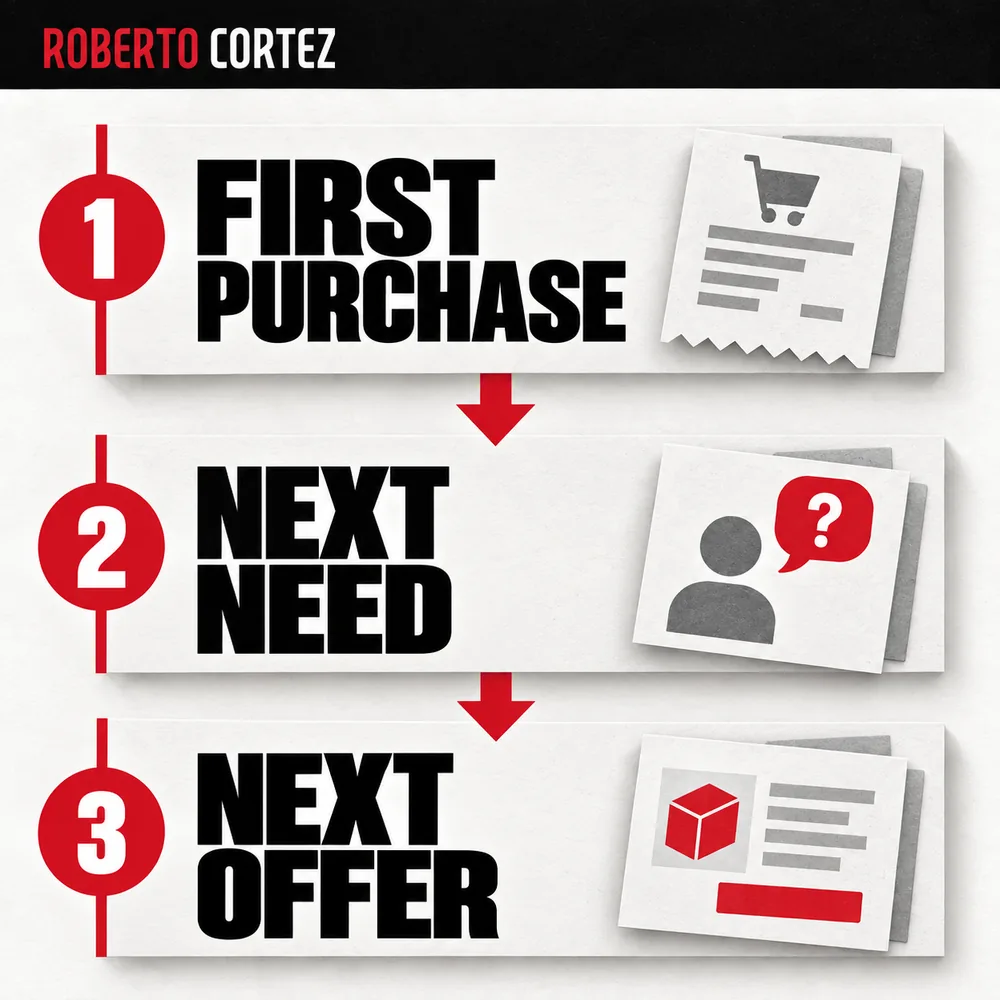
How do you assess whether the initial product supports the business?
Assess the first offer through what it delivers, the costs it requires and the relationship it builds with suitable customers. When the strategy includes continuation, also follow what happens afterwards over a sufficient period. Do not conclude that the model works simply because entry costs are low or because there are many purchases at a small price.
For a paid product, consider the relevant costs of delivery, support, payment processing and acquisition. Initial revenue may cover part of those costs without representing profit. If the model depends on subsequent sales to be sustainable, make that dependence visible in the planning.
Thinking about how much to pay for a lead helps separate volume from viability. Contacts, initial buyers and main-service clients are different states. Do not treat movement between them as certain before observing actual behaviour.
Compare groups that have had similar time to decide and identify where the data came from. A recent campaign may look worse simply because continuation has not had time to happen. Equally, waiting for future sales without a timeframe or supporting signs should not indefinitely postpone assessing a model that continues to consume resources.
How do you present continuation without forcing a need?
Present the next offer when there is a compatible problem and enough information to explain what it adds. Show the difference between continuing independently and receiving another intervention, with clear scope and conditions. The person should be able to recognise whether they need that help without feeling their first purchase lost value because they declined a larger commitment.
A conversation may reveal that the process is already organised and no relevant additional work exists. Respect that conclusion. It may also reveal several people, systems or decisions that make implementation more demanding and justify considering a different form of support.
Avoid treating everyone as ready for the same message at the same moment. Someone who has not used the product may need to understand the first deliverable before assessing another. Follow-up should reflect the actual relationship, without confusing a purchase with consent to any kind of approach.
When analysing the sales a campaign helps create, preserve the distinction between participation and causality. A sequence of contacts may accompany a decision without proving that each contact caused the sale.
What should you correct before increasing volume?
Before increasing volume, confirm the promise fits, the delivery is useful and the audience attracted is compatible with the proposed continuation. If you find a mismatch, change the part producing it and observe new signs. Increasing promotion of a misaligned entry offer can increase work without resolving the shortage of suitable clients for the service you want to sell.
Choose a specific hypothesis, such as an overly broad promise or a poorly explained continuation. Review that part and record what you expect to learn. Changing the topic, price, audience and main offer simultaneously makes it harder to understand what caused the mismatch.
Leave room to discover that the first offer works better as an independent product. Assess it through its own costs and usefulness, then seek another entry point for the service. The aim is to build commercial relationships that fit real needs without requiring every purchase to follow the same path.